


Easy Garden Trellis for Cucumbers, Peas, Beans & More


Updated September 18, 2026
This easy garden trellis took me one afternoon, a piece of cattle panel, and zero fancy tools, and it completely changed how my cucumbers grow. It arches right over the path between two of my raised beds, and the best part is that it works for so much more than cucumbers. Peas, pole beans, squash, melons, even climbing flowers… if it likes to climb, it’ll be very happy here.
I’ll be honest, this is one of those projects that looks way more impressive than it actually is. You can have it done in less than an hour. It’s basically a piece of cattle panel, a couple of scrap boards, and a handful of screws. If you can drill a screw into wood, you can build this.
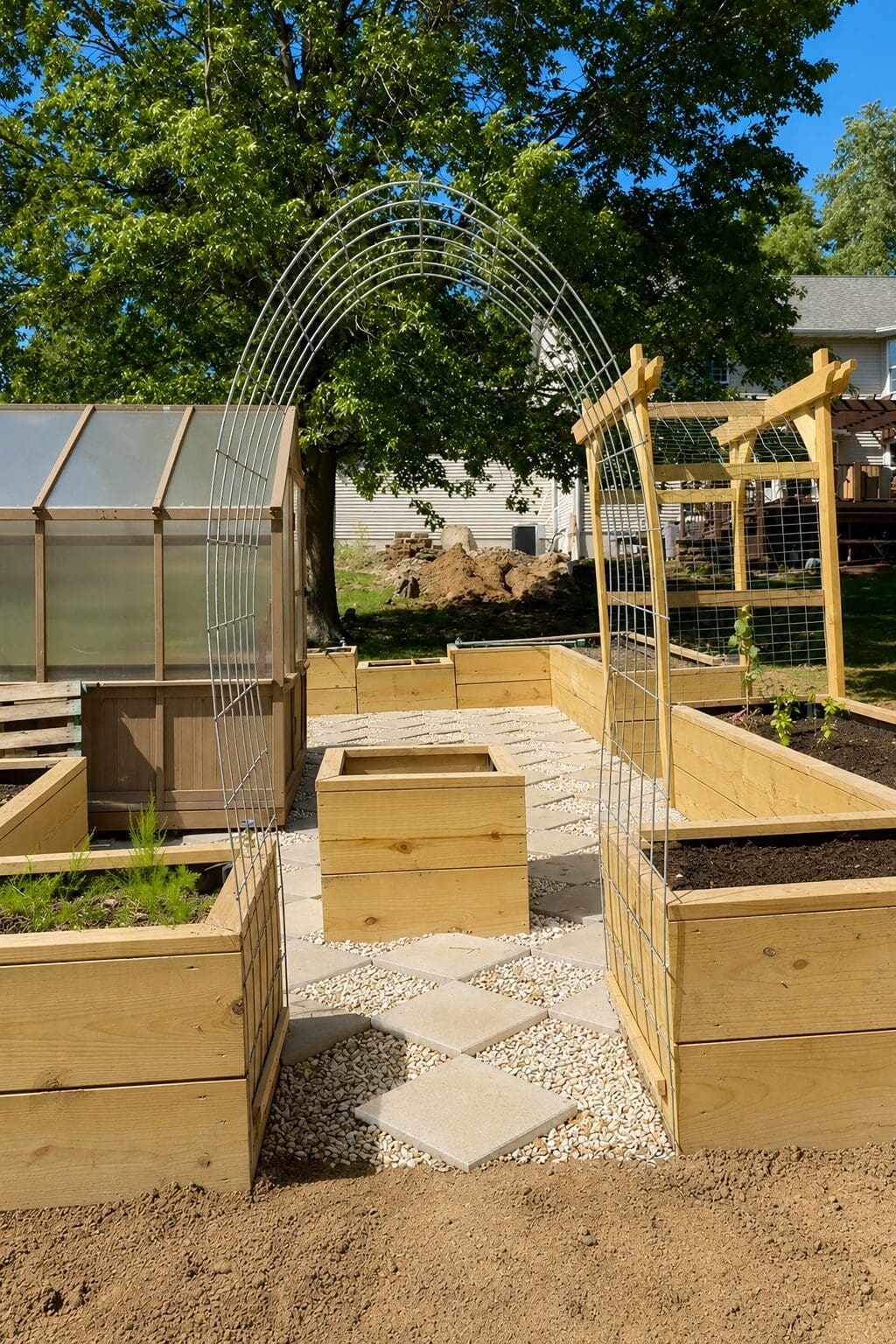
Table of Contents
- What You’ll Need to Build This Garden Trellis
- Using My Raised Beds as the Support
- How I Cut the Cattle Panel Trellis
- Propping the Cattle Panel Up Between the Two Beds
- Attaching the Garden Trellis to the Beds
- Squeezing It Into Shape
- Planting Cucumbers Along the Trellis
- More DIY Projects From My Garden
- 📌 Pin This Easy Garden Trellis for Later
- Cattle Panel Garden Trellis FAQ
What You’ll Need to Build This Garden Trellis
Here’s everything I used. Nothing crazy, and you probably already have most of it hanging out in your garage.
- Cattle panel (also called a wire or livestock panel, the rigid galvanized kind, not rolled fencing)
- 1×2 boards, cut into short pieces (these are your “clamps” that hold the panel to the beds)
- Exterior screws (a couple per end is plenty)
- Cordless drill/driver
- Angle grinder with a metal cutting wheel (for trimming the panel to size)
- Safety glasses (non-negotiable when you’re cutting metal, friends)
- Work gloves
- Tape measure
- Two raised garden beds to act as the base on each side
Using My Raised Beds as the Support
The thing that makes this garden trellis so easy is that there’s no frame to build, no posts to sink. My two raised beds already sit next to each other with a path between them, so they hold up the garden trellis on both sides. That means the cattle panel just needs to be cut to the width of your beds so it sits flush with solid wood to screw into. Measure your bed width, and that’s your magic number.
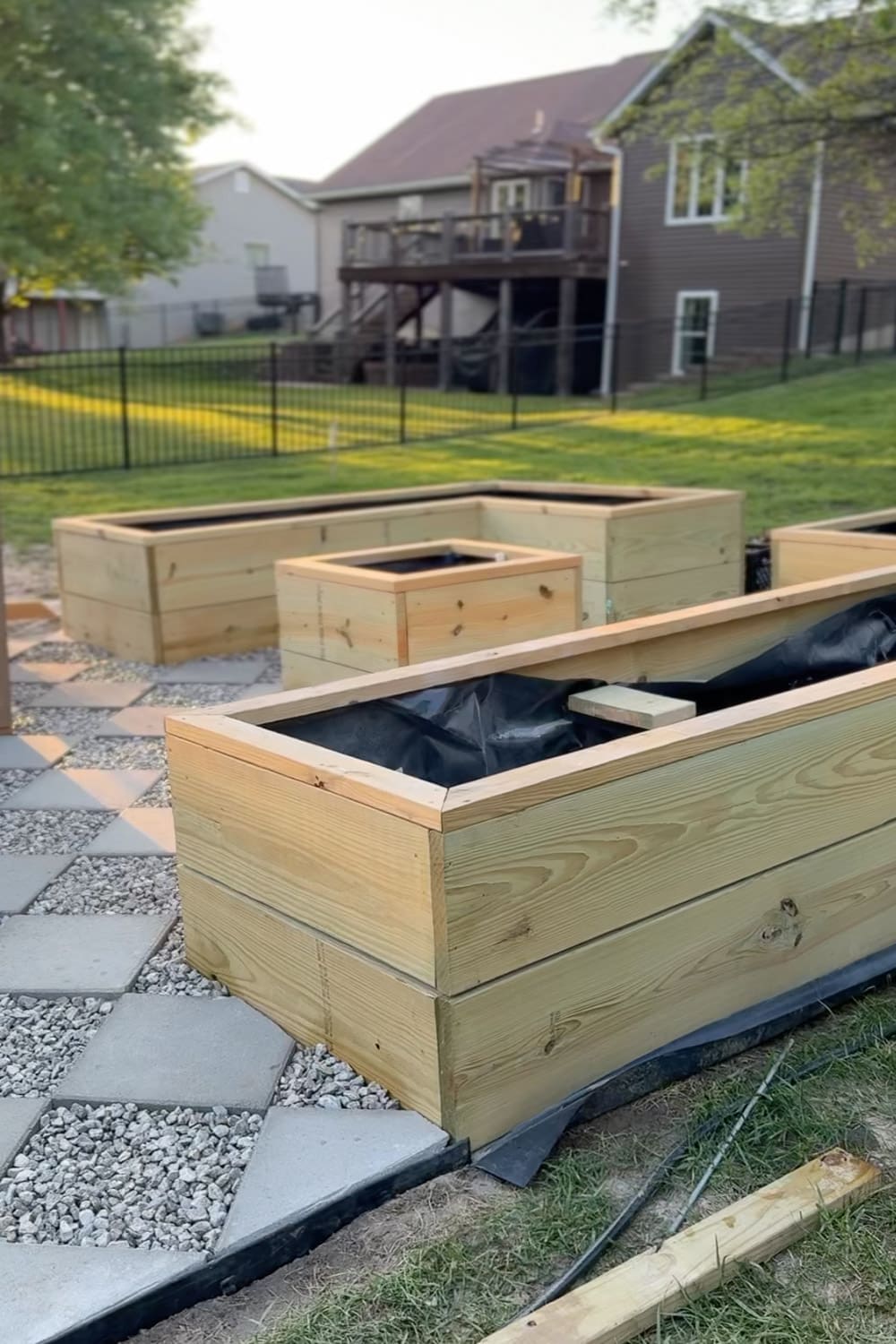
(Want raised beds like mine? Here’s my tutorial on building these raised garden beds.)
How I Cut the Cattle Panel Trellis
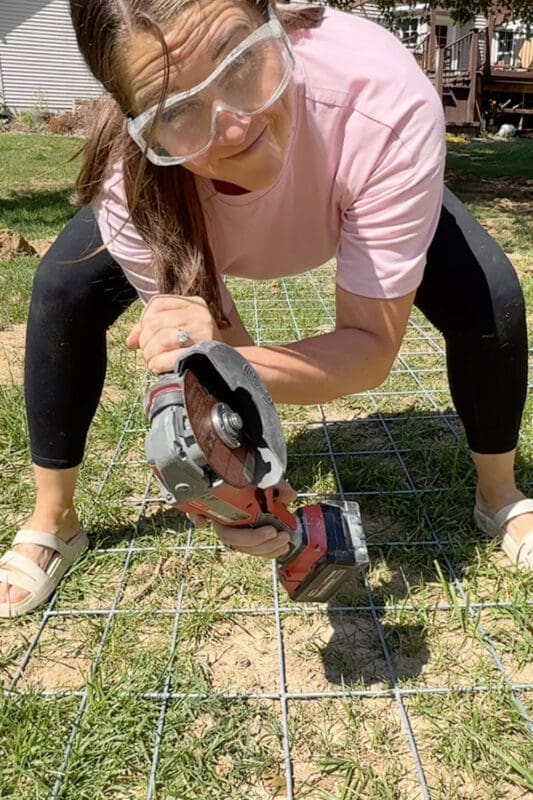
To cut the panel down, I used an angle grinder with a metal-cutting wheel. It zips through the wire way faster than bolt cutters and gives you a nice, clean cut. Pop your safety glasses on (and gloves!), line up your cut, and let the tool do the work. No need to force it.
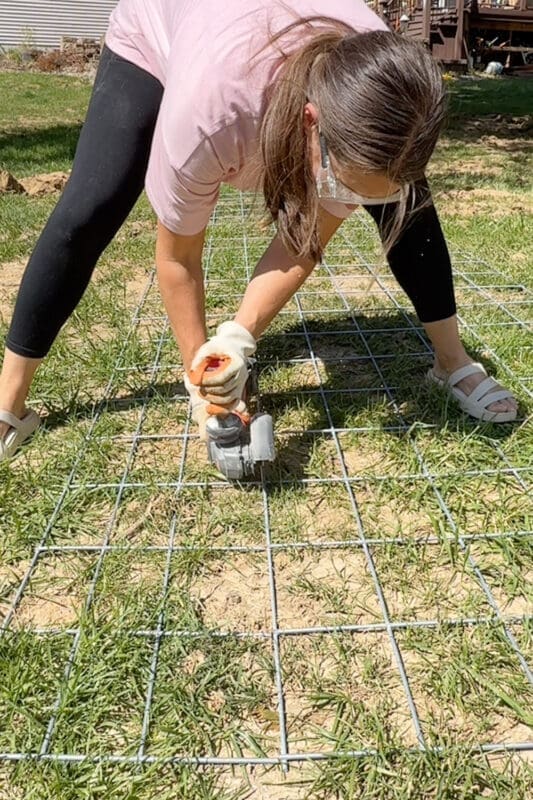
A little heads-up: the cut ends will be sharp, so be careful handling the panel after this step.
Propping the Cattle Panel Up Between the Two Beds
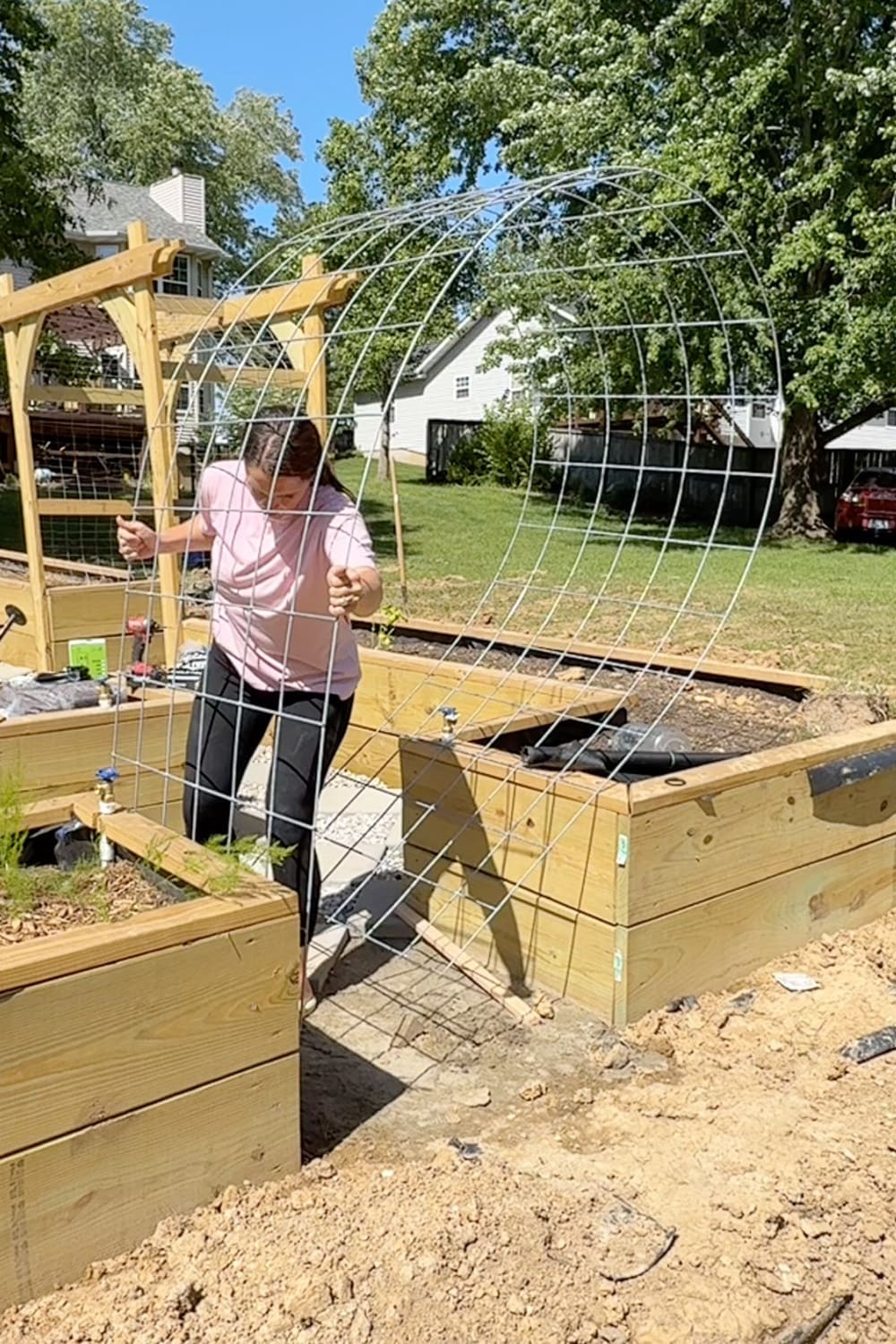
Once it was cut to size, I propped the panel up between my two beds and let it curve into that pretty arch shape on its own. Cattle panel is springy, so it naturally wants to bow over into an arch when you set both ends down, and you’re really just guiding it into place. This is the part where it suddenly starts looking like a real trellis, and you get a little burst of “oh my gosh, it’s working.”
Attaching the Garden Trellis to the Beds
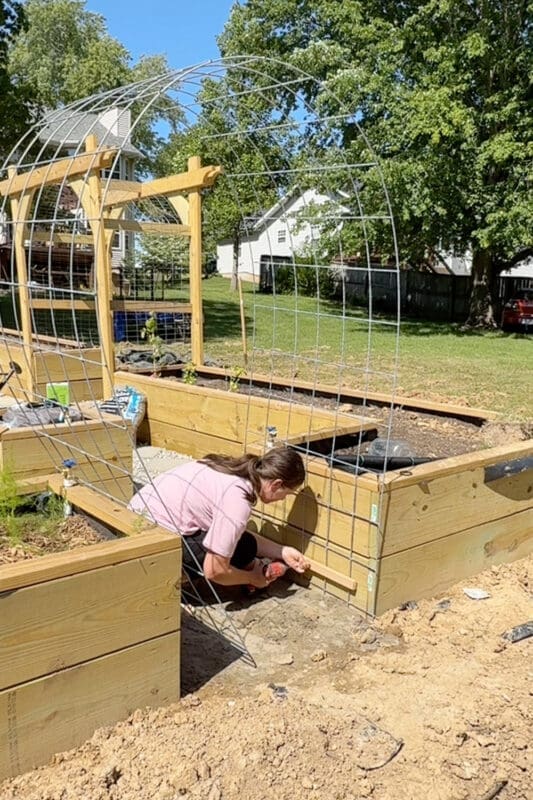
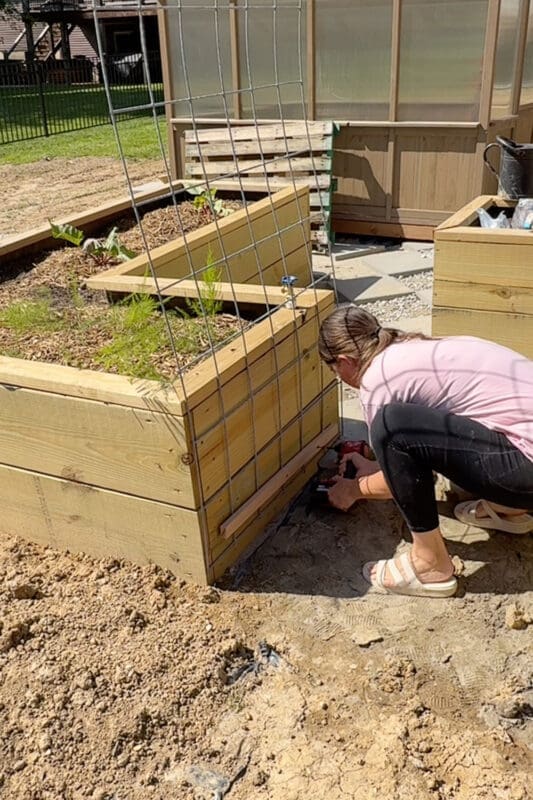
Here’s my favorite low-effort trick for attaching the panel, and there’s no special hardware involved. I sandwiched the panel between the raised bed and a piece of 1×2, then used my drill to drive a screw through the 1×2 into the bed at each end. That little board basically pins the panel in place and clamps it tight against the wood. Simple, sturdy, and you don’t have to fuss with brackets or wire. Do that on both sides, and the garden trellis is officially locked in.
Squeezing It Into Shape
Once it was attached, I noticed the panel was kind of ballooning out and bowing a little wider than I wanted in the middle. Easy fix: I just grabbed the panel and squeezed it inward with my hands to bend it a bit, and that brought everything in so it sat straighter and looked more symmetrical. Cattle panel is forgiving like that, so you can nudge it around until it looks right.

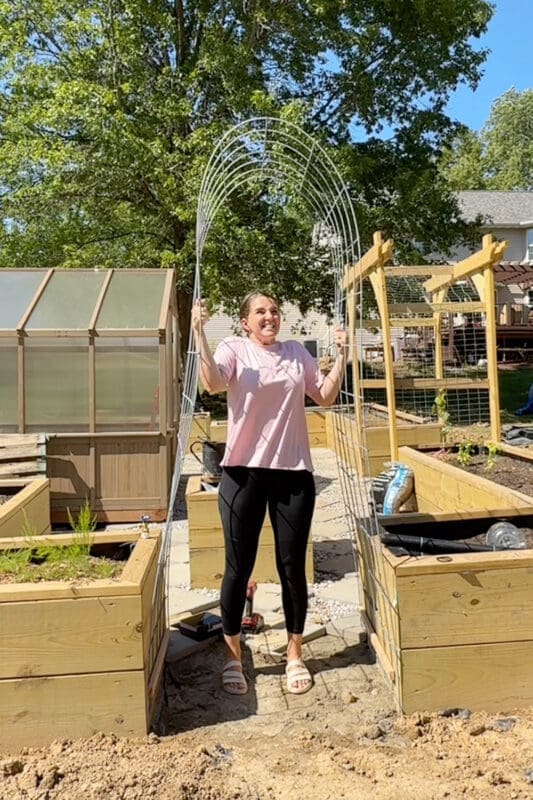
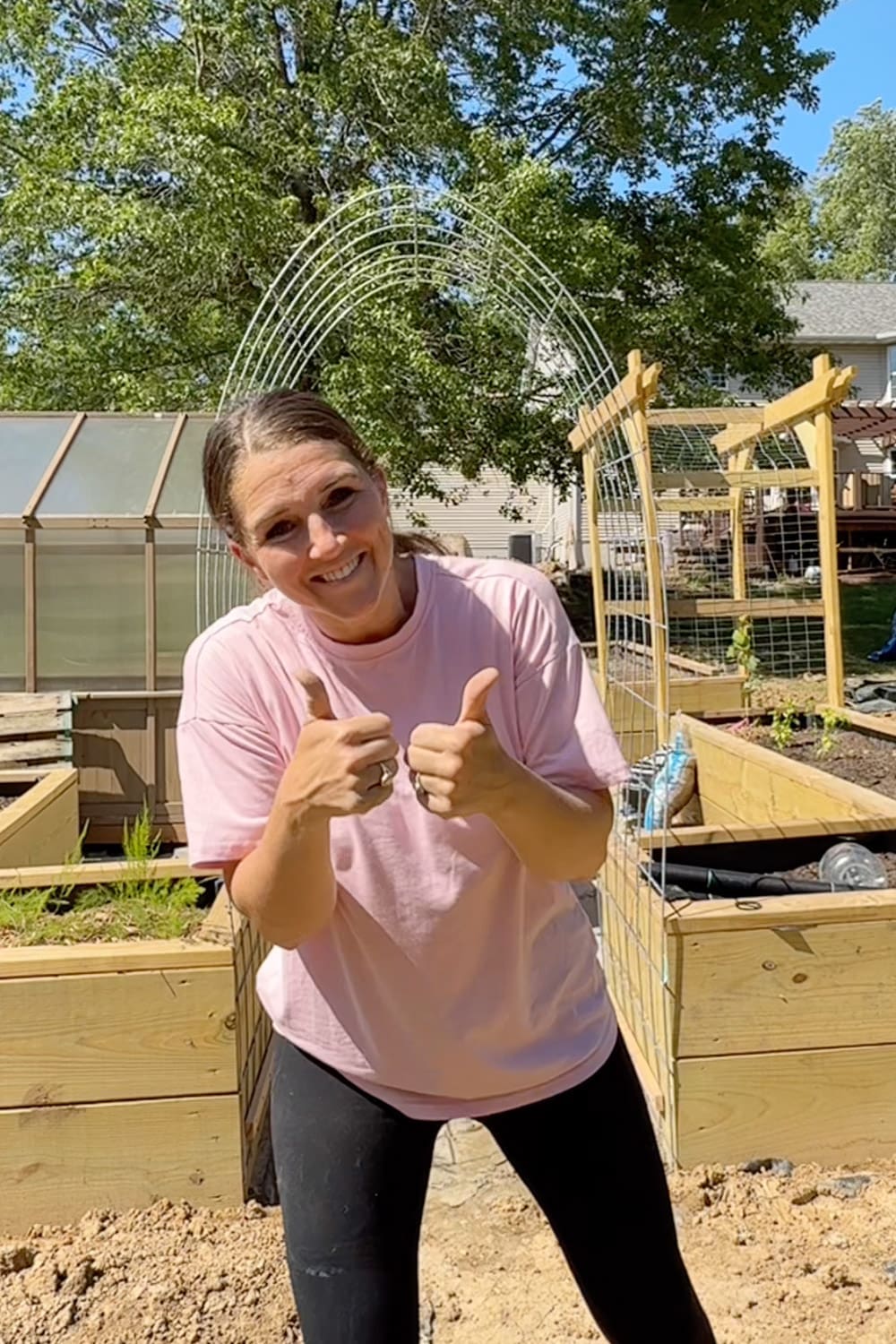
And that’s it. That’s the whole project. No really, you’re done. Stand back, admire it, take the obligatory thumbs-up photo. You earned it.
Planting Cucumbers Along the Trellis
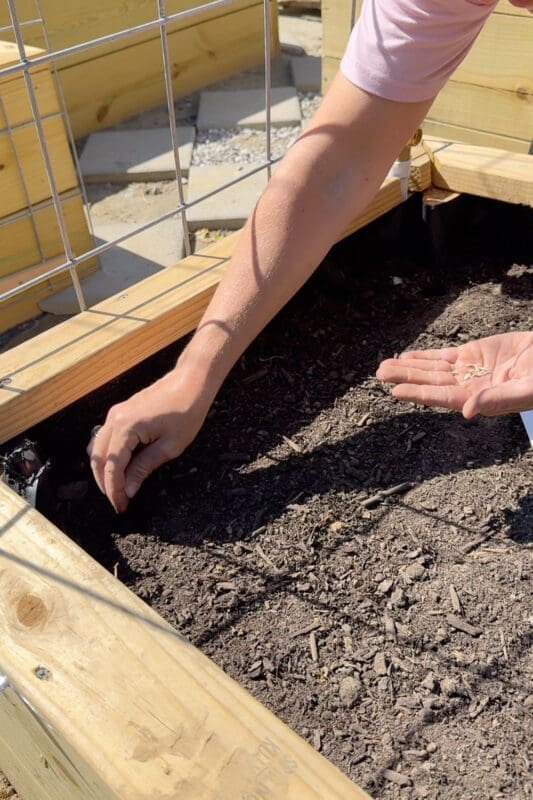
Now for the fun part: actually putting this trellis to work. I planted cucumber seeds right along the base of the panel so that as they grow, they’ll grab on and climb straight up and over the arch. Growing cucumbers vertically like this saves so much space, keeps the fruit up off the soil, and makes picking them about a thousand times easier.
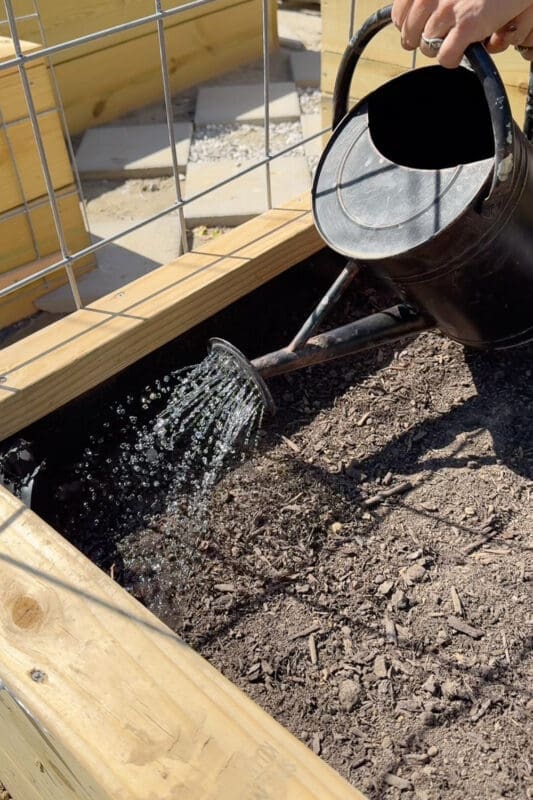
If you want all my best tips for actually getting your seeds and seedlings to thrive, I put everything I’ve learned into one post. You can check out my best planting tips right here. It’s the stuff I wish someone had told me when I started. How to Plant a Raised Bed Garden: My Best Tips
I’ll be updating this post with photos once my cucumbers are climbing all over the trellis, so check back to see it in its full leafy glory!
More DIY Projects From My Garden
This trellis is just one little piece of a much bigger project. We have put so much work into getting this whole garden space ready, from the raised beds to the greenhouse to the pathways to the planting, and it’s been a true labor of love (and a whole lot of sweat). If you want to follow along with the rest of the journey, here are some of my other garden posts you might love:
📌 Pin This Easy Garden Trellis for Later
Loving this project but not ready to build yet? Pin it so you can find it when you are! Just hover over the image below and click the Save button to add it to your favorite garden board.
Cattle Panel Garden Trellis FAQ
Pretty much anything that climbs! I’m growing cucumbers, but it’s perfect for peas, pole beans, squash, melons, gourds, and even climbing flowers like morning glories or sweet peas. If a plant likes to vine, it’ll be happy here.
A standard cattle panel is about 16 feet long and 50 inches wide, which is plenty to arch over a path between two beds. You’ll trim the width down to match your beds, but the 16-foot length is what gives you that tall, walk-through arch.
Yes! Cattle panel is seriously sturdy. For heavier fruit like melons, a lot of gardeners use little fabric slings to support them as they grow, but the panel itself can handle the weight just fine.
It’s widely used in vegetable gardens and is generally considered safe for growing food. It’s the same material lots of gardeners use for trellises, arches, and even raised-bed hoops.