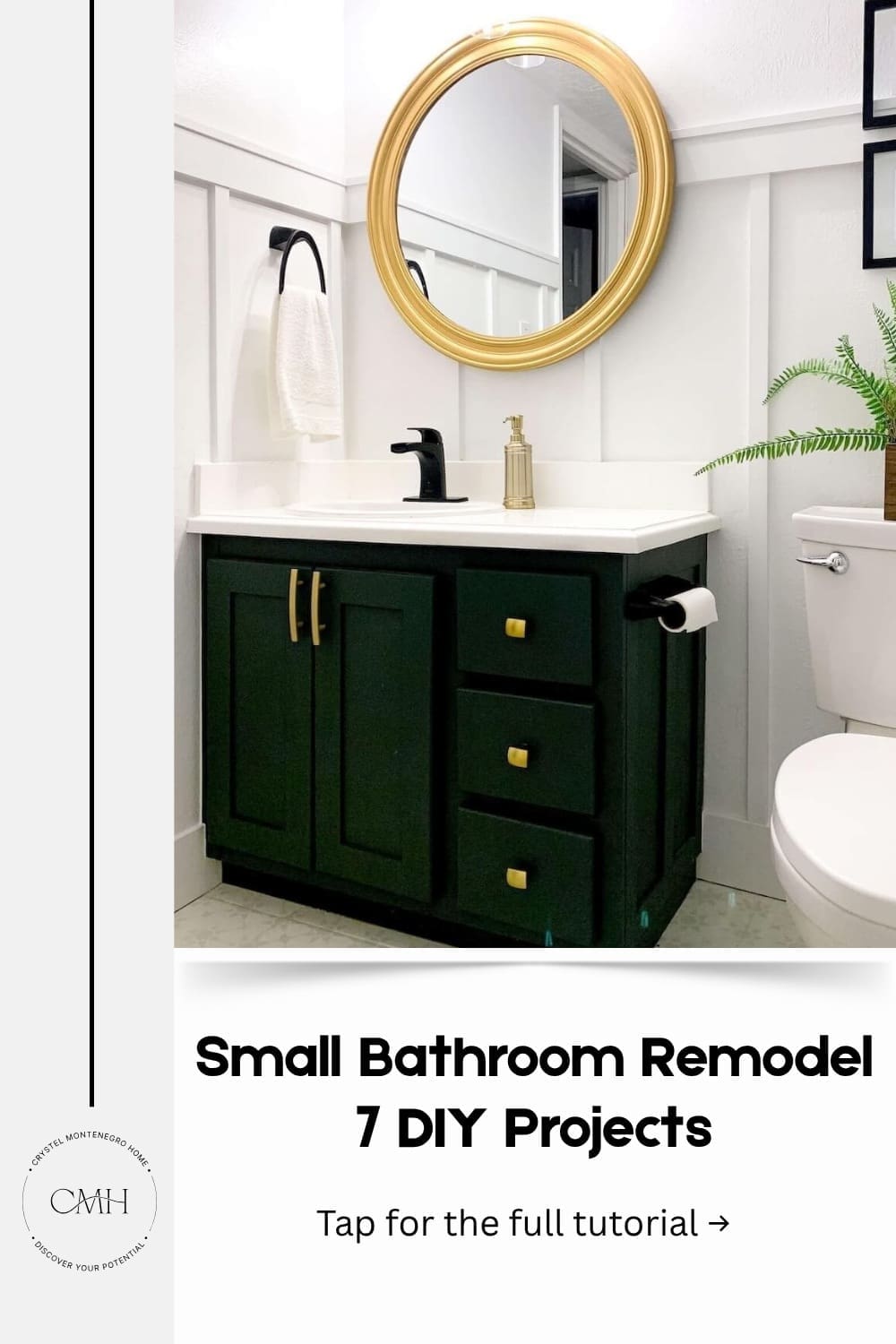
Small Bathroom Remodel: 7 DIY Projects


Updated July 13, 2026
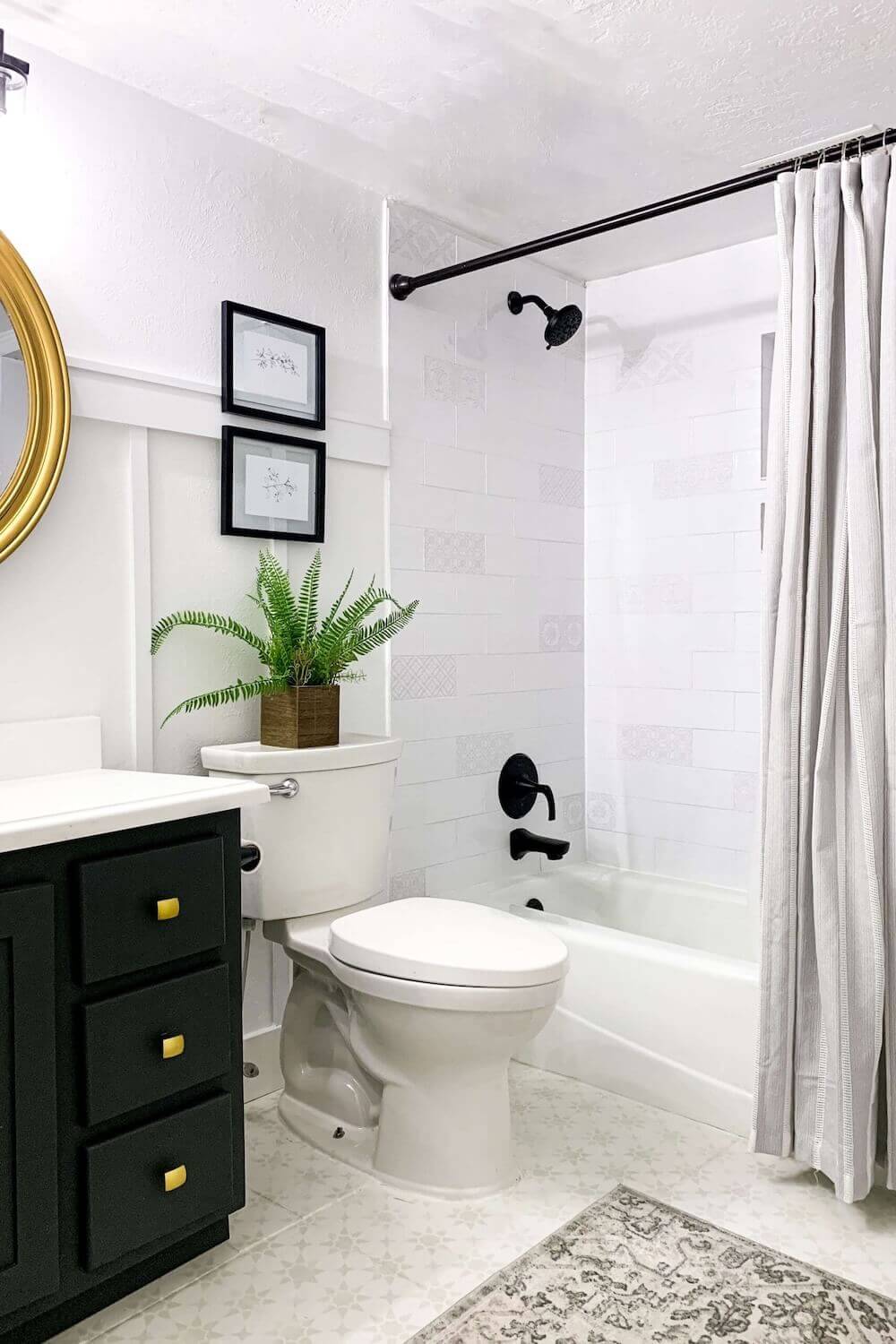
A small bathroom remodel doesn’t have to mean gutting everything down to the studs. In our basement bathroom, I kept the existing tub, vanity box, and overall layout, then tackled 7 weekend DIY projects that completely transformed the space: removing mold and rebuilding the shower, building a recessed shower niche, tiling the walls with classic white subway tile, painting and stenciling the floor, painting the vanity, transforming the mirror with Rub ‘n Buff, and adding board and batten to the walls. The result is a bright, modern bathroom that looks like a custom remodel without the contractor price tag.
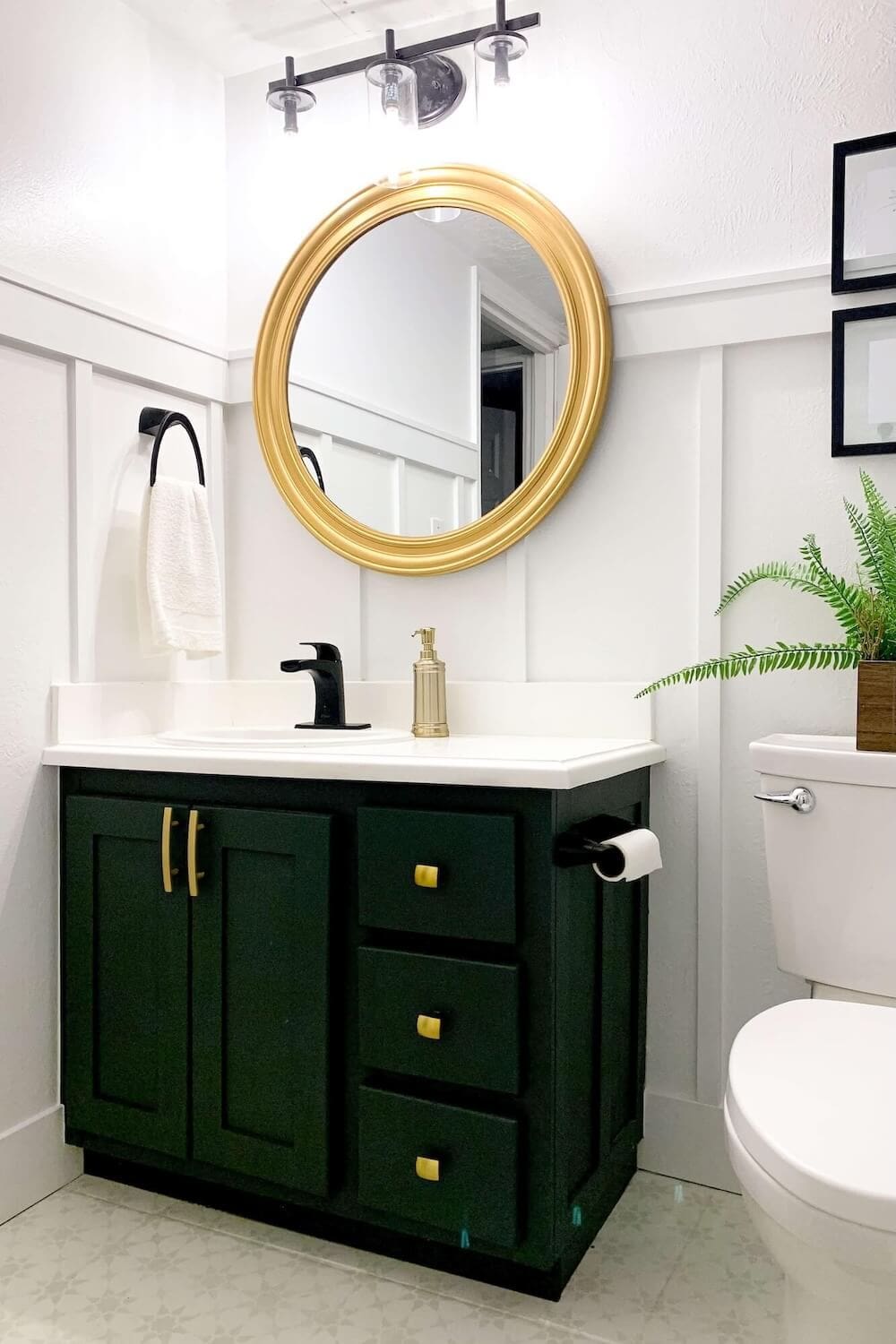
If you’re searching for a real DIY small bathroom remodel you can actually copy, this is the playbook that got us there. Below, I’ll walk you through every project step by step, with full tutorial links to each spoke post, plus the real cost-saving tradeoffs that let me skip a full demo and still end up with a bathroom I love. Whether you’re working with a small basement bathroom, a guest bath, or just a tight footprint, the same approach works: pick the projects with the biggest visual impact and skip what doesn’t need replacing.
Quick Answer: How do you plan a small bathroom remodel on a budget?
A DIY small bathroom remodel saves the most money when you keep the existing layout and plumbing, then focus on high-impact cosmetic projects: paint the vanity, paint or tile the floor, swap out hardware, refresh the mirror, and add wall treatments like board and batten. Skip the demo, skip the new fixtures, and DIY the labor – that combination cuts contractor costs by 60-70% on most small bathrooms.
Watch the Full Small Bathroom Remodel
Table of Contents
- Quick Answer: How do you plan a small bathroom remodel on a budget?
- Watch the Full Small Bathroom Remodel
- Basement Bathroom Remodel: At a Glance
- Before: Small Basement Bathroom, Big Potential
- Step 1: Demo, Mold Removal & Shower Prep
- Step 2: Build a Recessed Shower Niche
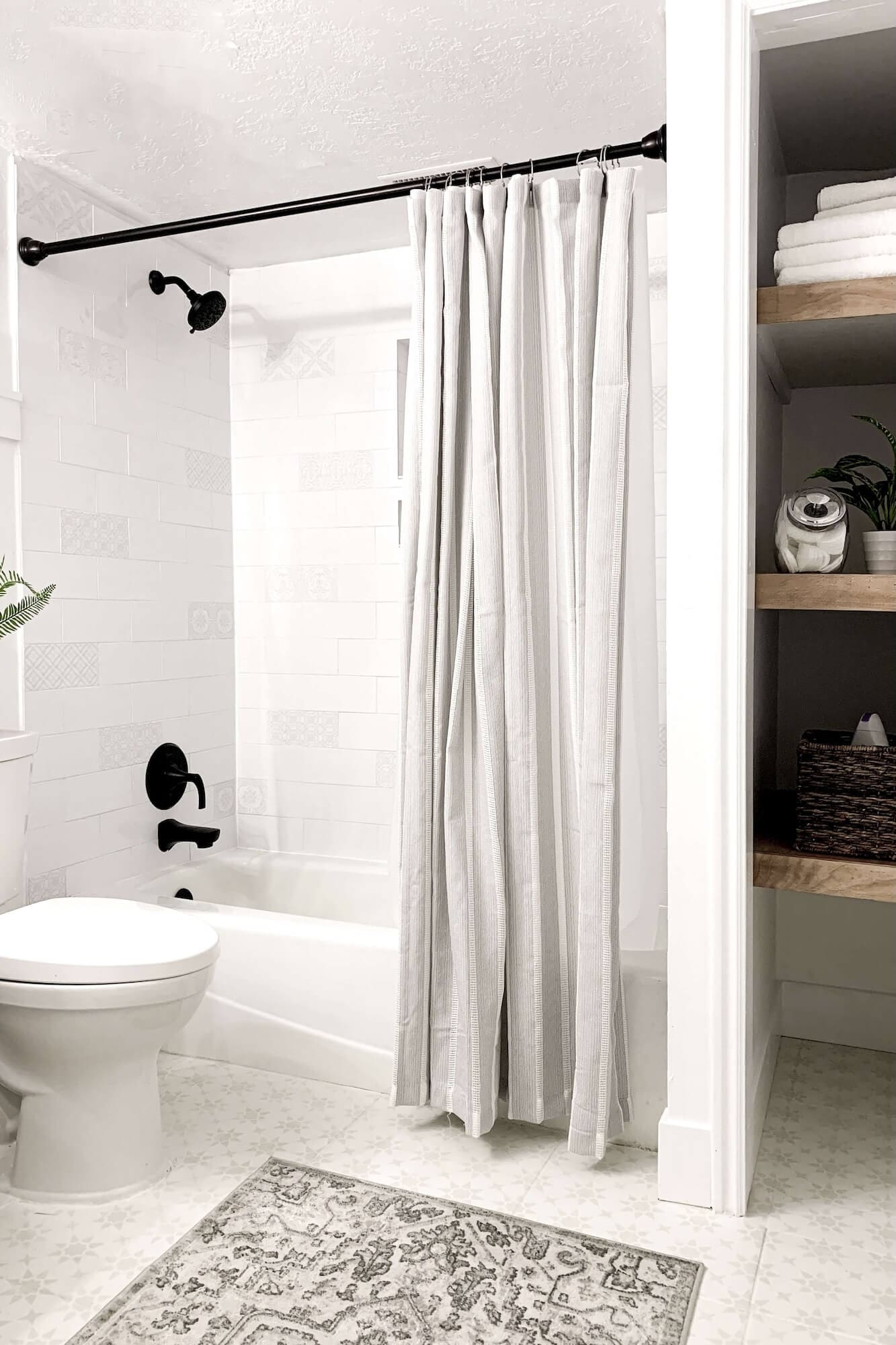
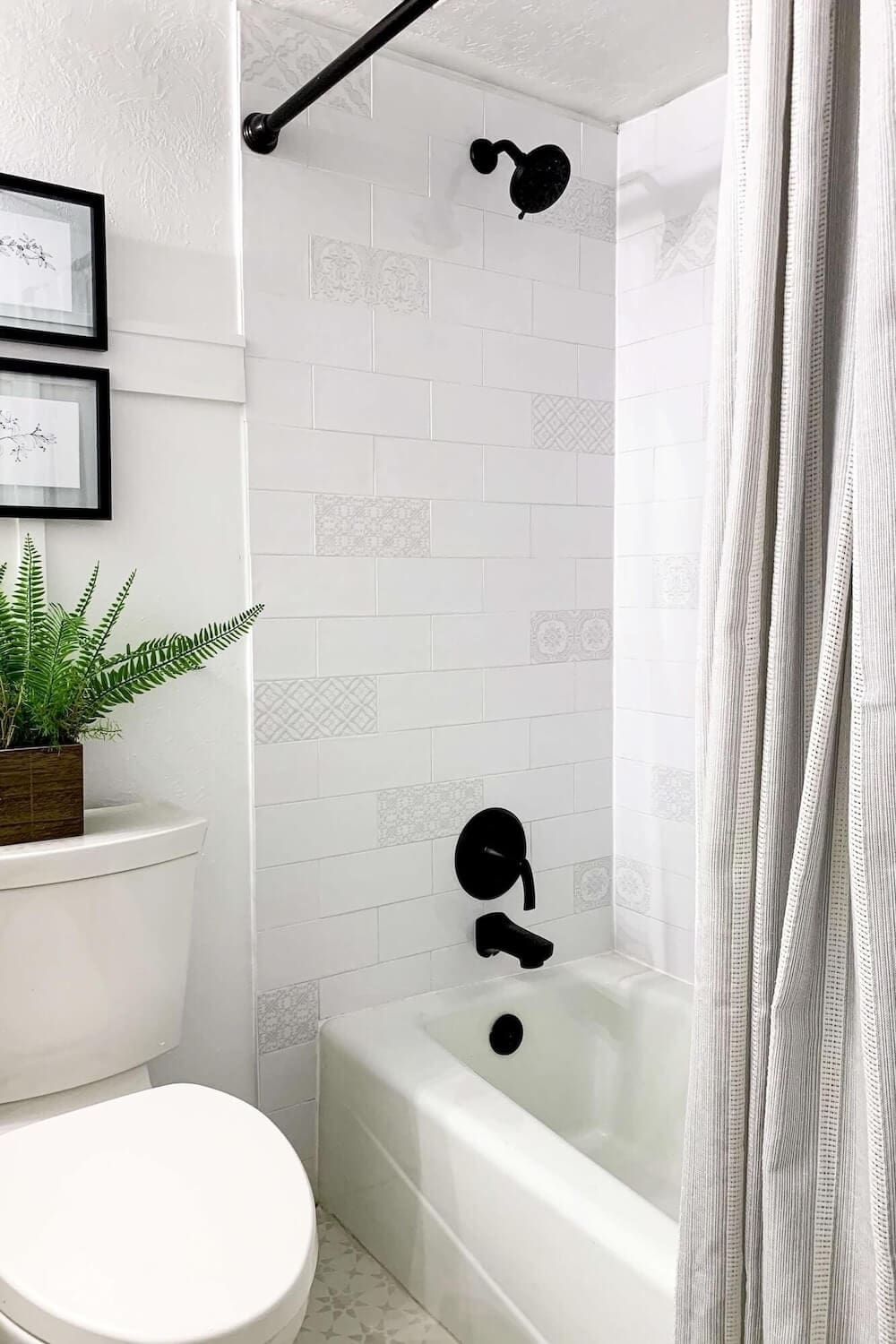
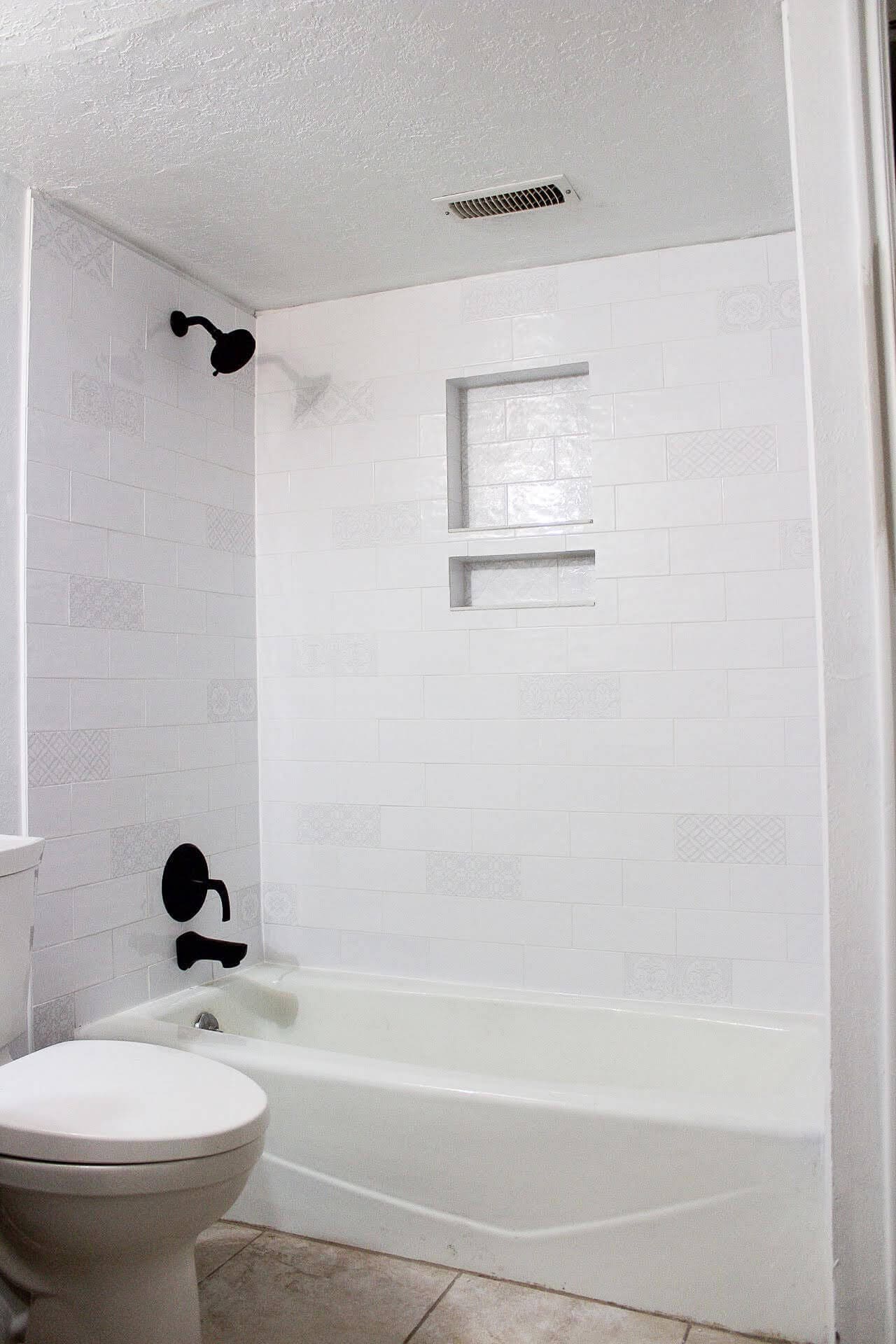
- Step 3: Tile the Shower Walls
- Step 4: Paint & Stencil the Bathroom Floor
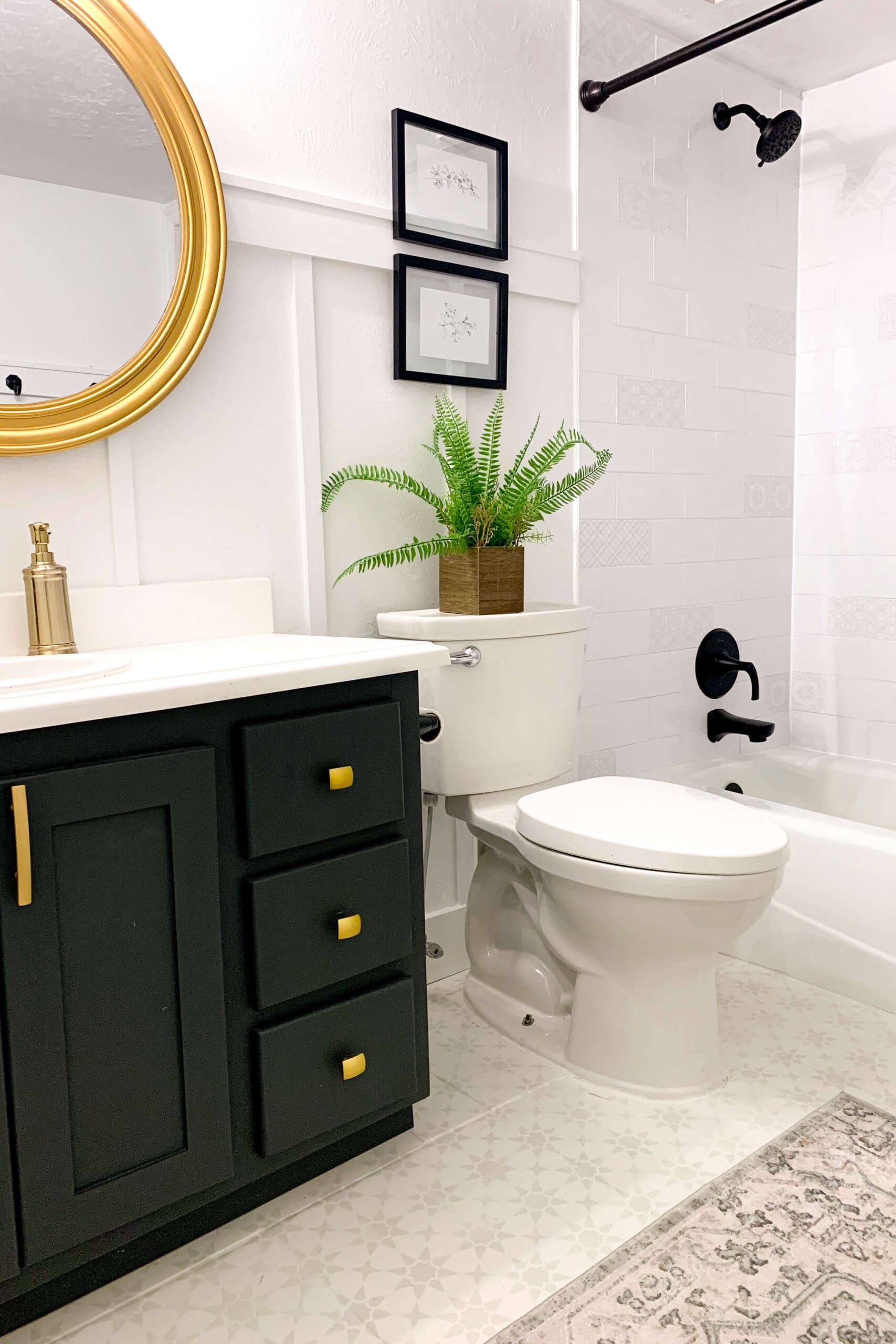
- Step 5: Paint the Vanity & Update Hardware
- Step 6: DIY Gold Bathroom Mirror
- Step 7: Board and Batten Bathroom Wall
- Optional: DIY Toilet Replacement
- Small Bathroom Remodel Ideas From This Space
- What a Small Bathroom Remodel Actually Costs (DIY vs. Contractor)
- Small Bathroom Remodel Timeline (Realistic Weekend Breakdown)
- Special Considerations for a Small Basement Bathroom Remodel
- What I’d Do Differently Next Time
- 📌 Save This Small Bathroom Remodel for Later
- FAQ About Small Bathroom Remodels
Basement Bathroom Remodel: At a Glance
Here’s the big-picture flow of this DIY small bathroom remodel so you can see how all the pieces fit together:
- Demo & Prep the Shower: Remove damaged tile and mold, clean and dry the framing, rebuild with cement board, and waterproof everything.
- Build a Shower Niche: Frame, pitch, and waterproof a recessed niche for storage.
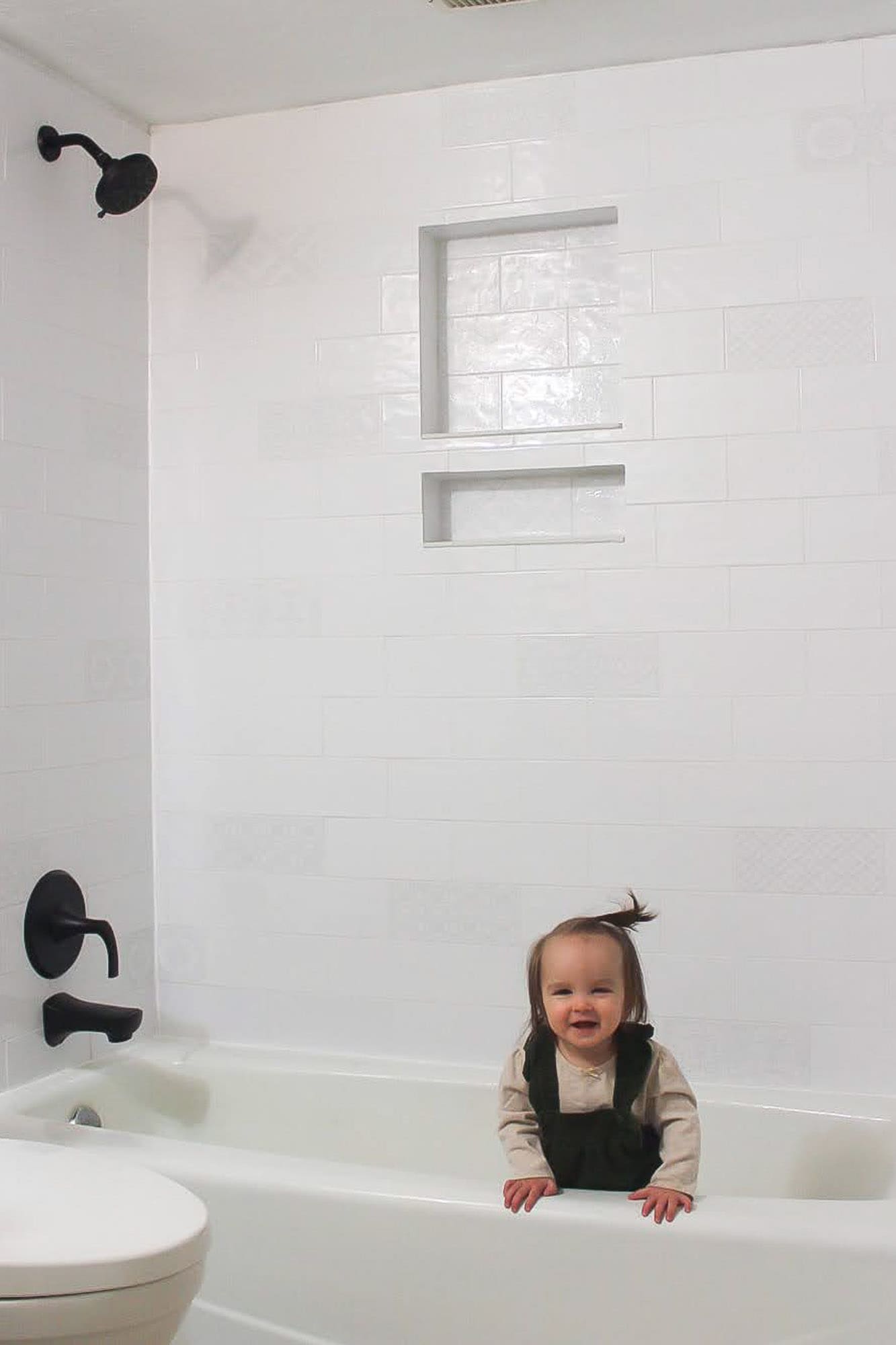
- Tile the Shower Walls: Install a white subway tile surround with a patterned niche and black fixtures.
- Paint & Stencil the Floor: Turn beige floor tile into a patterned, painted floor instead of replacing it.
- Paint the Vanity & Update Hardware: Keep the cabinet box, build new doors, and give it a bold, dark green finish with fresh hardware.
- Upgrade the Mirror to Gold: Transform a plain mirror into a warm gold focal point using a black base and Rub ’n Buff.
- Add Board and Batten: Wrap the room with a simple board and batten wall treatment and add hooks for storage.
- Optional: Replace the Toilet (in another bath, but same process): Swap in a new, more comfortable-height toilet with a simple DIY install.
Below I’ll walk through each step, with ideas + links you can follow if you want to dig into the detailed posts.
Before: Small Basement Bathroom, Big Potential
Before any of the pretty updates, this bathroom felt dark and dated. Beige walls, basic tile, a shower surround with a strange window, and a tired vanity all made the room feel dingy rather than cozy.
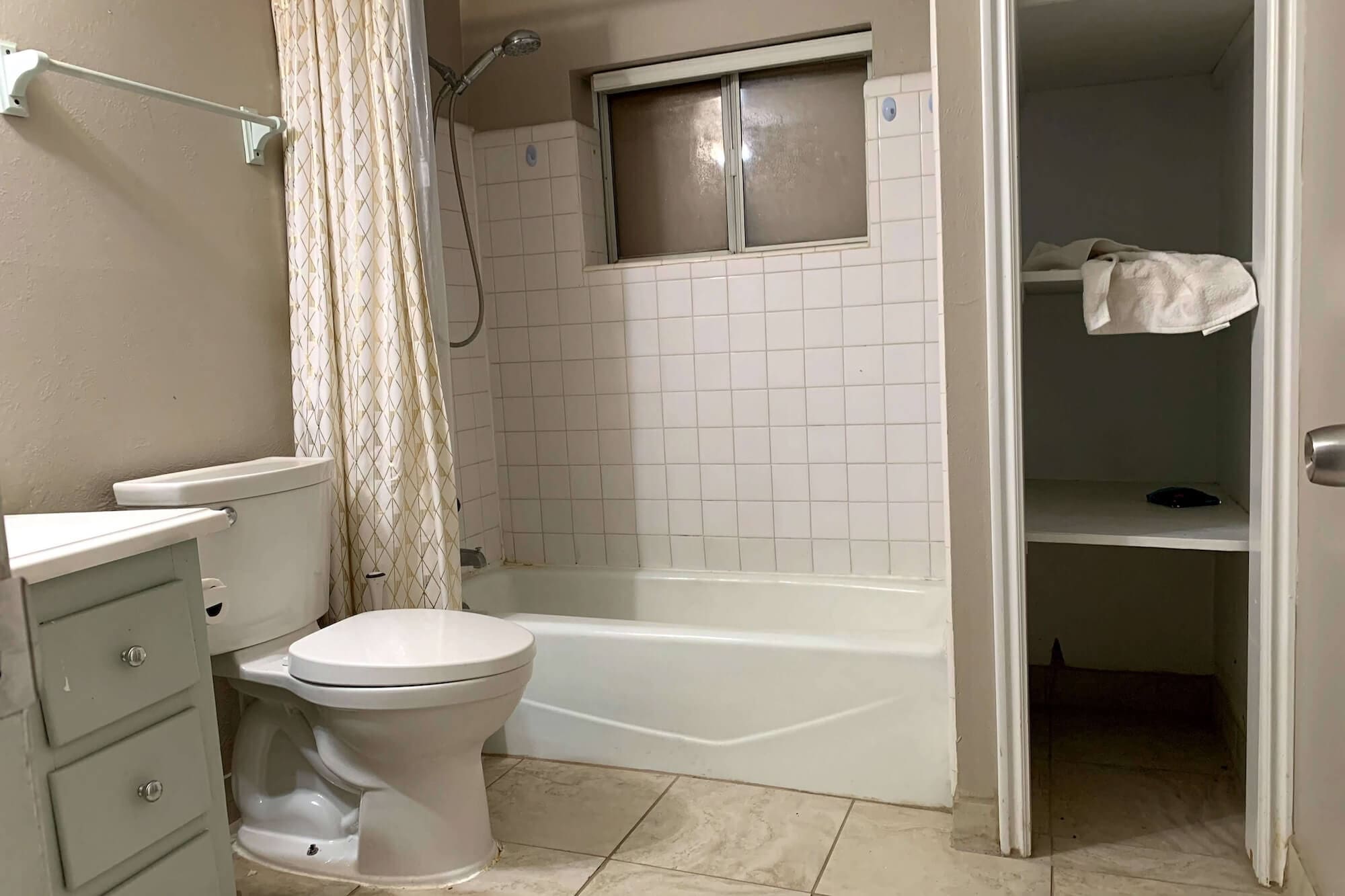
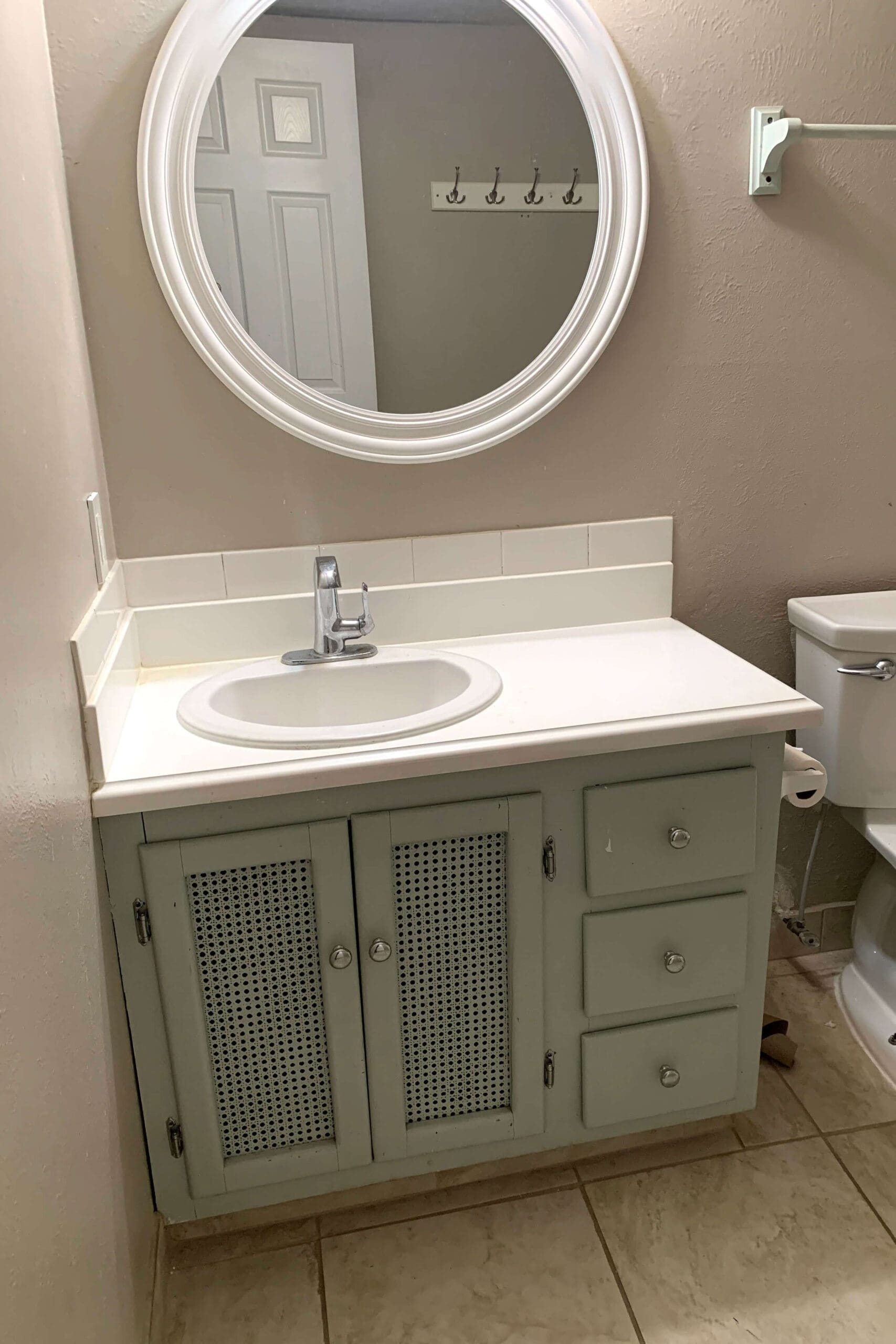
The vanity had a worn finish and doors that had clearly lived a hard life, and the floor tiles were a flat beige that did nothing for the space. The linen closet shelves were just thin white boards that looked like they belonged in a garage more than a bathroom.
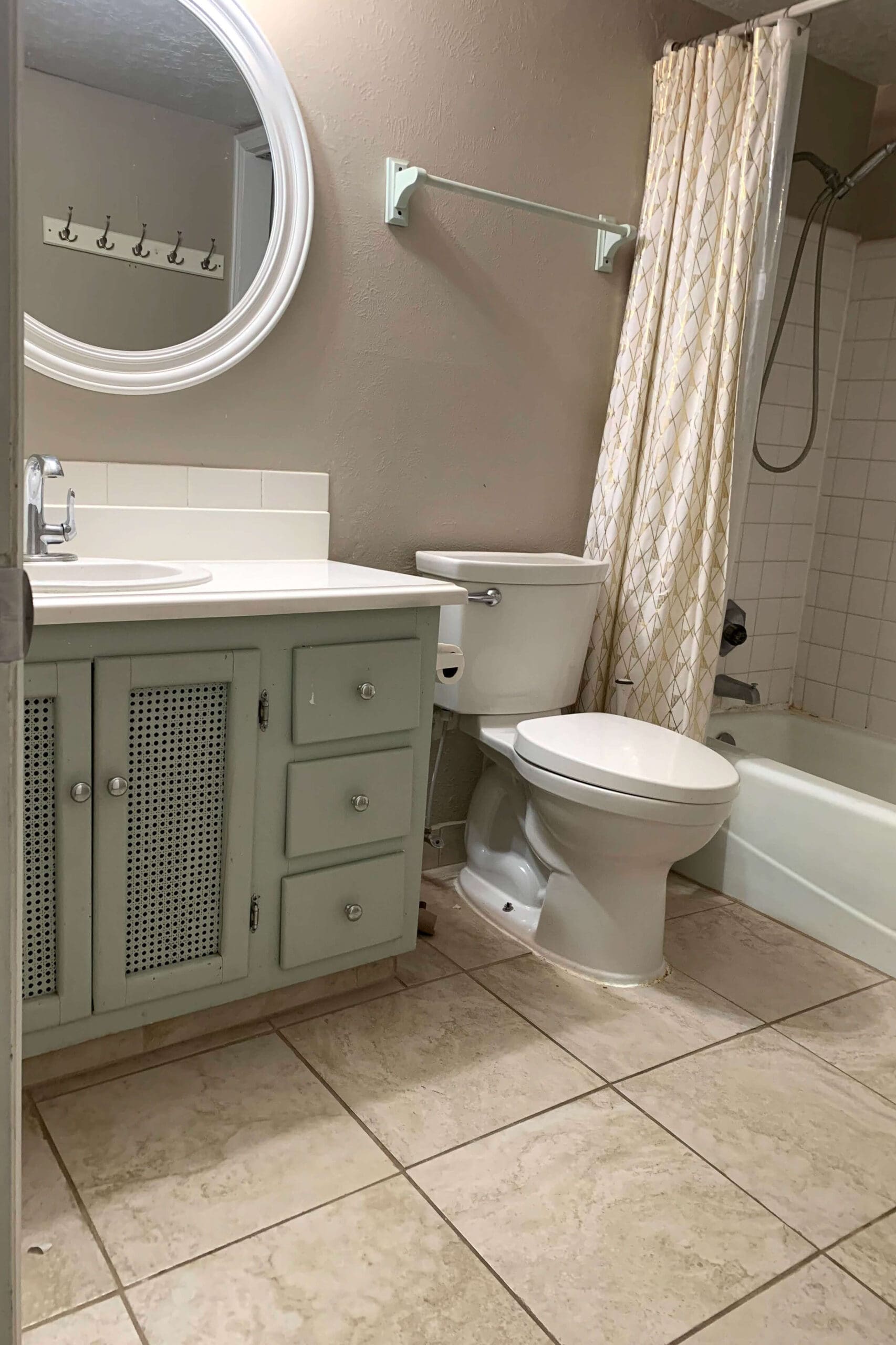
It was a true basement bathroom remodel project-usable, but not somewhere you’d be excited to get ready every morning.
Step 1: Demo, Mold Removal & Shower Prep
For the full step-by-step demo, mold removal, and waterproofing process I used in this shower, see How to Get Rid of Mold in a Shower + Prep the Walls for Tile.
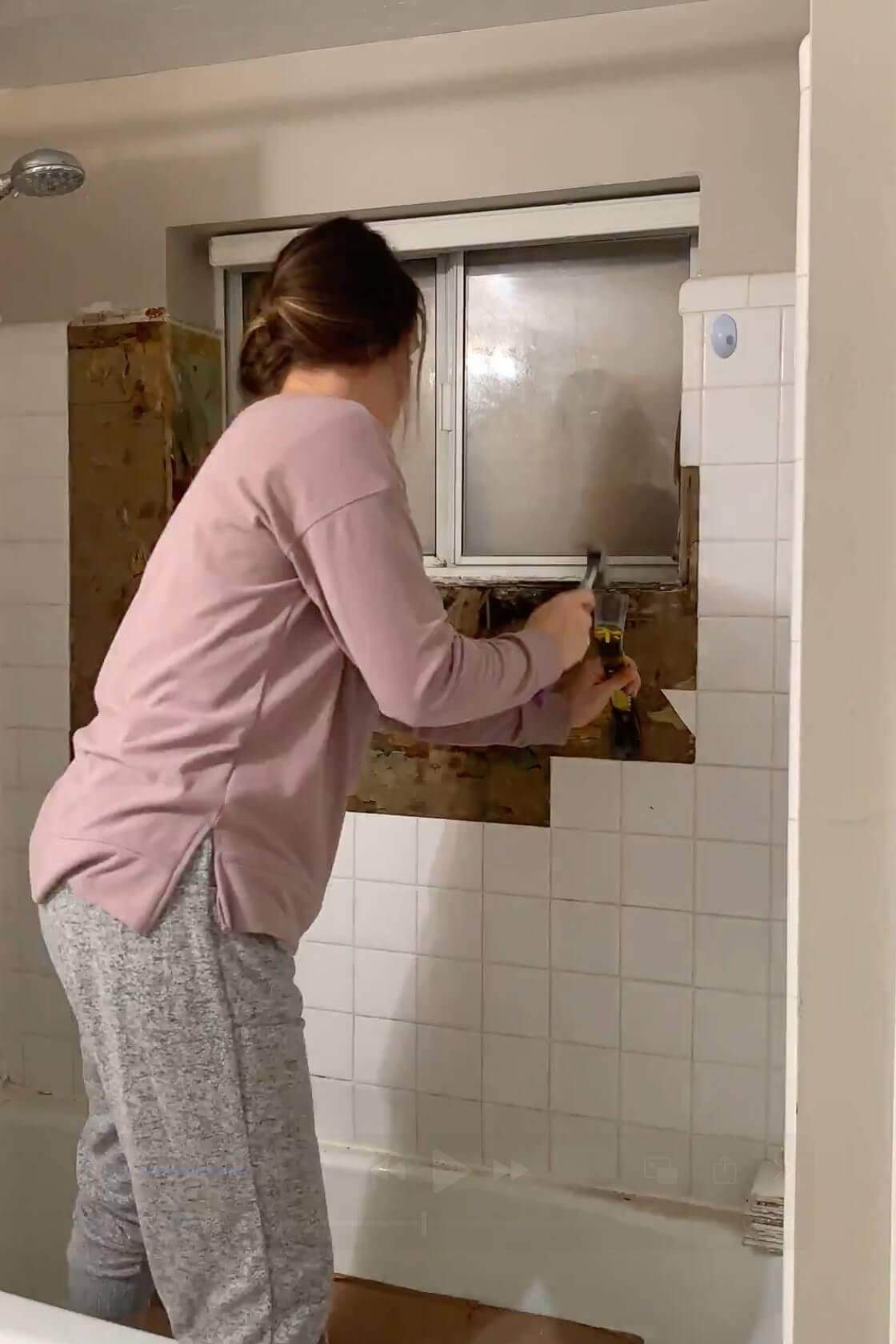
The first big job was getting rid of the failing shower surround and dealing with the mold behind the tile. This was not a “spray it with bleach and move on” situation-it was a full demo and rebuild.
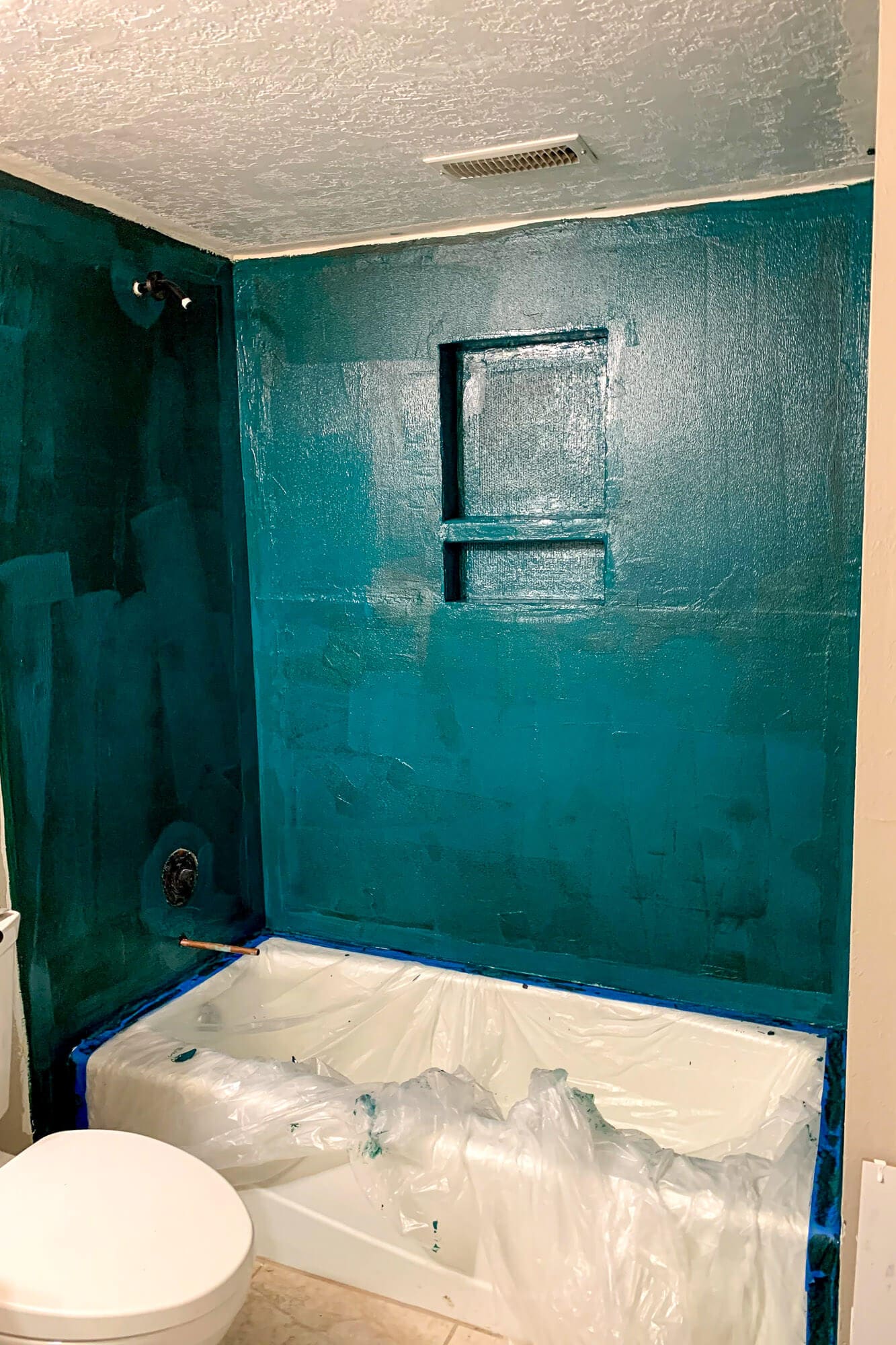
- Removed the old tile and wet greenboard (the tile was practically falling off, which is a big clue there was moisture behind it).
- Bagged all debris in contractor bags to minimize dust and mold spores traveling through the house.
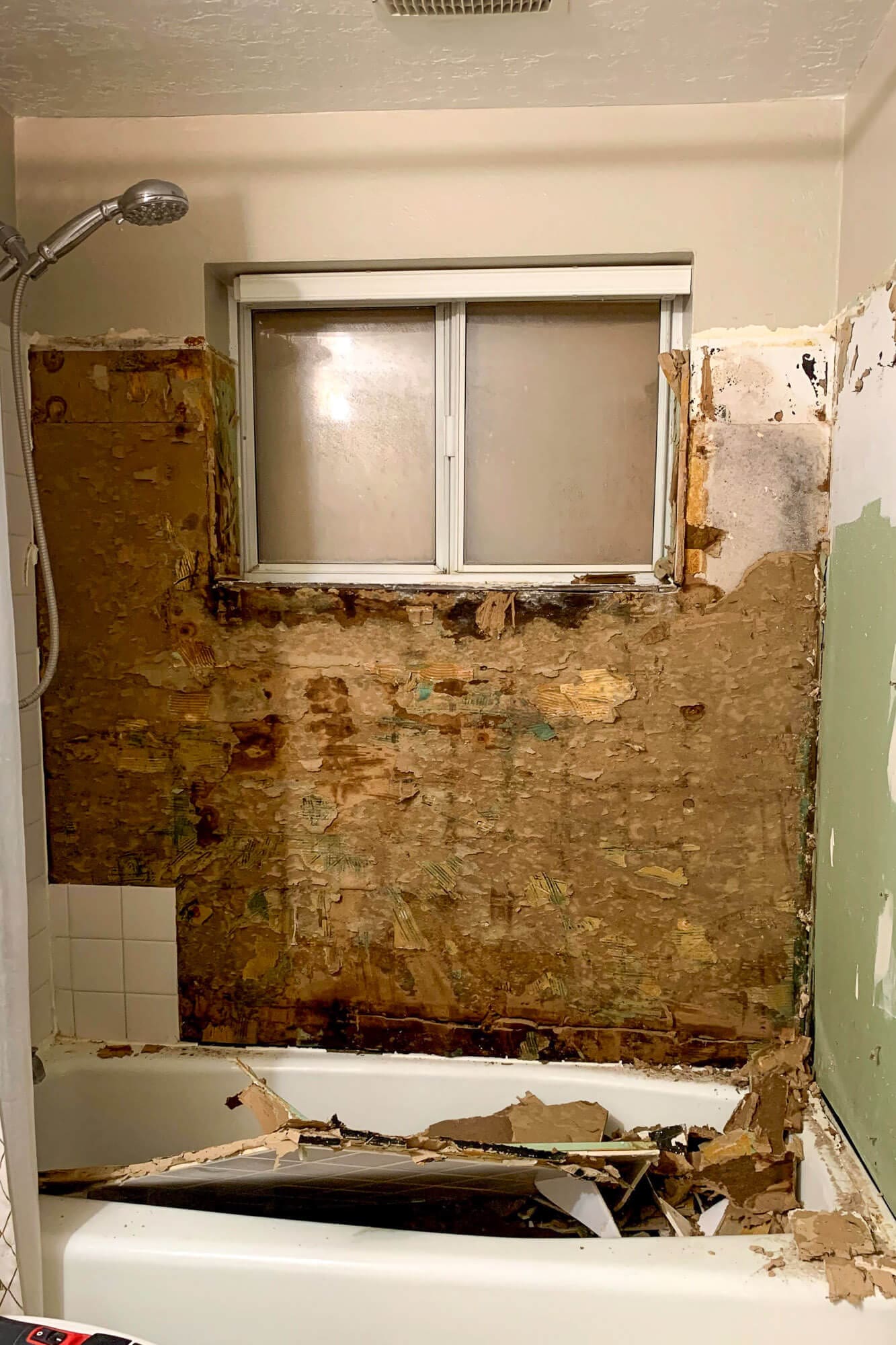
- Cleaned the open wall framing with mold cleaner, then followed up with warm water and white vinegar.
- Let the studs dry completely before rebuilding-this took at least a full day with good ventilation and fans running.
Once everything was dry, I installed ½” cement board instead of greenboard, added blocking where seams didn’t land on studs, taped seams with alkali-resistant mesh, and skimmed them with thinset. Then I rolled on two full coats of liquid waterproofing membrane over every inch of the surround.
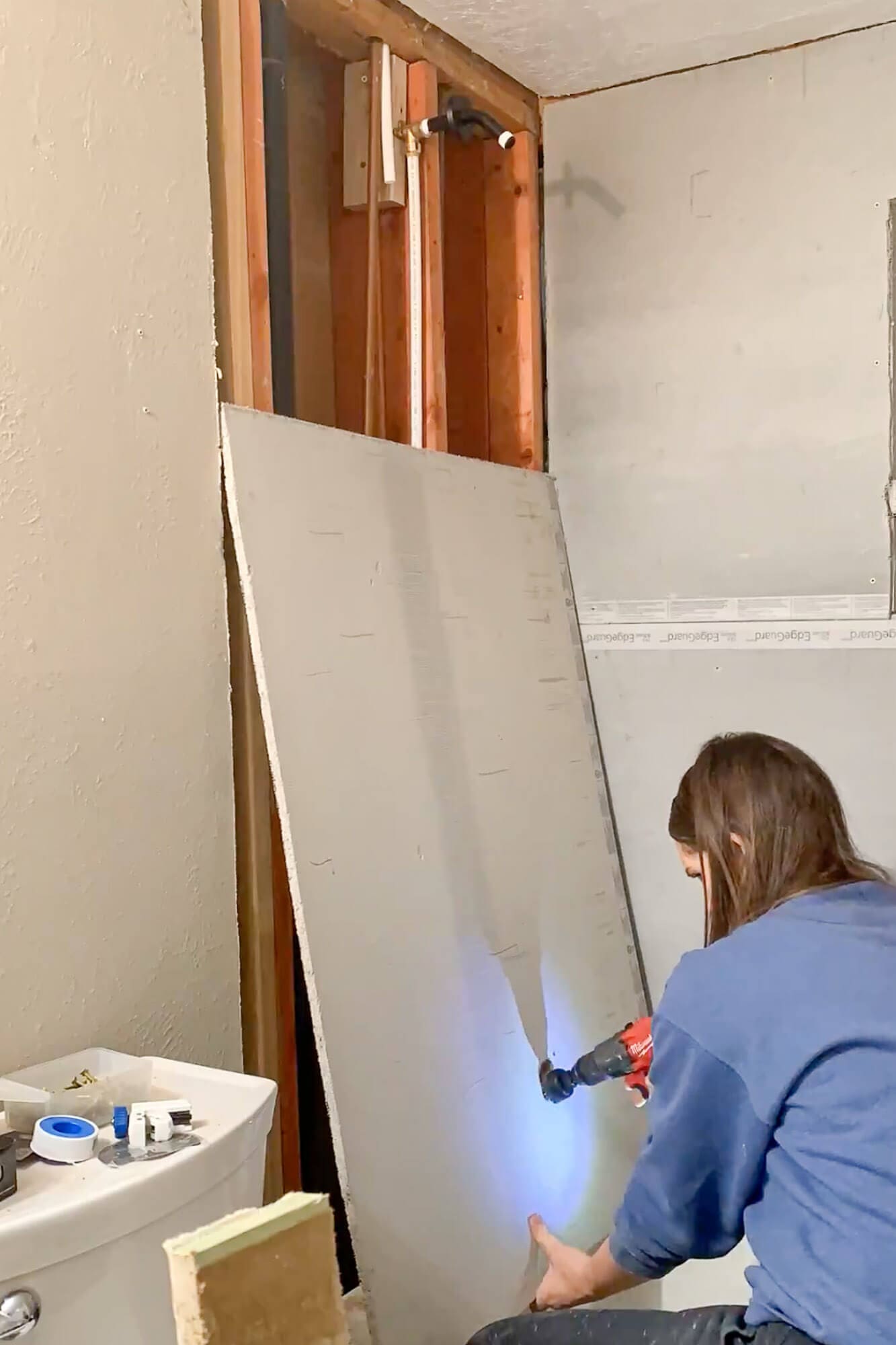
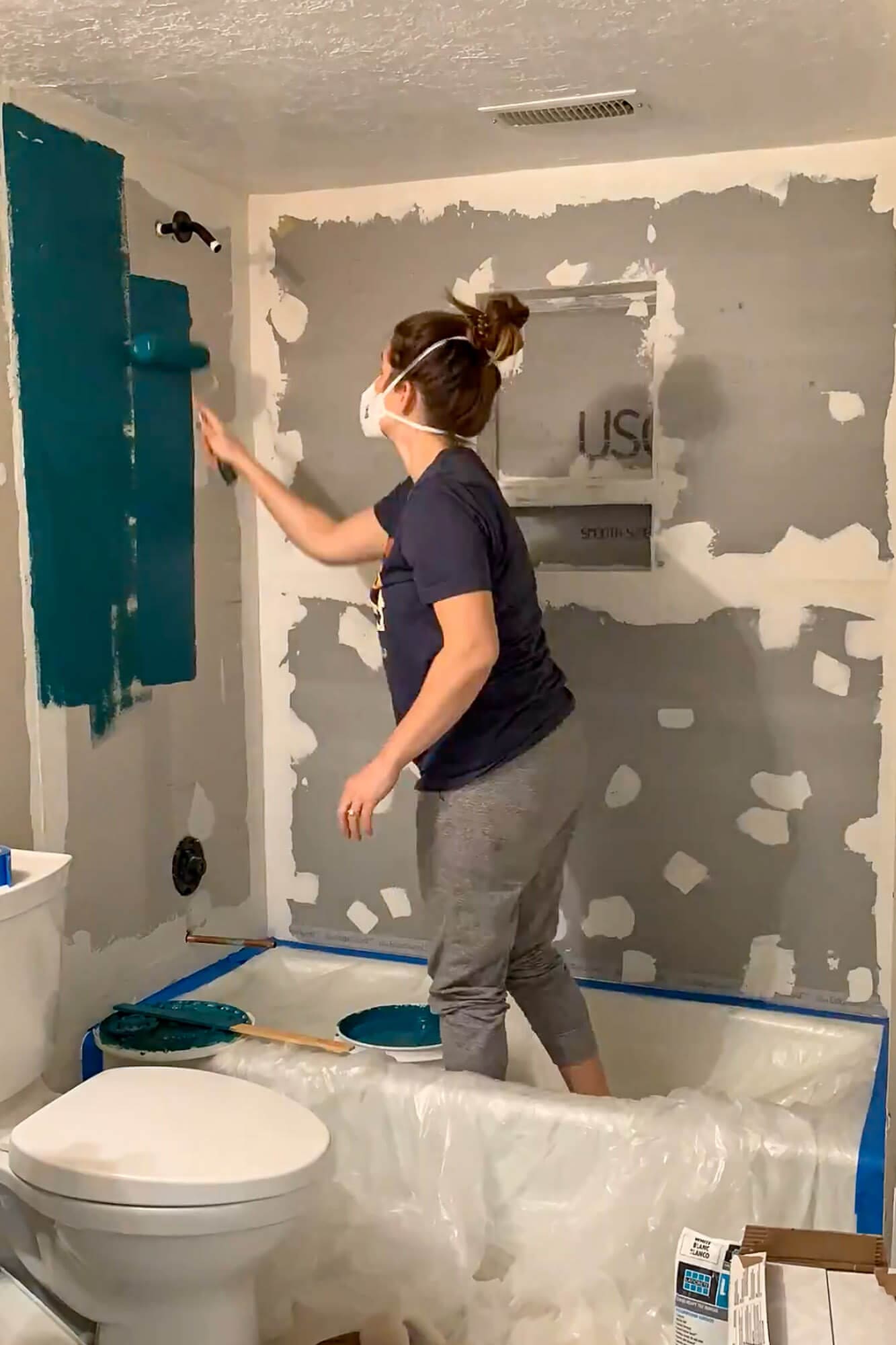
That gave me a solid, waterproof base for tile and set this small bathroom remodel on a budget up to last.
Safety note: I followed local code for waterproofing and used GFCI protection at the vanity.
Step 2: Build a Recessed Shower Niche
If you want to add the same built-in storage, you can follow my detailed niche build in How to Build a Shower Niche (Step-by-Step DIY Tutorial).
With the shower framing exposed, I took the opportunity to add a recessed shower niche-one of the most functional upgrades in any small bathroom.
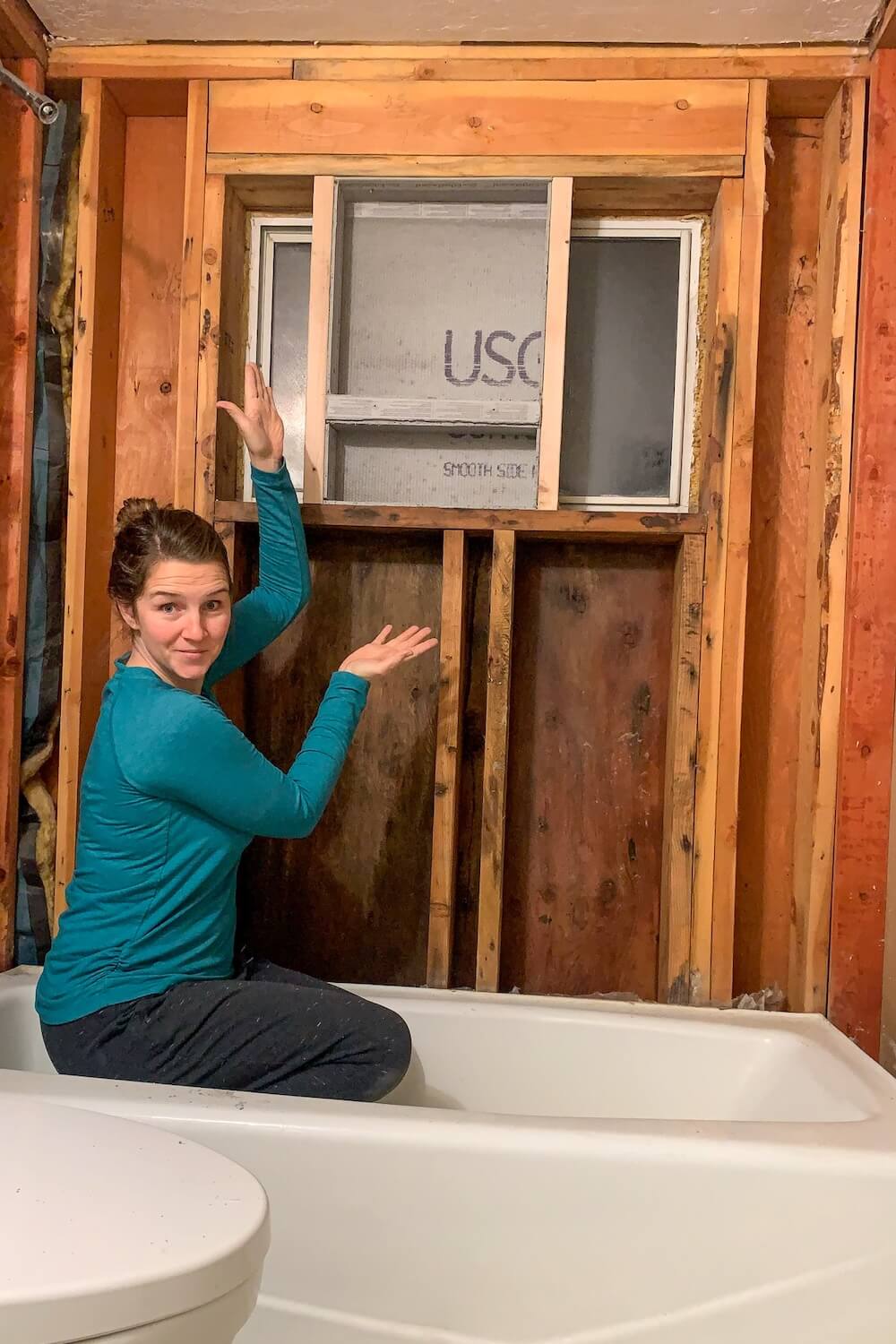
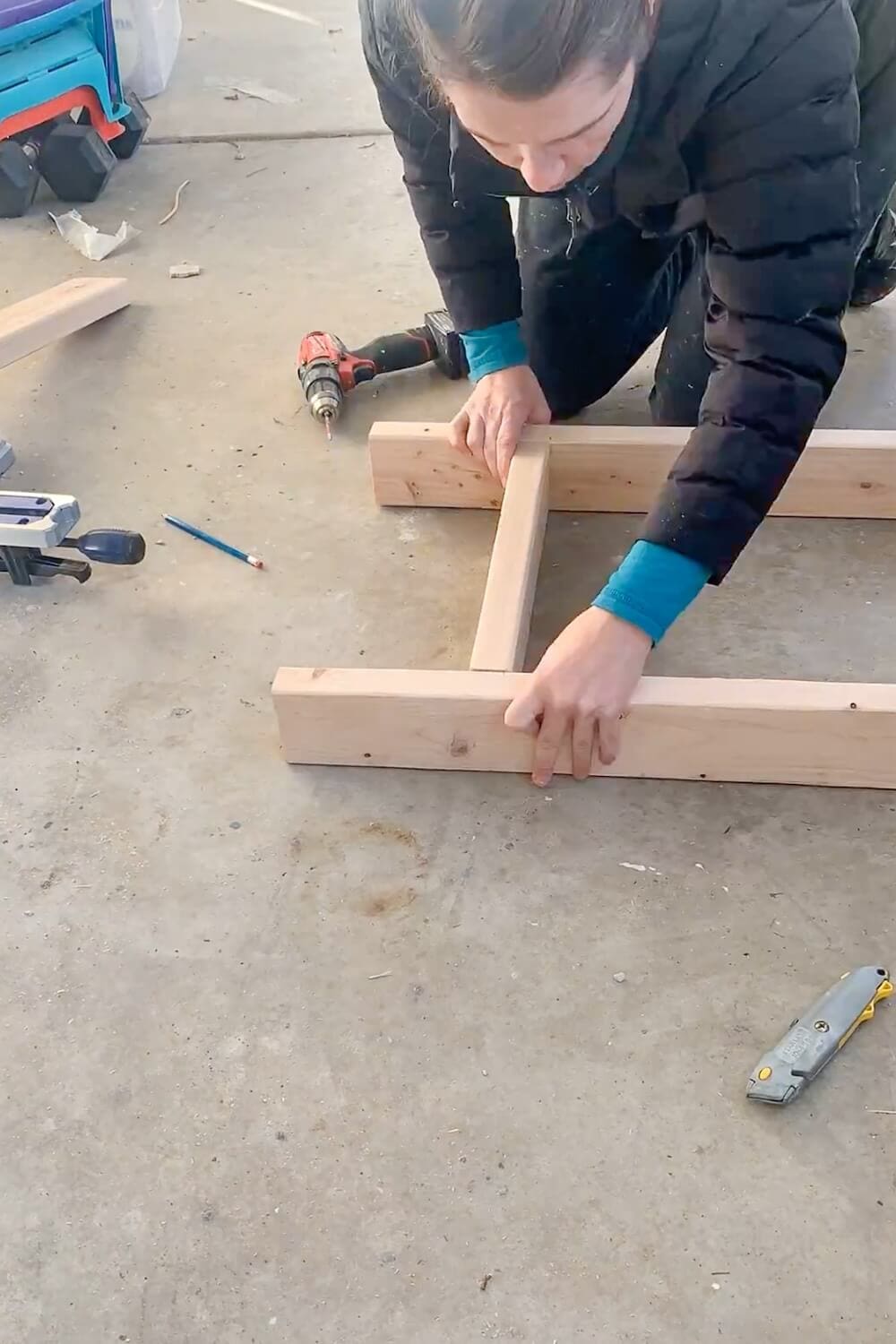
Key steps:
- Chose a niche height around chest level (roughly 42-48″ from the floor) and sized it based on our tallest bottles and tile layout.
- Framed a box between studs using 2×4s, then attached cement board to the back before installing it.
- Added a slight pitch (1-2°) to the bottom by shimming the front edge so water would drain out instead of pooling.
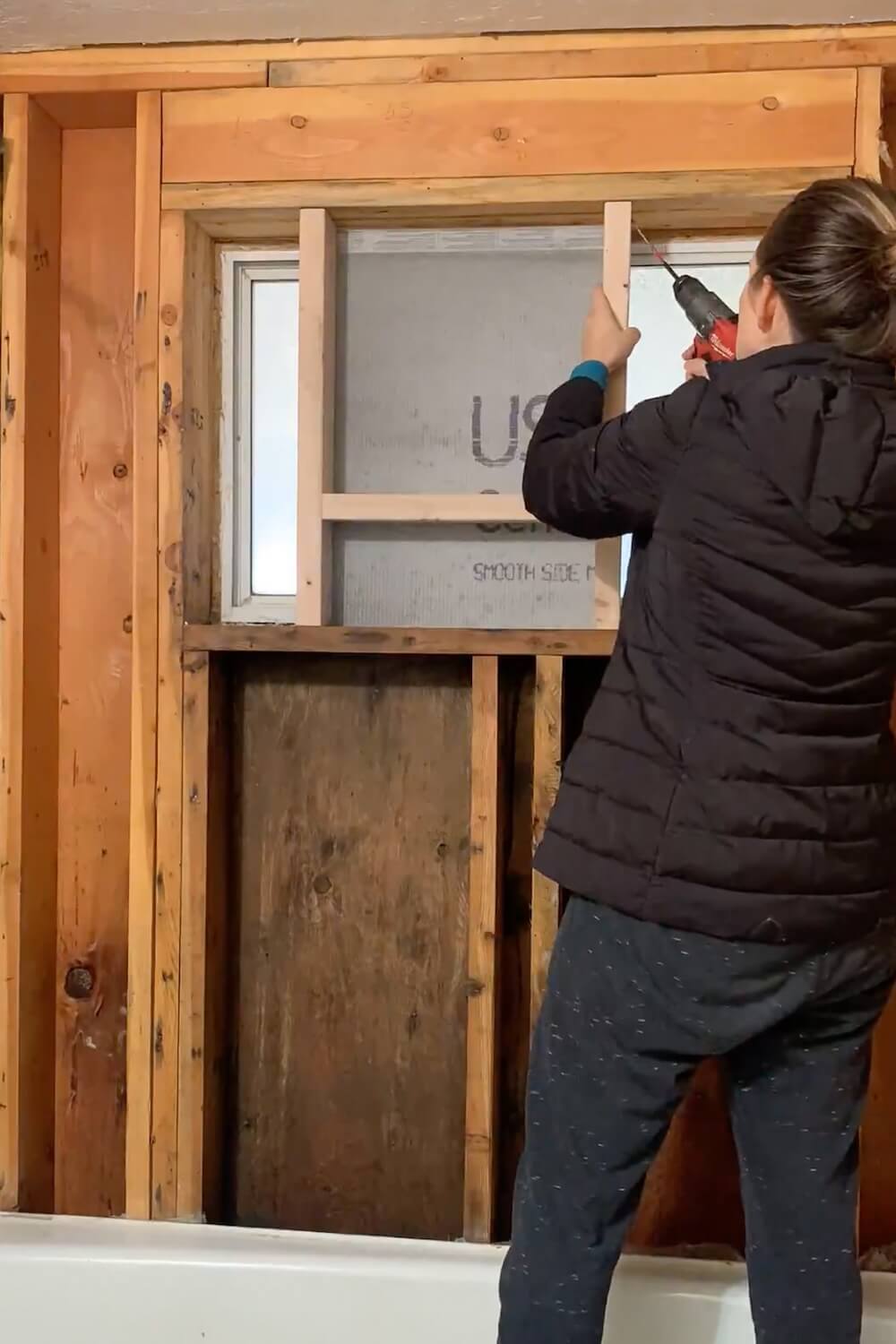
- Secured the box between the studs, then wrapped cement board around the opening.
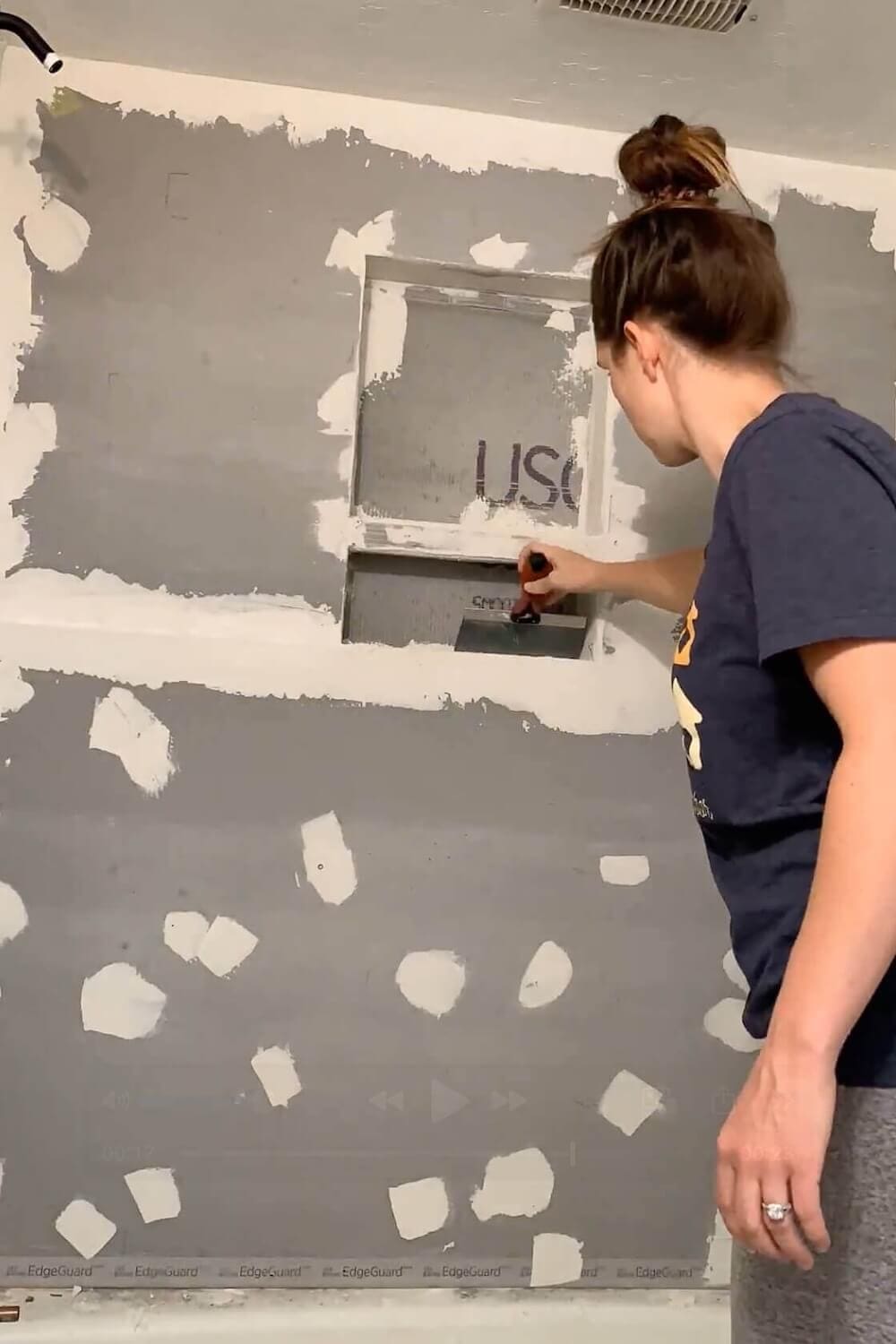
- Taped and thinset all seams and screw holes, then waterproofed the niche and surrounding wall with two coats of membrane.
This niche keeps bottles off the tub edge and instantly makes the shower feel more custom.
Step 3: Tile the Shower Walls
You can see every tiling step for this surround in my shower tutorial here: How to Tile a Shower Wall (Even If You’ve Never Done It Before).
Once the waterproofing cured, it was time for the fun part-tiling the shower.
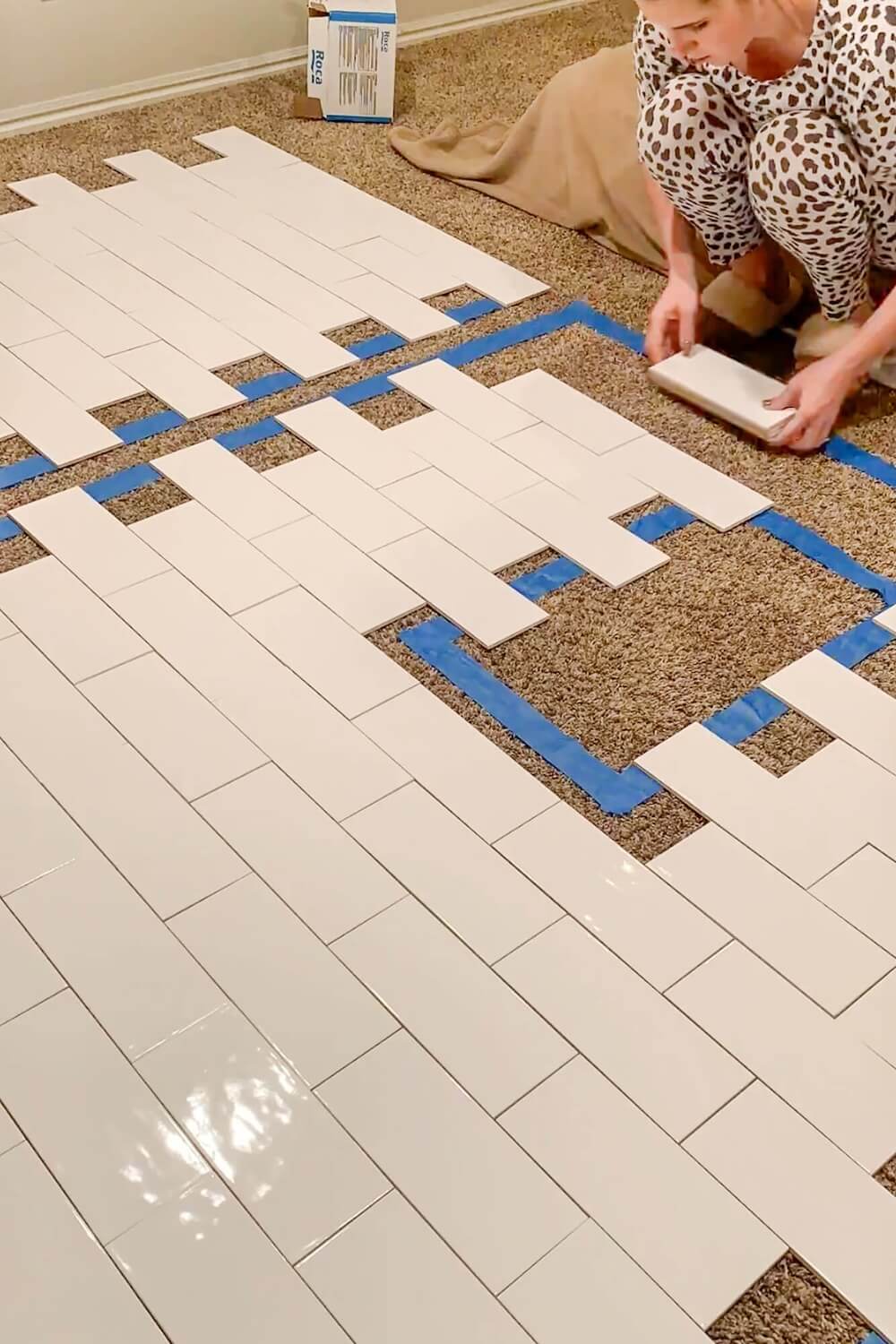
- Planned the tile layout on the floor first, taping out the shower width and “auditioning” where the patterned tiles would go so there were no awkward slivers at the corners.
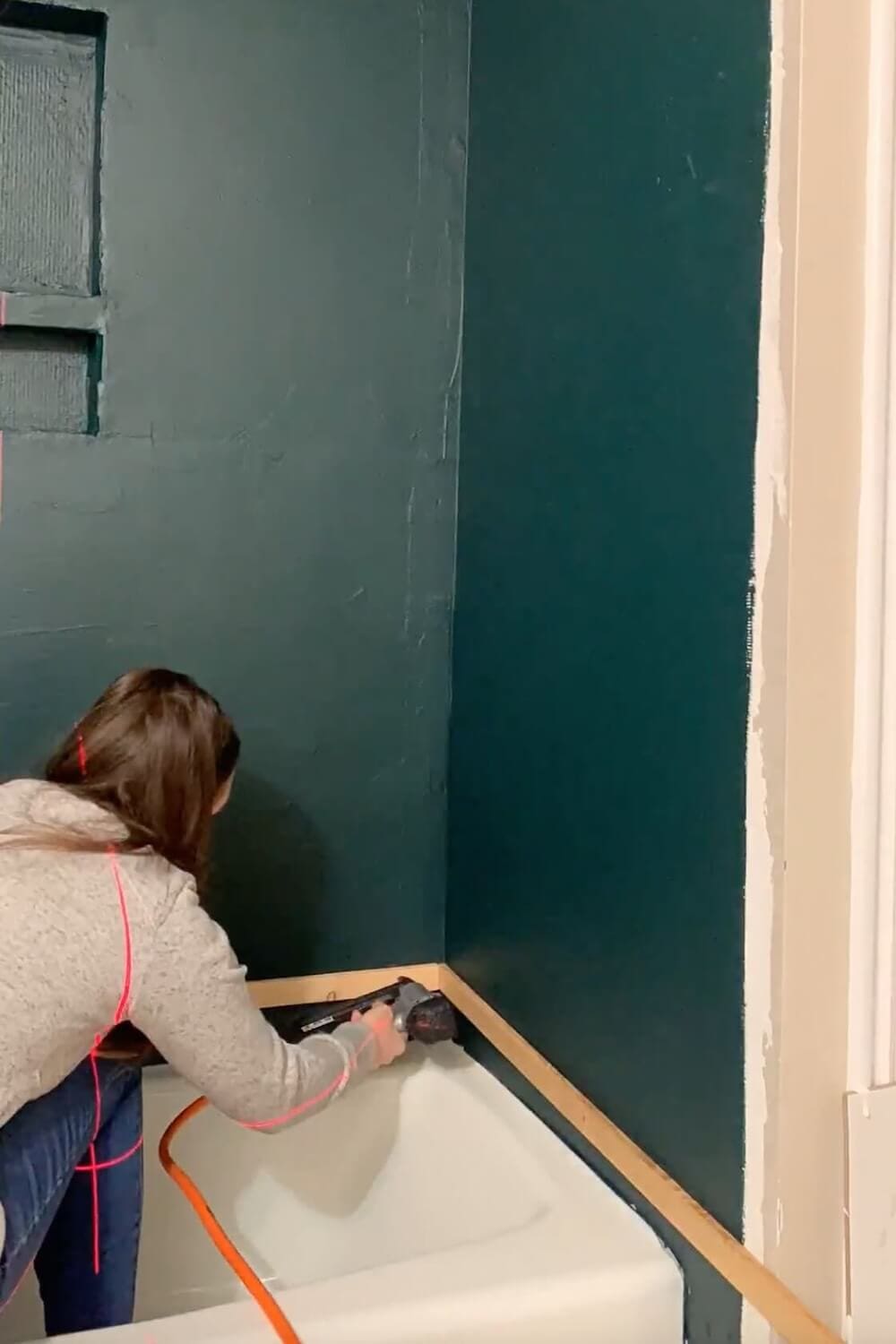
- Found the highest point on the tub and used a laser level to mark a line one full tile above it. I installed a ledger board along that line so the first row of tiles would be perfectly level even if the tub wasn’t.
- Installed metal edge trim on the two open vertical corners for a clean, finished edge.
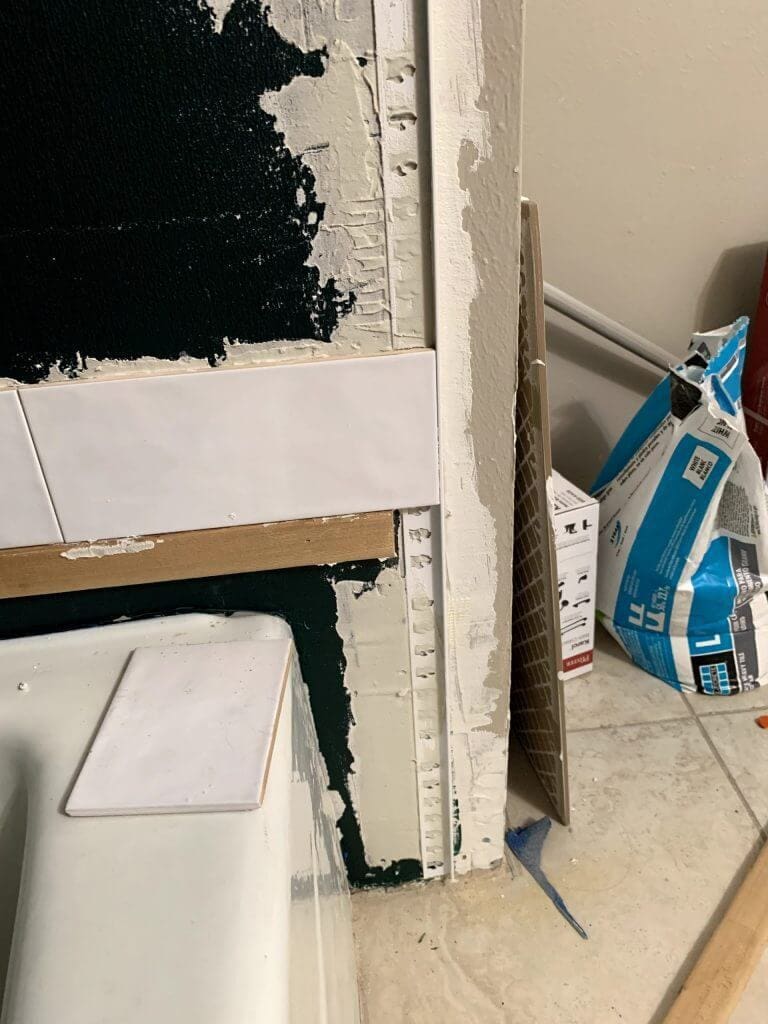
- Spread thinset on the wall with a notched trowel, back-buttered each tile, and pressed it into place with a small wiggle to collapse the ridges.
- Tiled around and inside the niche, aligning grout lines and wrapping the edge tiles into the opening for that “picture frame” look.
- Used spacers and a laser (or long level) as I worked up the wall so grout lines stayed straight.
- Grouted once the thinset cured, then finished with color-matched silicone in all inside corners and where tile meets the tub.
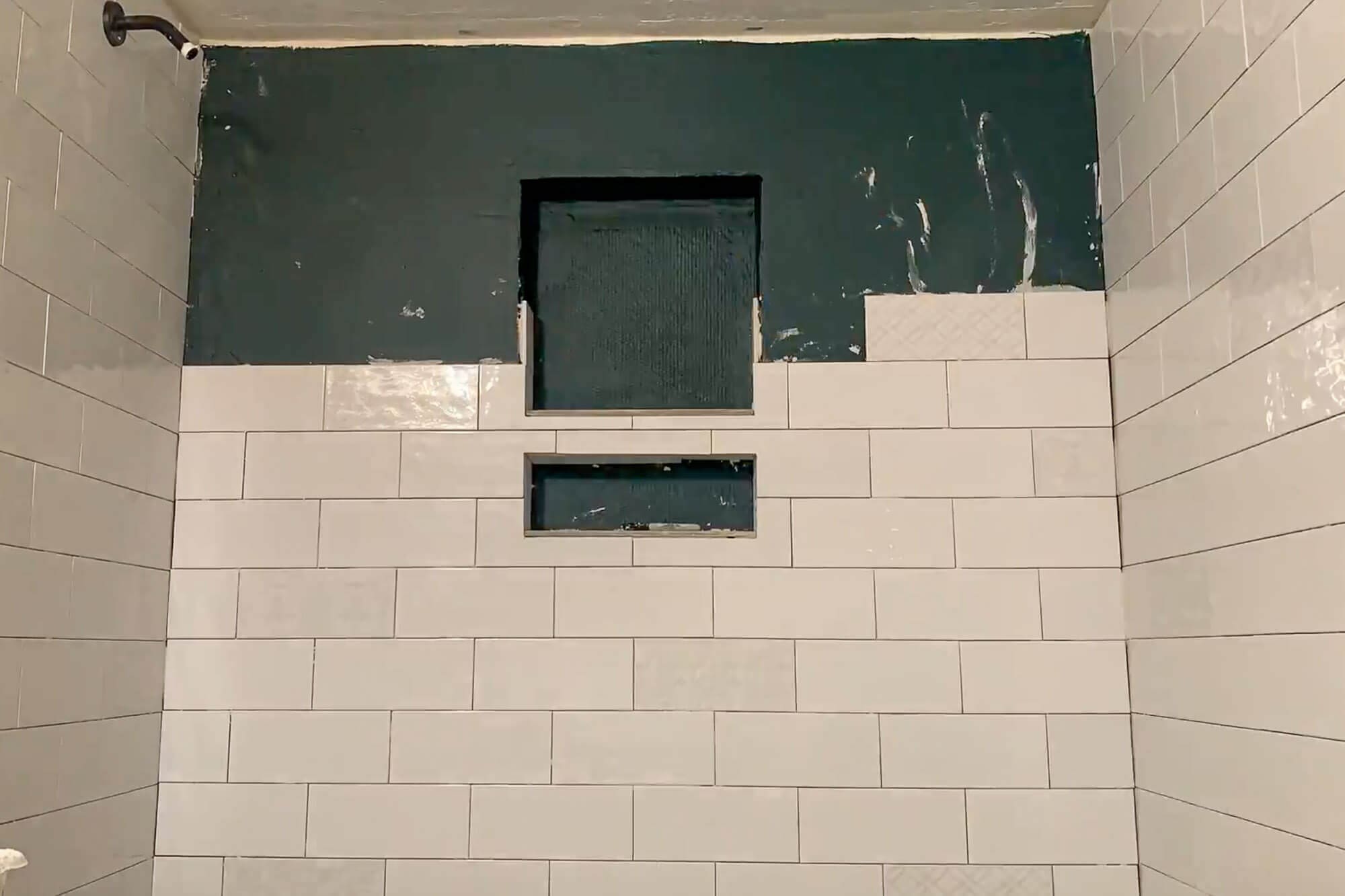
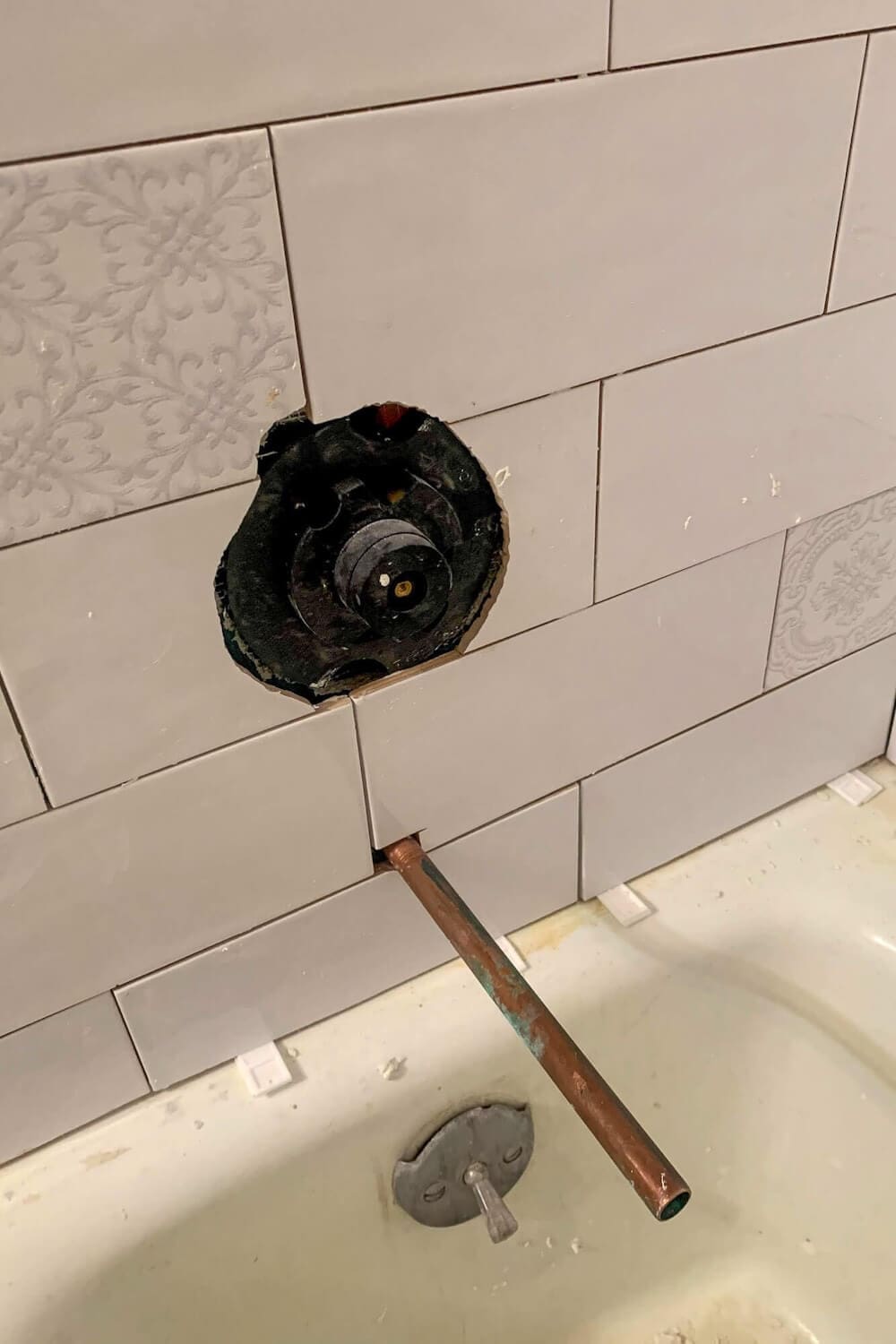
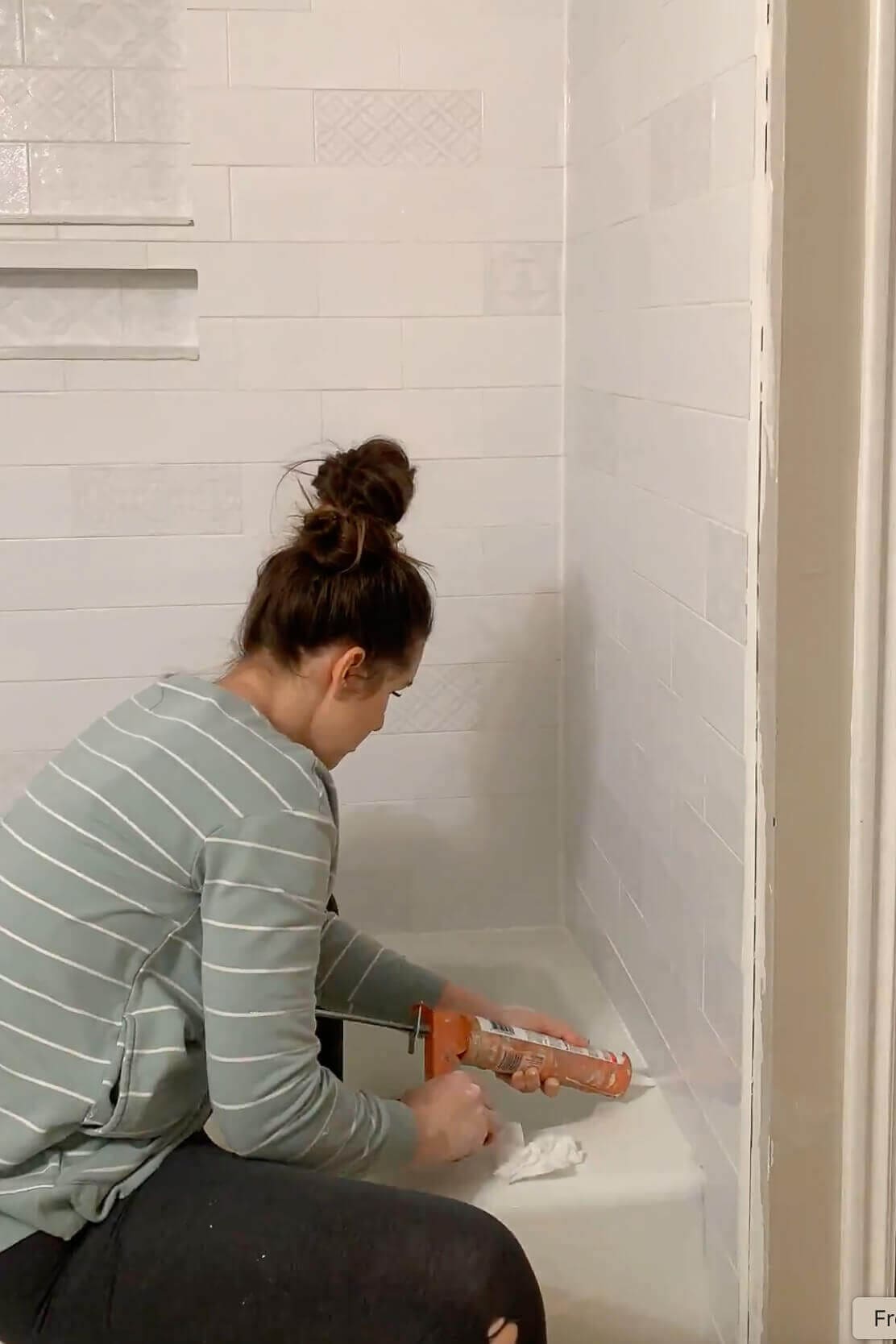
The finished shower is bright and classic, with just enough pattern in the niche to feel special. It really anchors this modern small bathroom remodel.
Step 4: Paint & Stencil the Bathroom Floor
For product details and exact steps for this painted pattern, head to Painting Bathroom Floor Tiles on a Budget.
Replacing the floor tile would have blown the budget, so I opted for a painted and stenciled tile floor instead.
The process looked like this:
- Removed the tile “baseboard” row to get a clean edge.
- Vacuumed thoroughly, then scrubbed with a heavy-duty degreaser to remove dirt, oils, and soap residue (this step is non-negotiable for adhesion).
- Rolled on a high-adhesion bonding primer rated for tile.
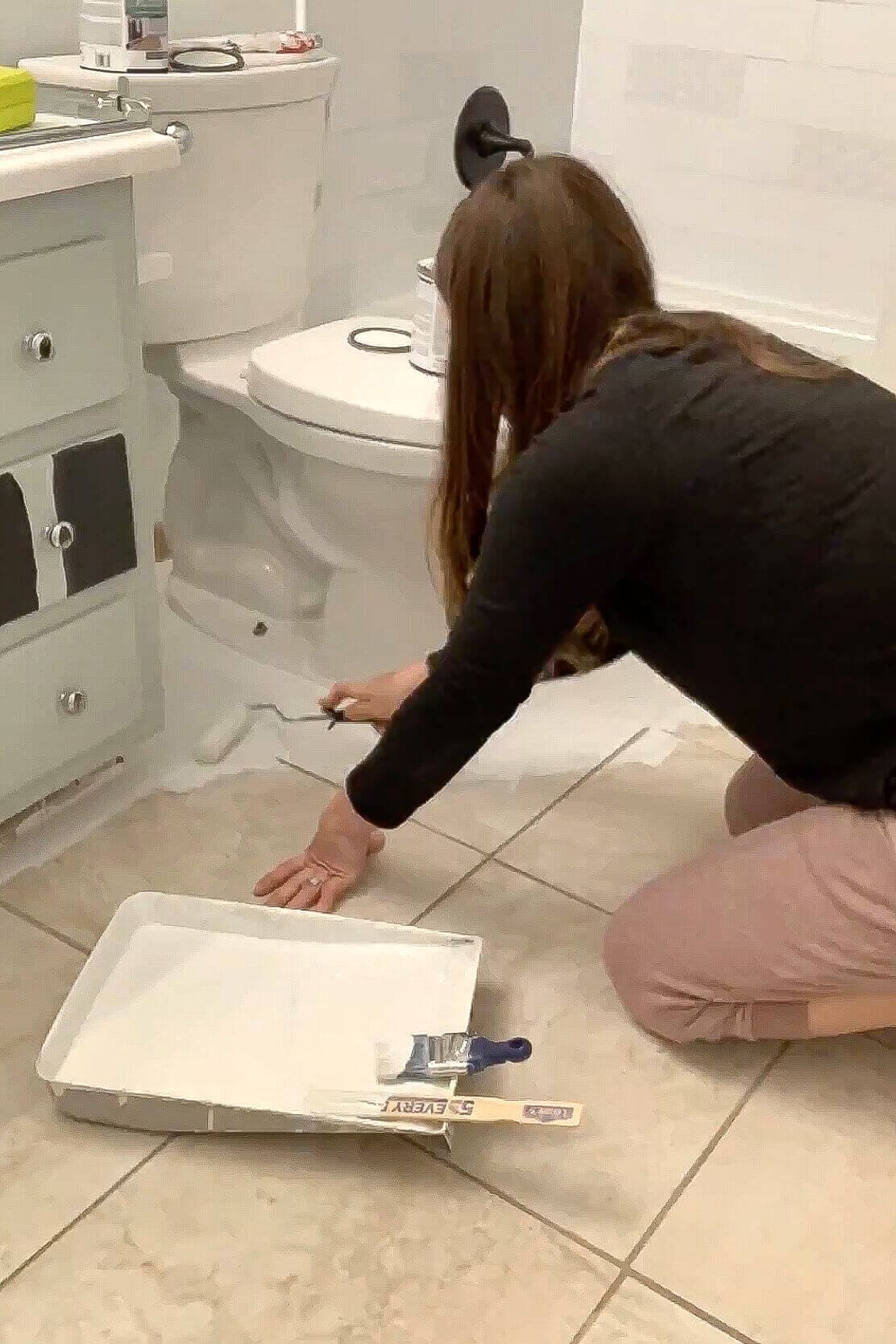
- Painted a solid warm-white base coat using an angled brush around edges and a foam roller for the main field.
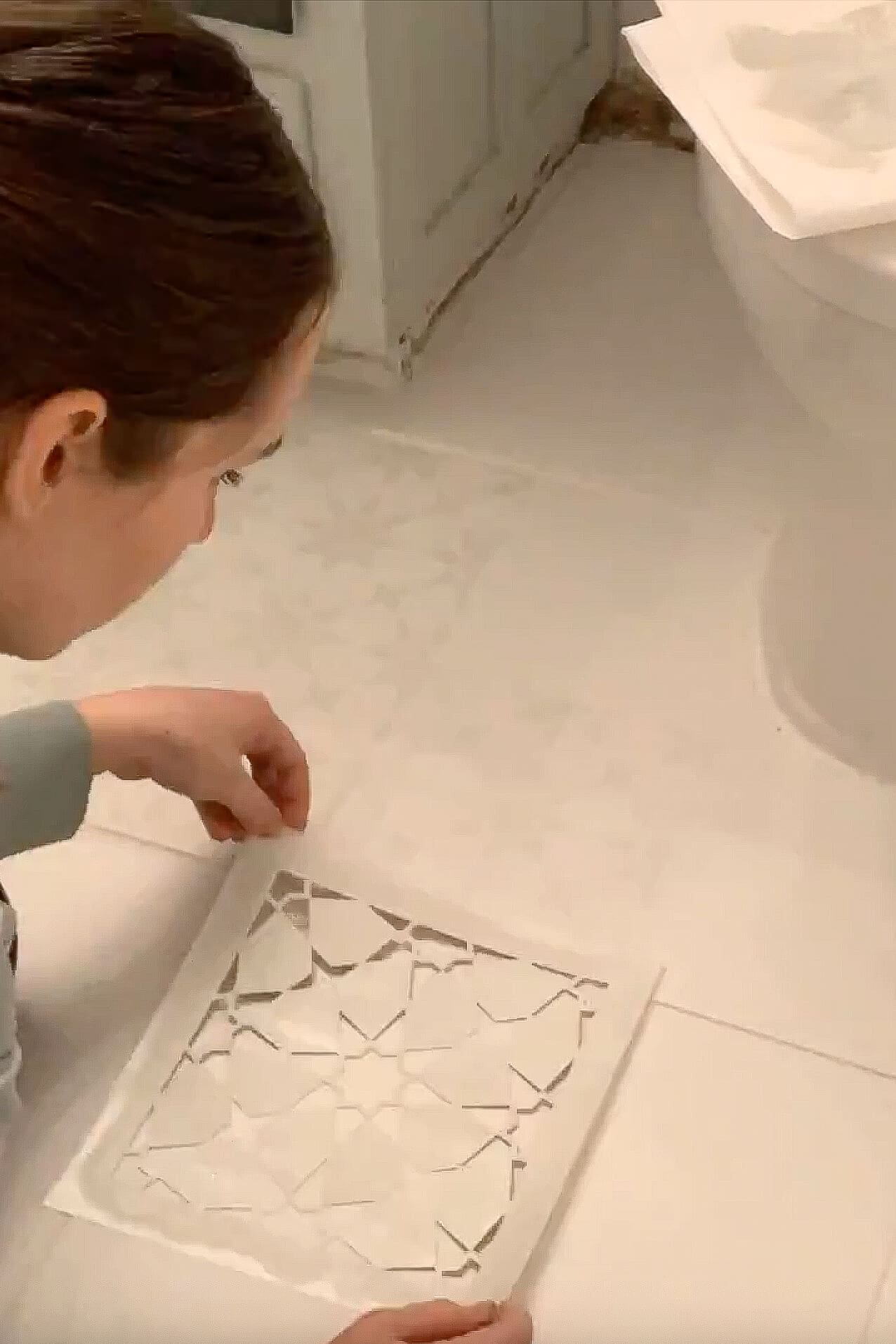
- After the base coat cured, used a star stencil and a small round brush in a stippling motion to add a soft gray pattern tile by tile.
- Trimmed a second stencil for tight spots around the toilet, tub, and walls.
- In this low-traffic basement bath, I skipped a topcoat, but a water-based polycrylic is a good idea in high-traffic spaces.
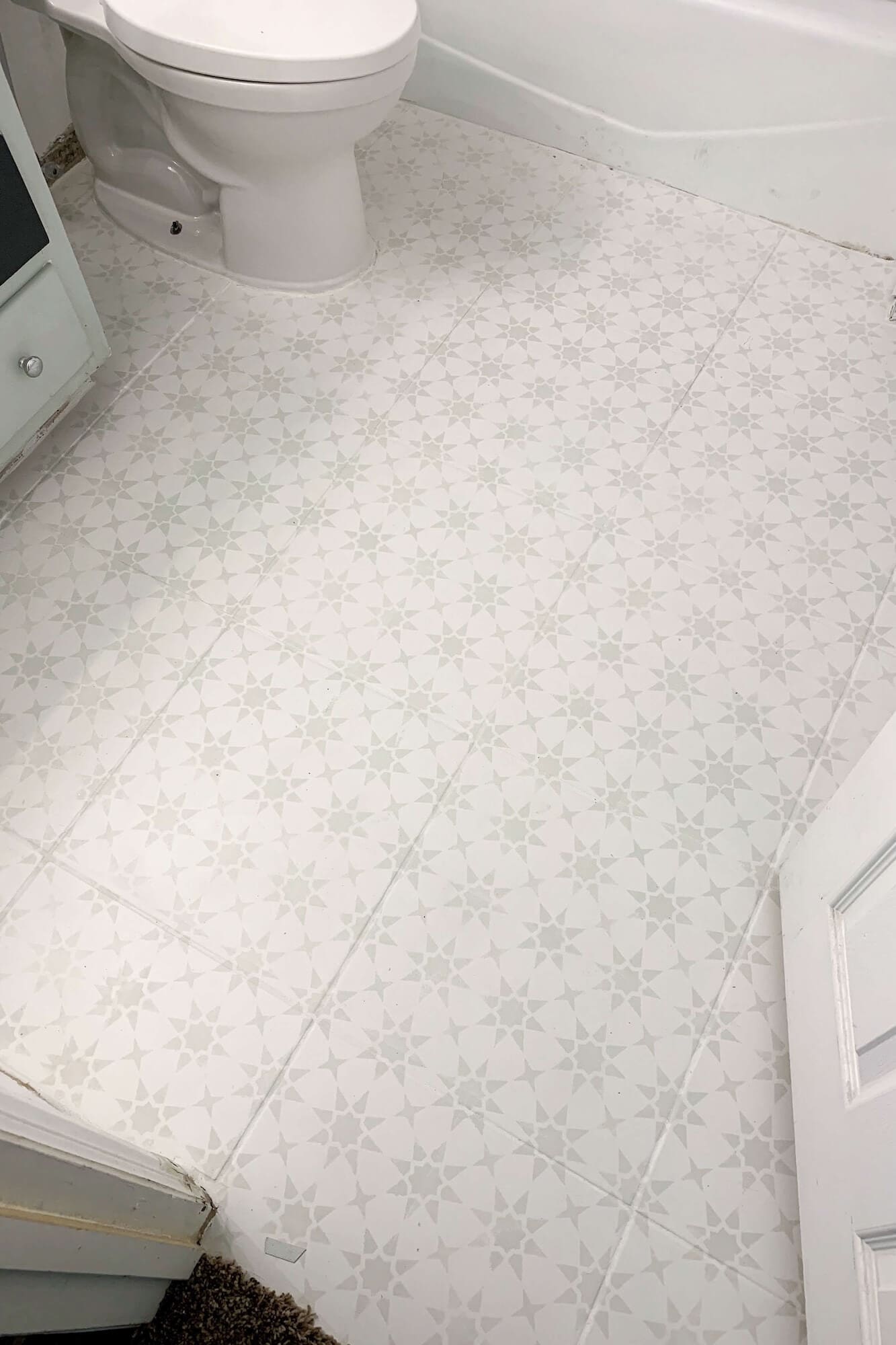
The end result looks like patterned cement tile and completely changed the feel of the room, all without touching a tile saw.
Step 5: Paint the Vanity & Update Hardware
If you’d like to give your own cabinet the same treatment, I break down every step in How to Paint a Bathroom Vanity Instead of Replacing It.
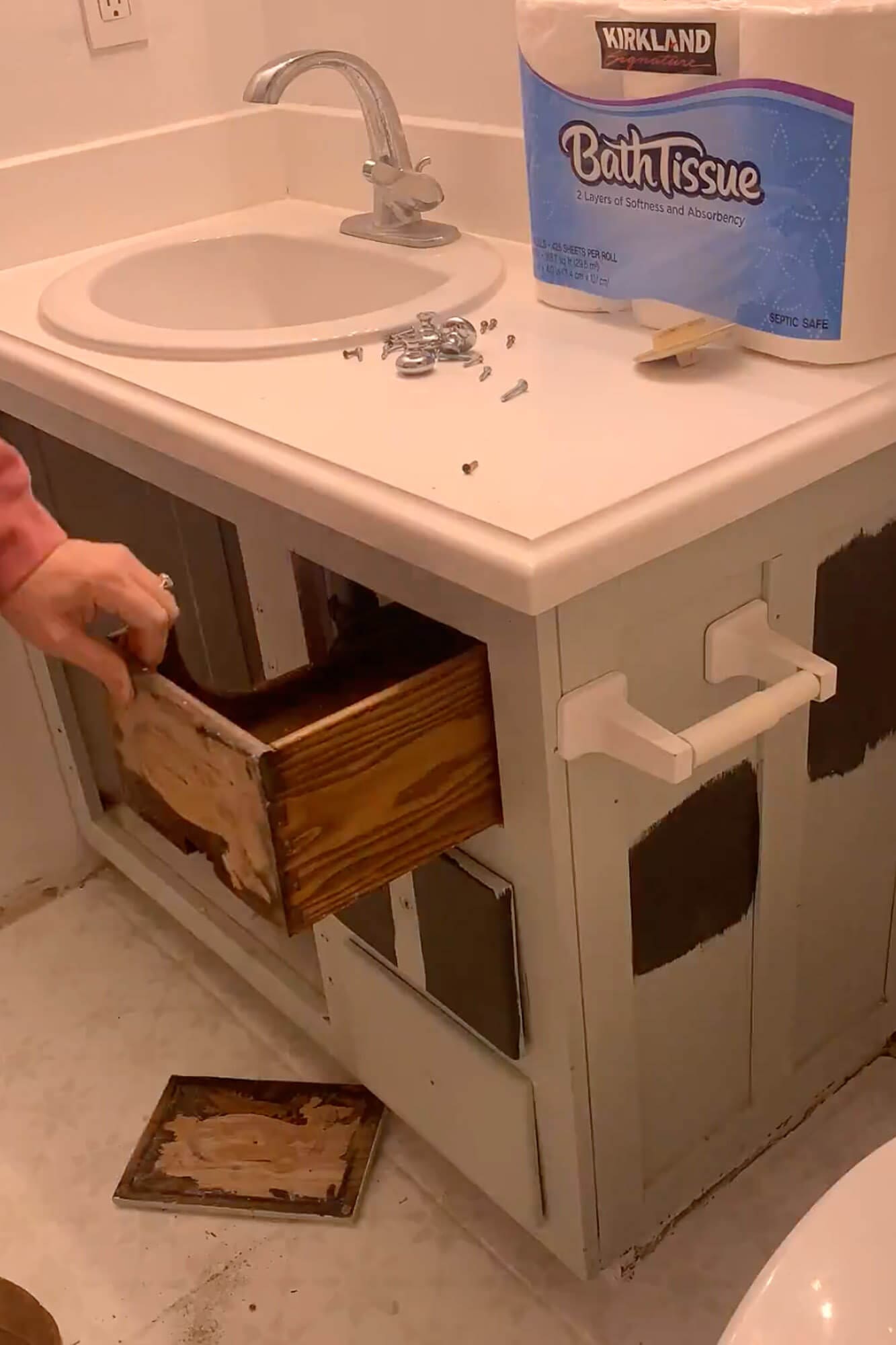
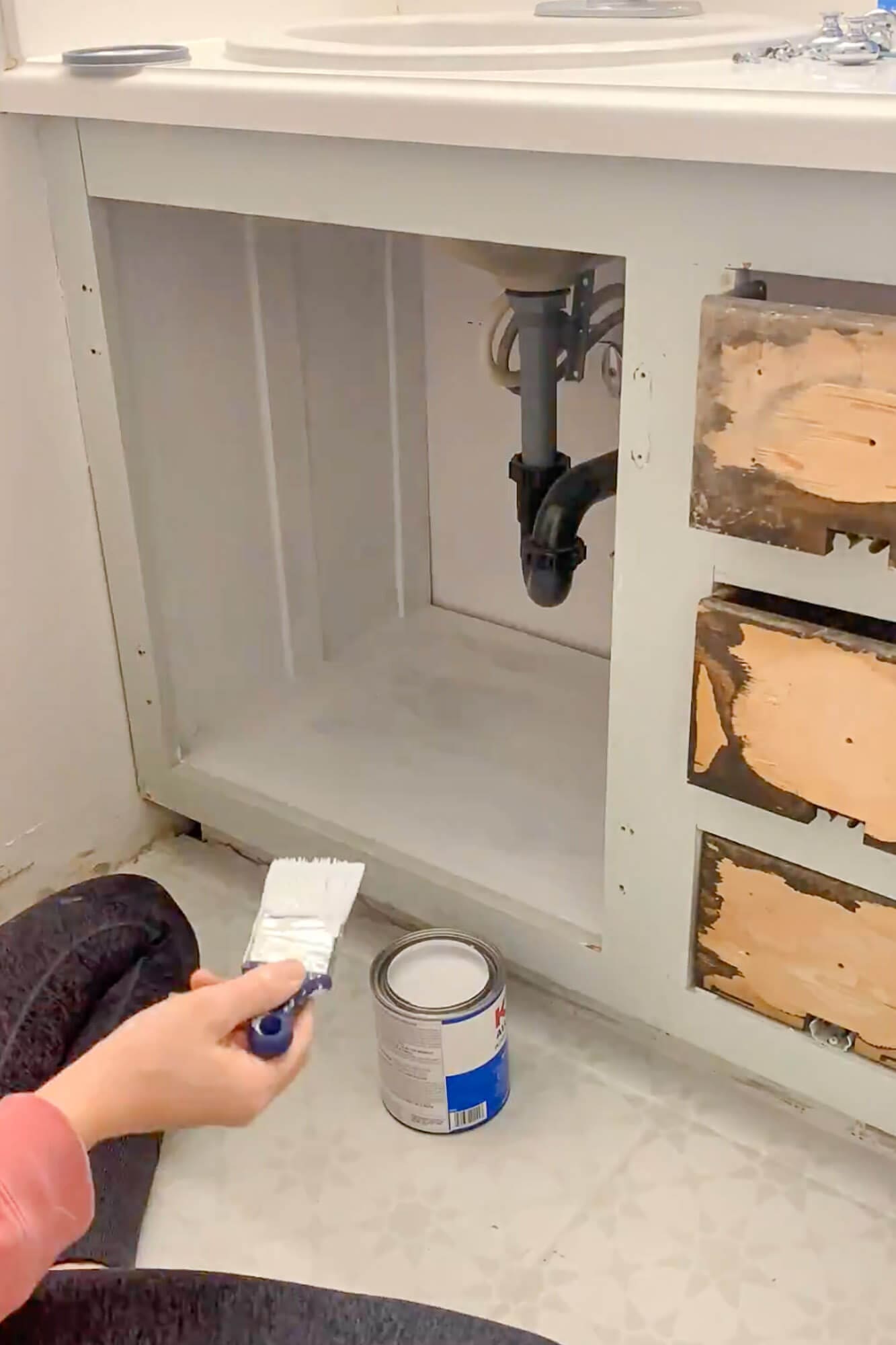
The vanity was structurally fine but visually tired. Instead of replacing it, I did a bathroom vanity makeover on a budget.
- Removed the doors and drawer fronts and cleaned everything with a degreasing cleaner.
- Lightly sanded the cabinet box, doors, and drawers to scuff the surface.
- Applied a bonding primer, sanded again for smoothness, and then painted multiple thin coats of deep green cabinet enamel (Sherwin-Williams Emerald Urethane Trim Enamel).
- Built new shaker-style doors and drawer fronts, then installed soft-close hinges.
- Added simple, modern gold pulls and knobs using a painter’s-tape drilling template so everything lined up perfectly.
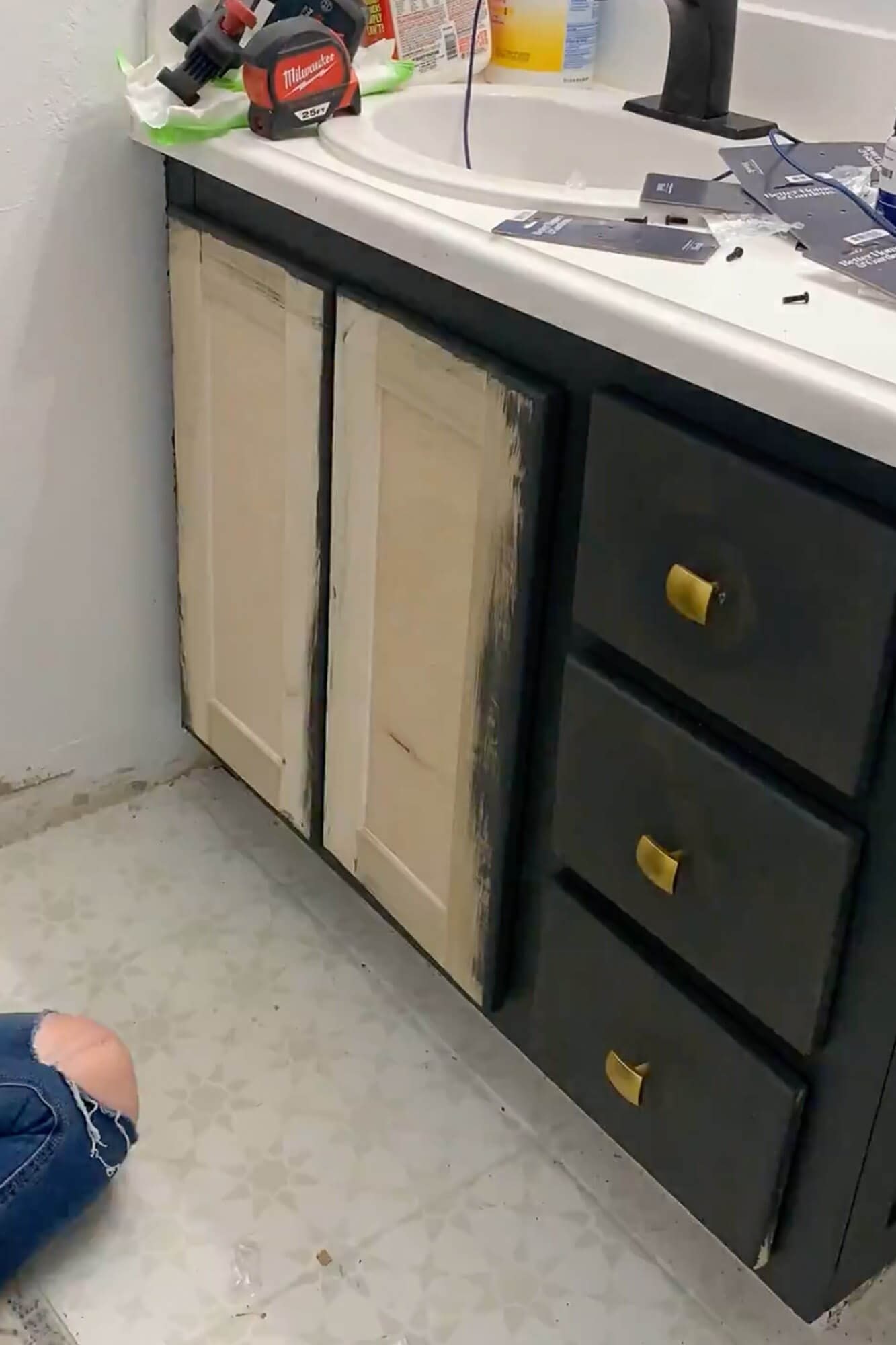
Paired with the new floor and shower, the painted vanity makes the whole bathroom feel intentional and pulled-together rather than builder-basic.
Step 6: DIY Gold Bathroom Mirror
You can see exactly how I transformed this mirror with a black base and Rub ’n Buff in Easy Gold Bathroom Mirror Painting Tutorial.
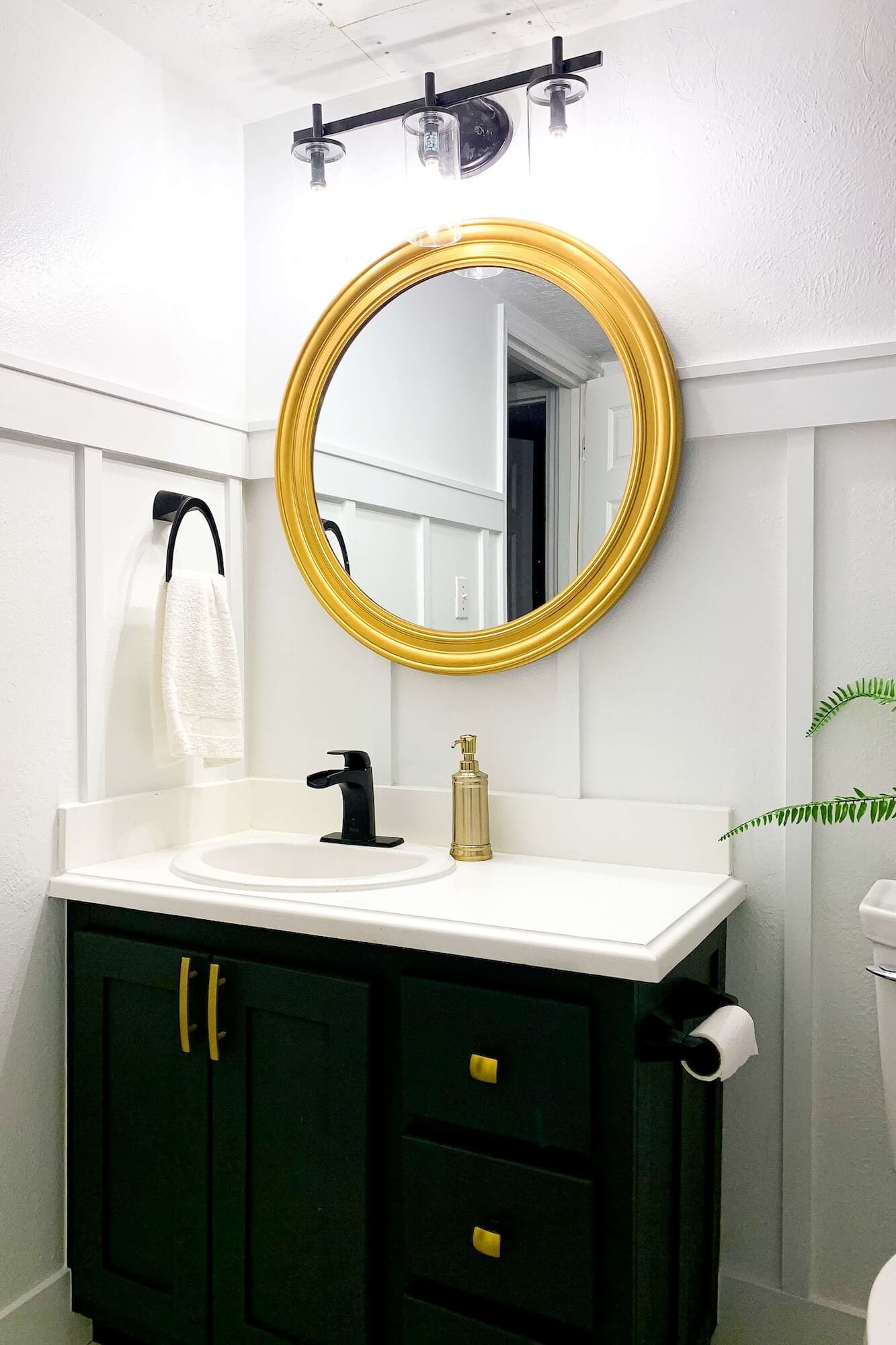
Above the vanity, I wanted a warm focal point to balance the dark cabinet and black fixtures. Instead of buying a new mirror, I transformed the existing white frame into a DIY gold mirror using spray paint and Rub ’n Buff.
The basic steps:
- Taped off the glass with painter’s tape.
- Sprayed the frame black as a base coat to add depth under the gold.
- Rubbed on Antique Gold Rub ’n Buff in thin layers with a soft rag, building up coverage gradually.
- Carefully scored and removed the tape, then scraped any overspray from the glass with a razor.
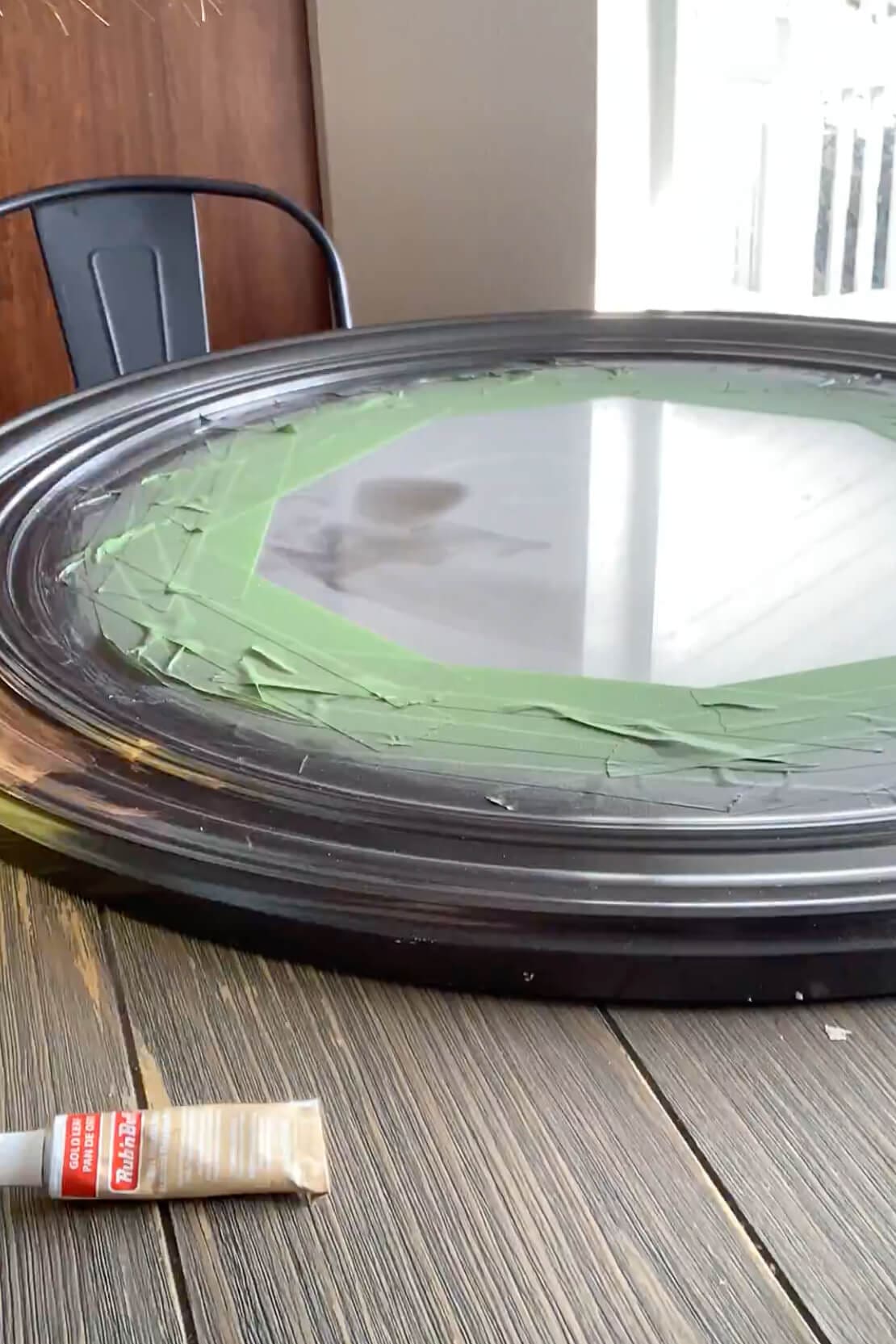
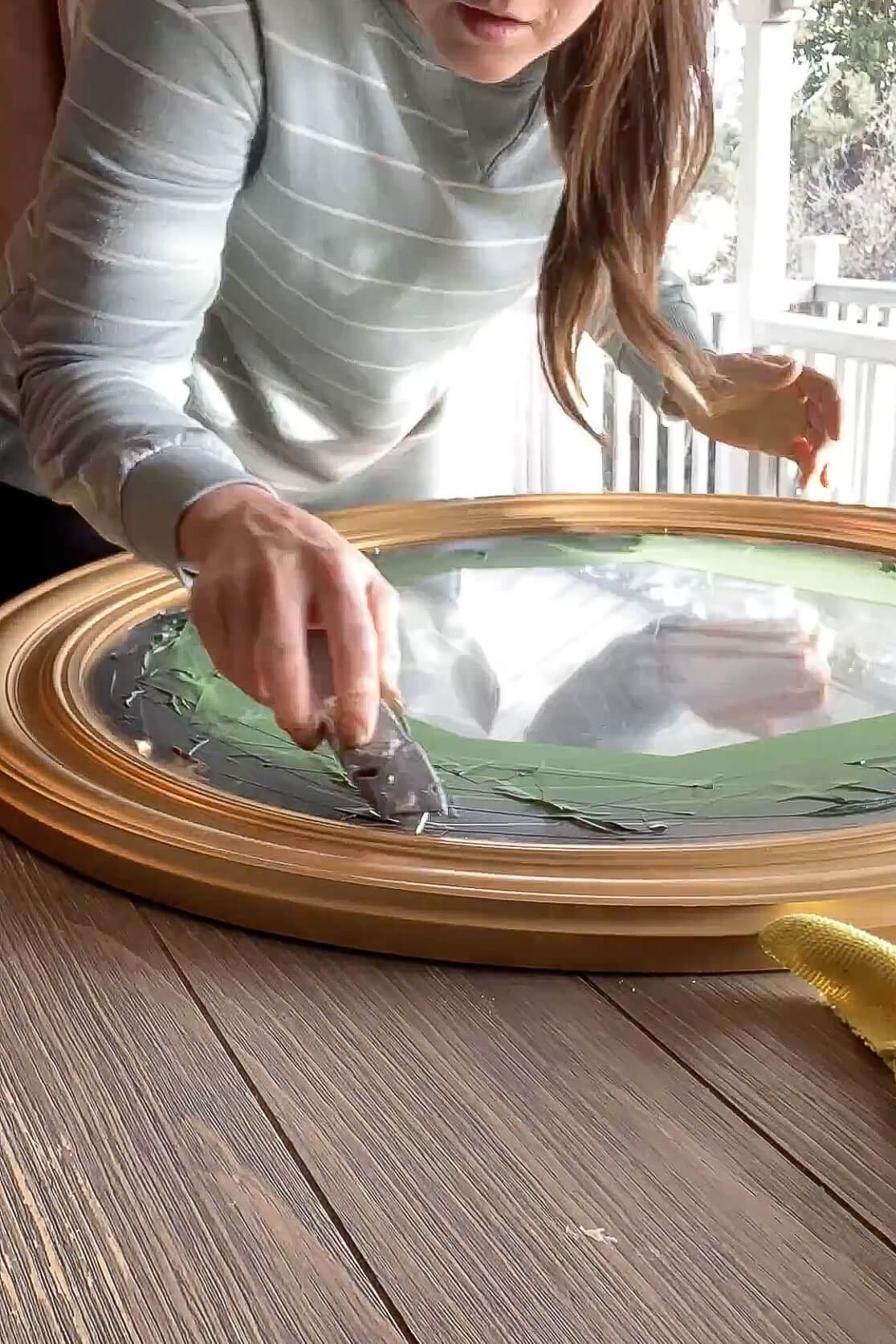
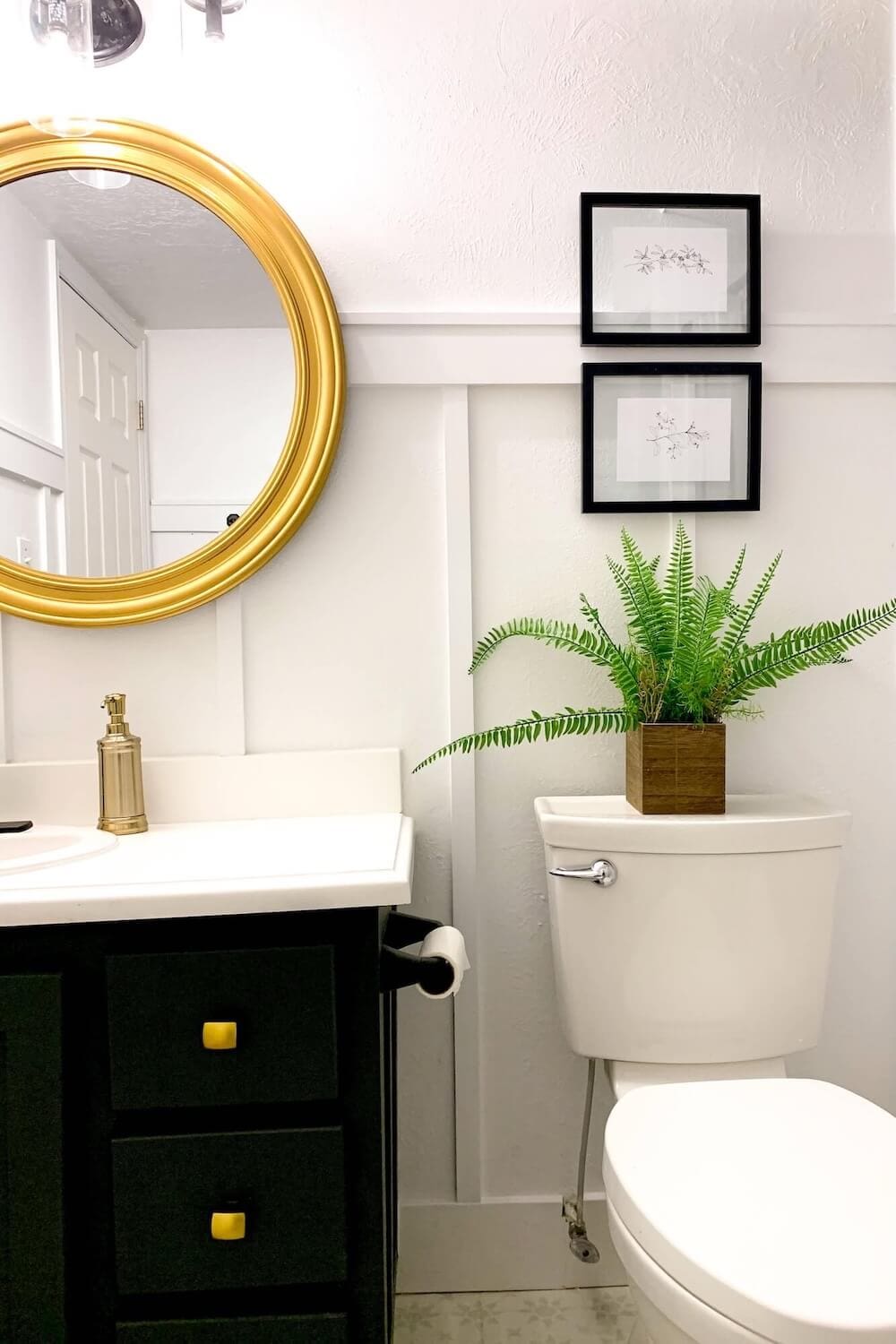
The finished frame ties in perfectly with the vanity hardware and warms up all the white tile and paint.
Step 7: Board and Batten Bathroom Wall
For measurements, spacing, and all the install details, check out DIY Board and Batten Wall in a Bathroom: Beginner Guide.
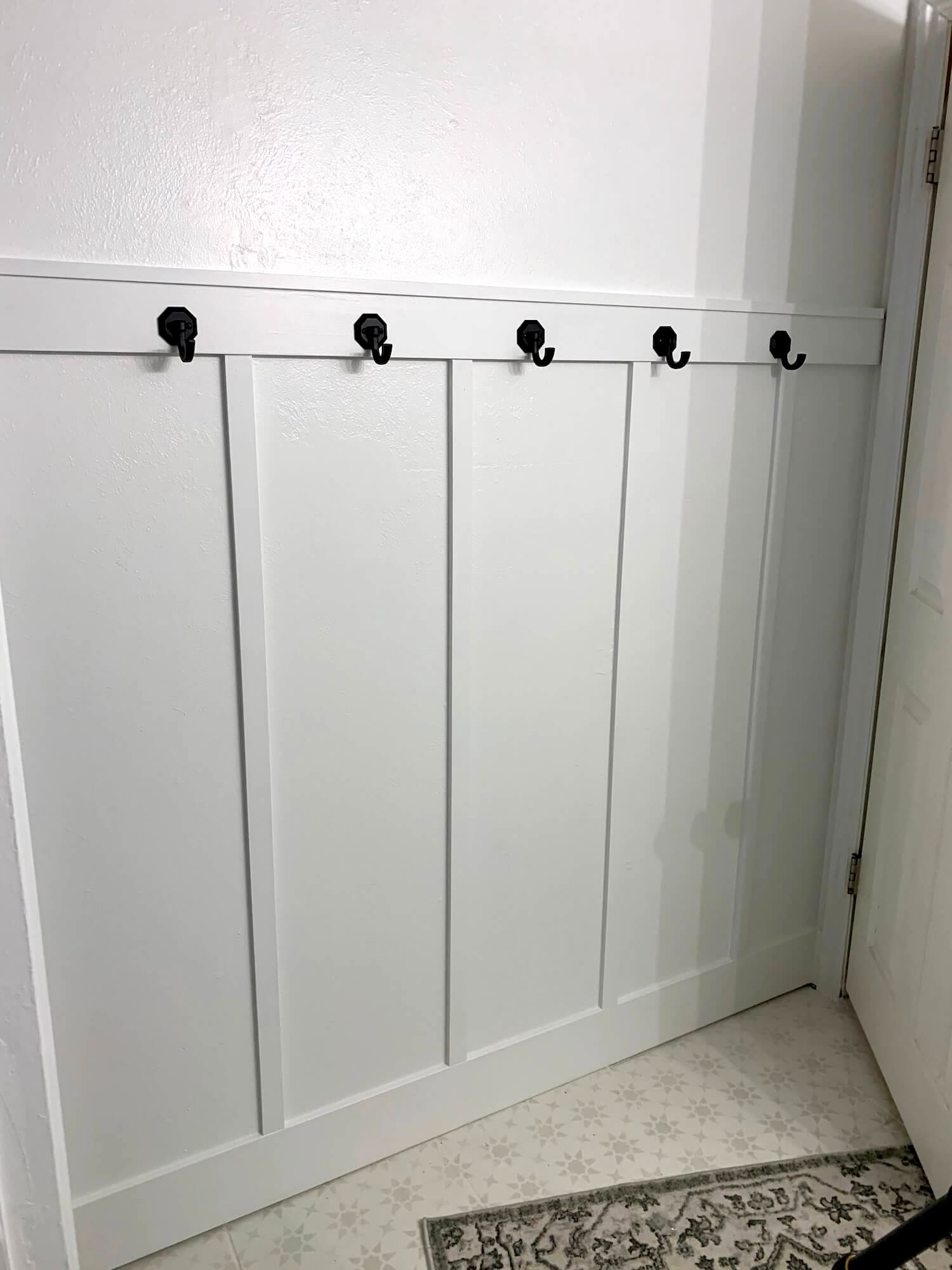
To add architecture and a bit of “custom” feeling, I installed a board and batten wall treatment around the bathroom.
Highlights:
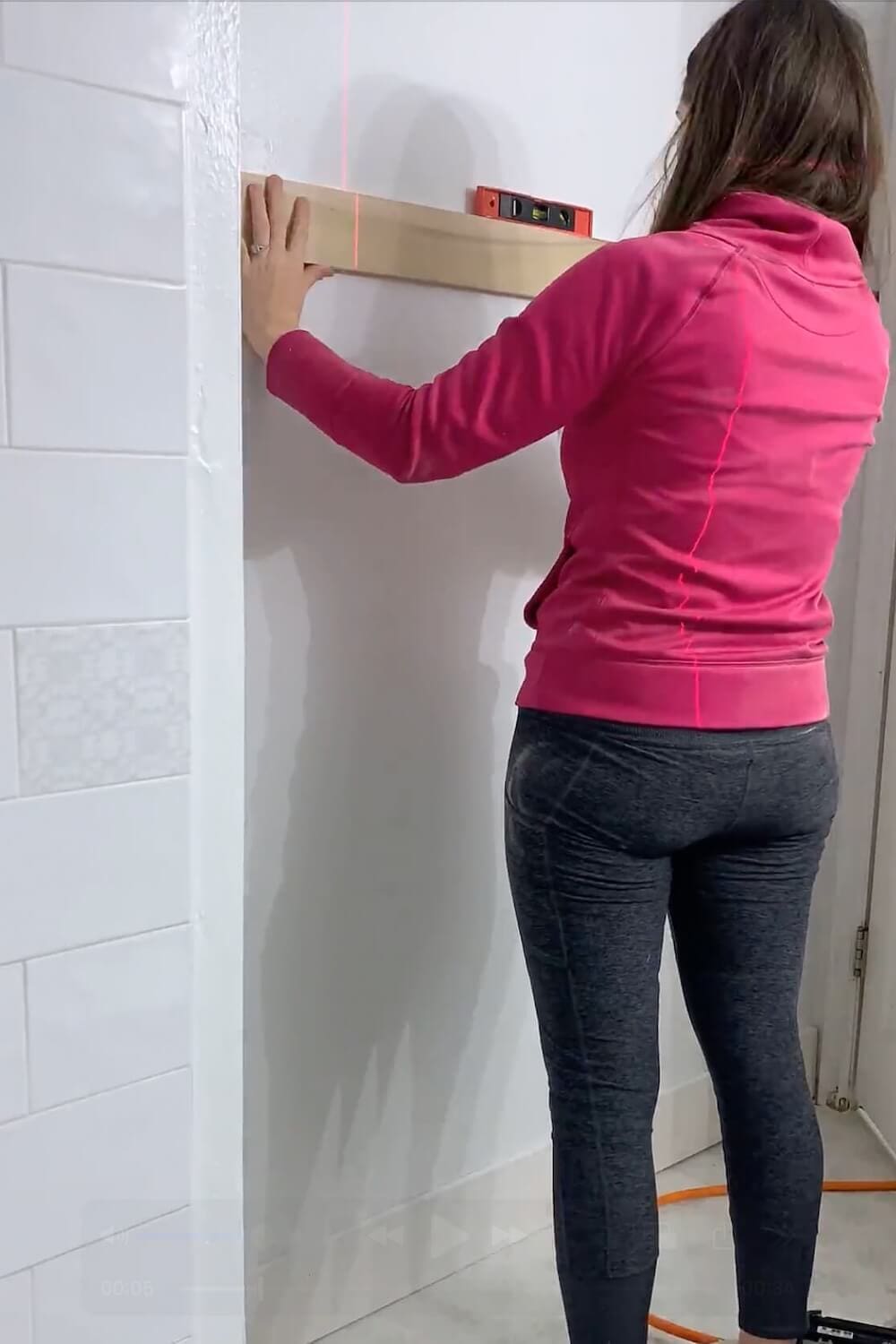
- Chose a height between 48″-52″-a little over halfway up the wall-so it lined up nicely with the vanity and mirror and made the room feel taller.
- Installed a 1×4 top rail into studs along a level line.
- Spaced 1×2 battens around 14-16″ apart (closer spacing tends to look better in small bathrooms).
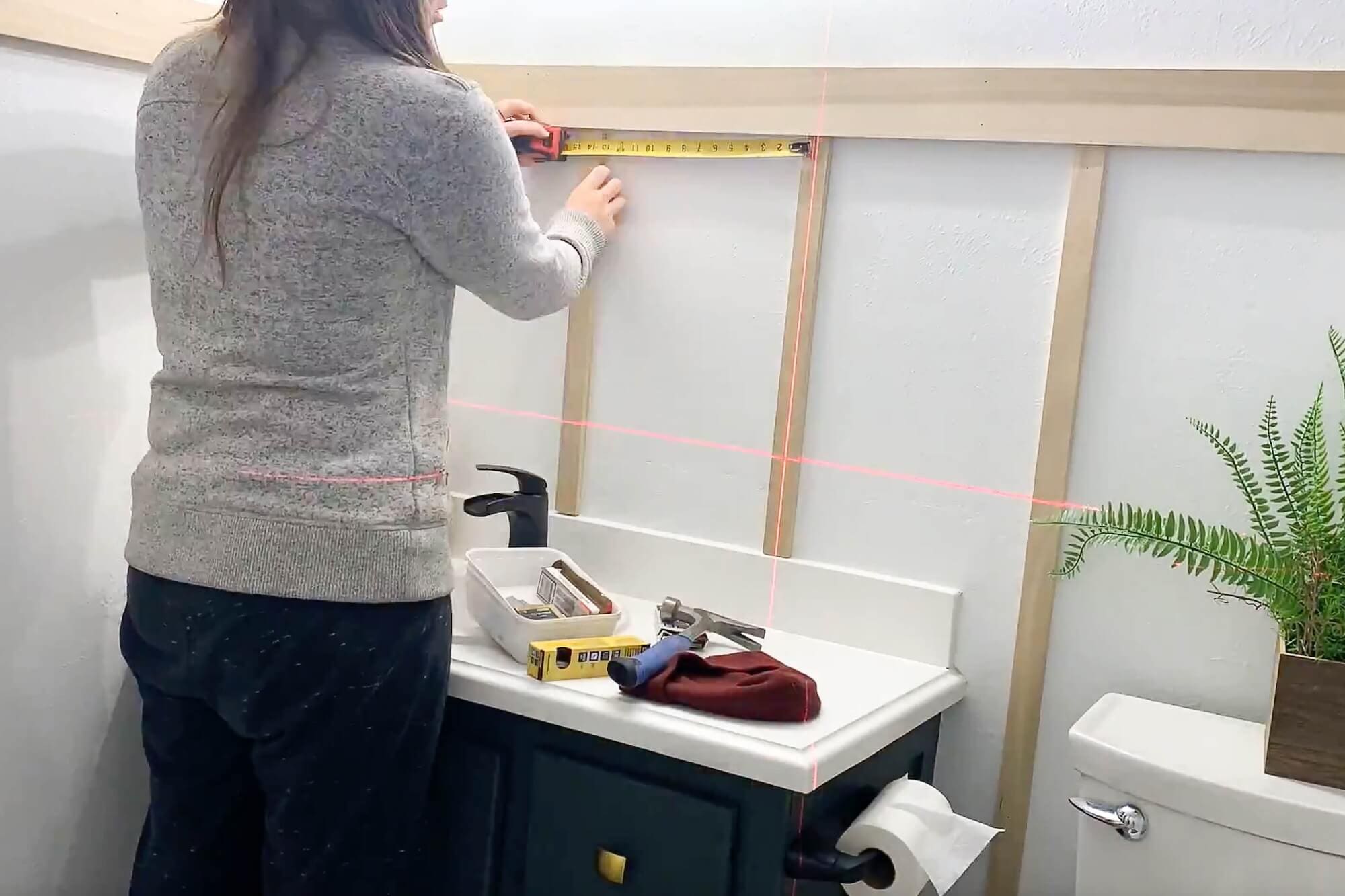
- Wrapped the trim around all four walls so it feels built-in, even behind the toilet and beside the shower.
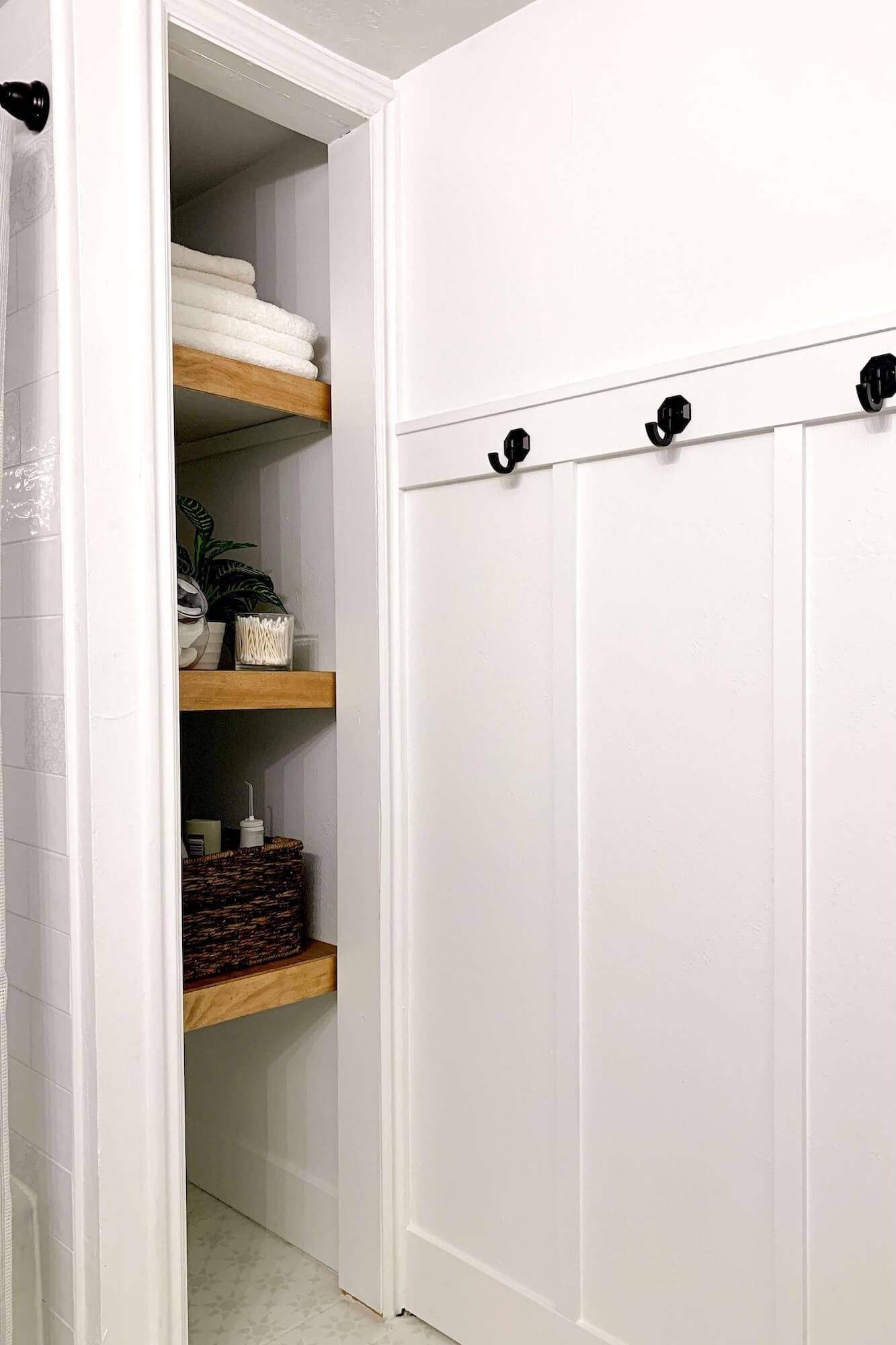
- Added a 1×2 top cap flat on the rail for a finished edge and a solid place to mount hooks.
- Filled nail holes, sanded, caulked all seams, then primed and painted everything white.
Hooks along the top cap added functional storage for towels and robes without taking up floor space-huge in a compact bathroom.
Optional: DIY Toilet Replacement
If you’re also swapping out your toilet as part of your remodel, you can follow my separate step-by-step guide here: How to Install a Toilet: A DIY Step-by-Step Guide.
While the toilet in this specific bathroom stayed, I do have a separate tutorial that walks through how to install a toilet step by step. If your own bathroom makeover includes replacing a toilet, that guide shows:
- Shutting off water and removing the old toilet
- Scraping off the old wax ring and inspecting the flange
- Setting new closet bolts and a fresh wax ring
- Lowering the new toilet into place, reconnecting water, and testing for leaks
It’s a beginner-friendly project that makes a surprisingly big difference in any bathroom.
Small Bathroom Remodel Ideas From This Space
If you’re collecting small bathroom remodel ideas or small bathroom ideas on a budget, here are the specific takeaways from this room:
- Use classic white subway tile in the shower and save pattern for the niche.
- Paint and stencil existing floor tile instead of replacing it.
- Update an old vanity with new doors, paint, and hardware rather than buying new.
- Turn a basic mirror into a gold statement piece with Rub ’n Buff.
- Add board and batten for height, character, and a place to hang hooks.
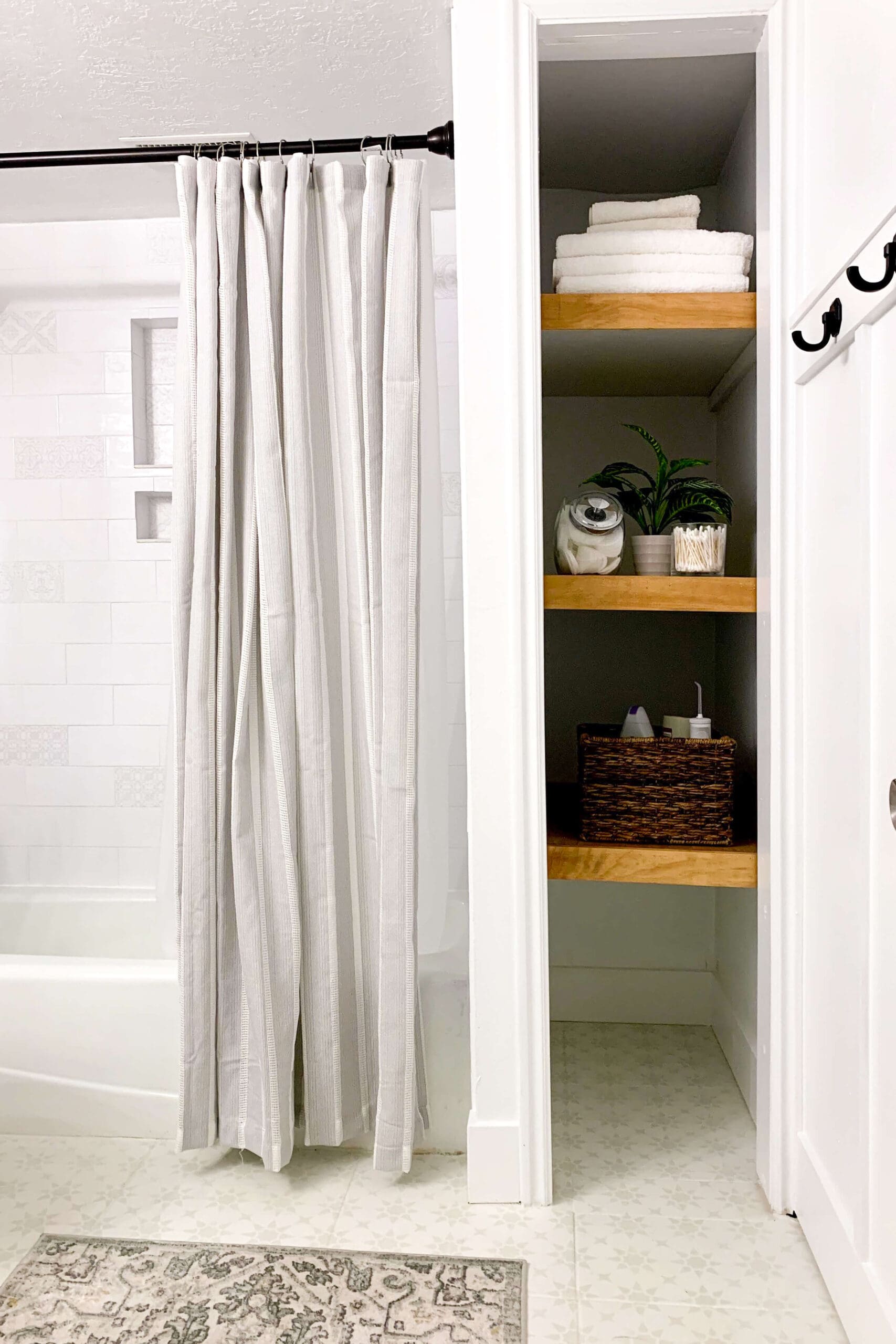
- Wrap cheap shelves with stained plywood to mimic thick wood shelving.
Each project is affordable on its own, but together they deliver a full small bathroom remodel on a budget.
What a Small Bathroom Remodel Actually Costs (DIY vs. Contractor)
One of the first questions I get on this post: how much did the whole small bathroom remodel cost? The honest answer: I don’t have a single line-item total saved (this was a multi-weekend project that stretched across months), but I can tell you exactly where the money went and where the savings showed up.
Where DIY saved the most
The single biggest cost in any bathroom remodel isn’t materials, it’s labor. Contractors typically charge $50–$150 per hour, and a full small bathroom remodel runs 60–100 hours of skilled labor. By doing the demo, tile, paint, and finish work myself, I dropped what would’ve been a $5,000–$15,000 contractor quote down to materials cost only. Painting the vanity and floor instead of replacing them was the next biggest win. Those two projects alone usually run $2,000–$4,000 if you’re swapping in new pieces. Painting kept them under $200 in supplies combined.
Where I still spent money
The shower retile required new cement board, waterproofing membrane, thinset, grout, and tile (white subway tile is one of the cheapest options at around $0.30 per square foot). The shower niche needed framing lumber, waterproofing tape, and the tile to clad it. Board and batten took 1×3 pine boards, paint, and trim. Hardware, faucet, towel ring, toilet paper holder, and cabinet pulls all added up faster than expected. Matte black finishes are widely available now in the $15–$40 range per piece.
My DIY rule of thumb for a small bathroom remodel on a budget
If a project lets you keep the existing fixture (tub, toilet, vanity box, mirror), it’ll save you 70–90% versus replacing. If a project requires moving plumbing or replacing a fixture, the cost jumps fast. The 7 projects in this remodel were chosen specifically because none of them moved plumbing, and only one (toilet, optional) replaced a major fixture.
Small Bathroom Remodel Timeline (Realistic Weekend Breakdown)
A full DIY small bathroom remodel takes roughly 4-6 weekends if you’re working evenings and Saturdays around a regular schedule. Here’s the breakdown that worked for me:
| Weekend | Project | Active Hours |
| 1 | Demo + mold removal + dry-out | 6-8 |
| 2 | Build shower niche + cement board + waterproofing | 8-10 |
| 3 | Tile shower walls (thinset cure overnight) | 10-12 |
| 4 | Grout + paint vanity + paint floor | 8-10 |
| 5 | Stencil floor + sealer + Rub ‘n Buff mirror + hardware | 6-8 |
| 6 | Board and batten install + caulk + final paint touch-ups | 8-10 |
The biggest timeline killer isn’t active work, it’s wait time. Thinset needs to cure overnight before grouting. Paint needs full cure time before reinstalling vanity doors. Floor sealer needs 24 hours before walking on it. If you’re trying to do this in one weekend, you’ll fight every cure-time deadline. Spread it across 4-6 weekends and you’ll actually enjoy the projects.
Special Considerations for a Small Basement Bathroom Remodel
Basement bathrooms come with a few extra challenges that above-grade bathrooms don’t, and skipping these can cause real problems six months after the remodel.
Moisture and ventilation
Basements are humid by default, even with a dehumidifier running. That’s why our shower had mold in the first place: it wasn’t a one-time event, it was a slow leak past failing caulk, plus humidity that never fully cleared. Before you tile, install a strong bath fan rated for the room’s square footage (most small bathrooms need 80 CFM minimum), vented to the outside (NOT just into the floor joists). Run the fan during showers and for 20 minutes after.
Mold prevention from day one
If your basement has any history of moisture, treat it before installing anything new. Hit exposed studs and concrete with Concrobium or a similar mold-control spray and let it fully dry before re-installing cement board. The Concrobium step adds 15 minutes; mold remediation later costs thousands.
Lighting (basement bathrooms feel cave-y by default)
Most basement bathrooms have one ceiling light and zero windows. Adding a sconce above the mirror or LED puck lights inside the shower changes the entire feel of the room without any electrical work. Battery-operated puck lights stick in place. Painted white walls and white tile help reflect every bit of available light.
Plumbing access
Basement bathroom plumbing is often easier to access than upstairs (exposed pipes in the ceiling), which is a reason to keep the layout and not move fixtures. If you do need to move a drain, basement floors are usually concrete: that’s expensive jackhammer territory. Stick with the existing layout if at all possible.
What I’d Do Differently Next Time
Even though I love how this small bathroom remodel before and after turned out, there are a few tweaks I’d make if I were starting from scratch:
- Pre-paint all trim before installing board and batten.
- Use satin or scrubbable matte paint on wall panels to hide texture better.
- Upgrade the exhaust fan at the very beginning.
- Drop the shower niche an inch or two for tall bottles.
- Spot-prime wood/drywall transitions to keep tannins and sheen differences from showing.
- Map and pre-drill all hooks and hardware into studs before painting.
- Use a hardware template for vanity pulls and knobs.
- Add one extra clear topcoat on the painted floor for even more durability in a busy bathroom.
They’re all small changes, but they’d make the next basement bathroom makeover smoother.
📌 Save This Small Bathroom Remodel for Later
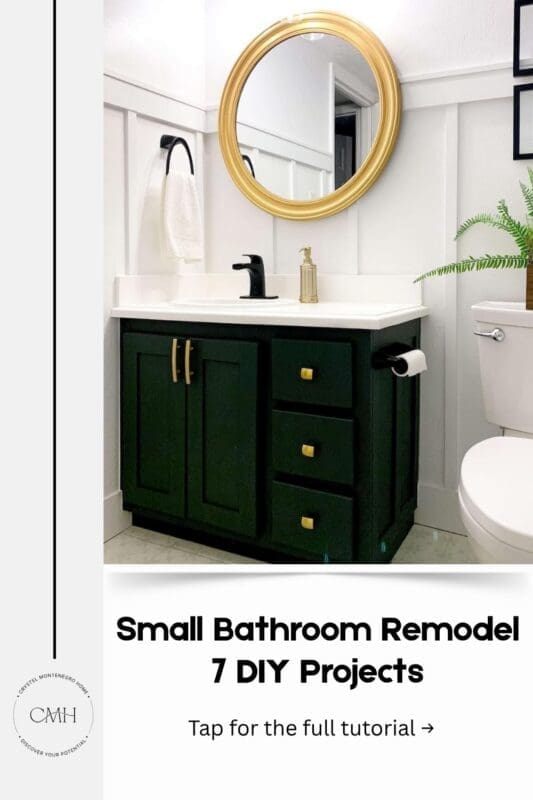
If you’re planning your own DIY small bathroom remodel, save this so you have all 7 projects in one place when you’re ready to start. Each project links to its full tutorial with the exact products and steps you’ll need.
FAQ About Small Bathroom Remodels
Focus on affordable DIY upgrades like painting tile floors, updating vanity doors, and using budget-friendly finishes. Reusing what you already have saves the most money. The biggest savings come from skipping a contractor and doing the labor yourself; labor is usually 50-70% of any bathroom remodel quote.
Painting is the cheapest way to update a small bathroom. Painting tile floors, walls, or cabinets transforms the look without the cost of replacing anything. A bathroom vanity makeover with paint and new hardware can run under $100 in supplies and rivals the look of a brand-new vanity.
Yes, you can remodel a small bathroom yourself if you can paint, use a level, and follow tile-setting instructions. The hardest skills to pick up are tile work and waterproofing, both of which have excellent free tutorials online. The easier projects (paint, hardware swap, mirror refresh, board and batten) require almost no specialty skills.
Even tiny bathrooms (under 30 square feet) can get a complete remodel makeover with the right approach. The smaller the space, the more important it is to focus on visual tricks: light paint colors, classic white subway tile, vertical lines from board and batten, and a statement mirror. In our basement bathroom, the room is around 40 square feet and we made it feel twice as big with these moves.
Incorporate details like updated hardware, bold paint colors, statement mirrors, and custom shelving. Even small upgrades can make a bathroom feel high-end. Mixed metals (matte black + gold), classic subway tile in the shower, and a wall treatment like board and batten signal “custom” without the custom price.
A full DIY small bathroom remodel takes about 4-6 weekends if you’re working it around a normal schedule. Demo and mold removal is one weekend, shower niche and waterproofing is another, tile and grout is a weekend with cure time built in, and the cosmetic work (paint, stencils, mirror, hardware) splits across the last 2-3 weekends.
A small shower remodel takes about 2-3 weekends if you’re DIYing it. Demo and waterproofing is one weekend, tiling is one weekend (with cure time between thinset and grout), and finishing details like fixtures and grout sealing is the third. The most time-consuming part is wait time between coats of waterproofing membrane and thinset cure.
Start with anything structural and messy first: demo, mold removal, framing, cement board, and waterproofing. Then move to tiling the shower, painting or stenciling the floor, and finally the “pretty” projects like the vanity, mirror, board and batten, and finishing touches. Thinking in this order keeps your DIY small bathroom remodel from turning into a repaint-and-touch-up loop.
Three updates add the most visual and resale value to a small bathroom: a refreshed vanity (paint plus new hardware), updated floor (painted tile or new vinyl), and an upgraded shower (new tile, new fixtures, or both). Together these three projects address the surfaces visitors actually notice and easily justify their cost in resale lift.
A remodel almost always beats a full replacement for a small bathroom, especially if the layout works and the plumbing is sound. Replacing a tub, toilet, or vanity adds thousands in cost and can require permits. Refinishing what’s there (paint, hardware, surface treatments) gets a similar visual result for a fraction of the cost.
It depends on your local code and how much you’re changing. Cosmetic updates like painting, tiling, and building shelves usually don’t need permits. But moving plumbing, changing electrical, or altering structural walls often does. For this basement bathroom remodel, I followed local code, used GFCI protection at the vanity, and would always recommend checking with your city or county before making big changes.
In most cases, painting and stenciling existing tile is more budget-friendly. Retiling means buying new tile, renting or buying tools, and possibly dealing with subfloor issues. Painting bathroom floor tiles lets you keep the tile you have and just update the surface, which is why I chose it for this budget small bathroom remodel.
The best paint color for a small bathroom is one that reflects light and stays neutral against fixtures. Soft whites, warm off-whites, pale greens, and pale blues all work well. Avoid dark colors on every wall in a small bathroom; they shrink the room visually. Save bold color for an accent wall or the lower portion of board and batten.