

Updated November 21, 2025
If you’ve ever stared at your outdated tile and wished you could change it without demolition or a huge budget, painting bathroom floor tiles is a game-changer. That’s exactly what I did in our basement bathroom. With the right primer, paint, and a simple tile stencil, I turned old beige tile into a fresh, patterned floor that looks custom without the cost of new tile.
In this guide I’ll show you how to paint bathroom floor tiles step by step, primer, base coat, stenciling, and sealing—so you get a durable, pretty floor instead of a peeling paint disaster. This method works on most ceramic and porcelain tile, and I’ll share notes about vinyl and other surfaces as well.
Time: Weekend project (plus cure time)
Difficulty: Beginner-friendly DIY
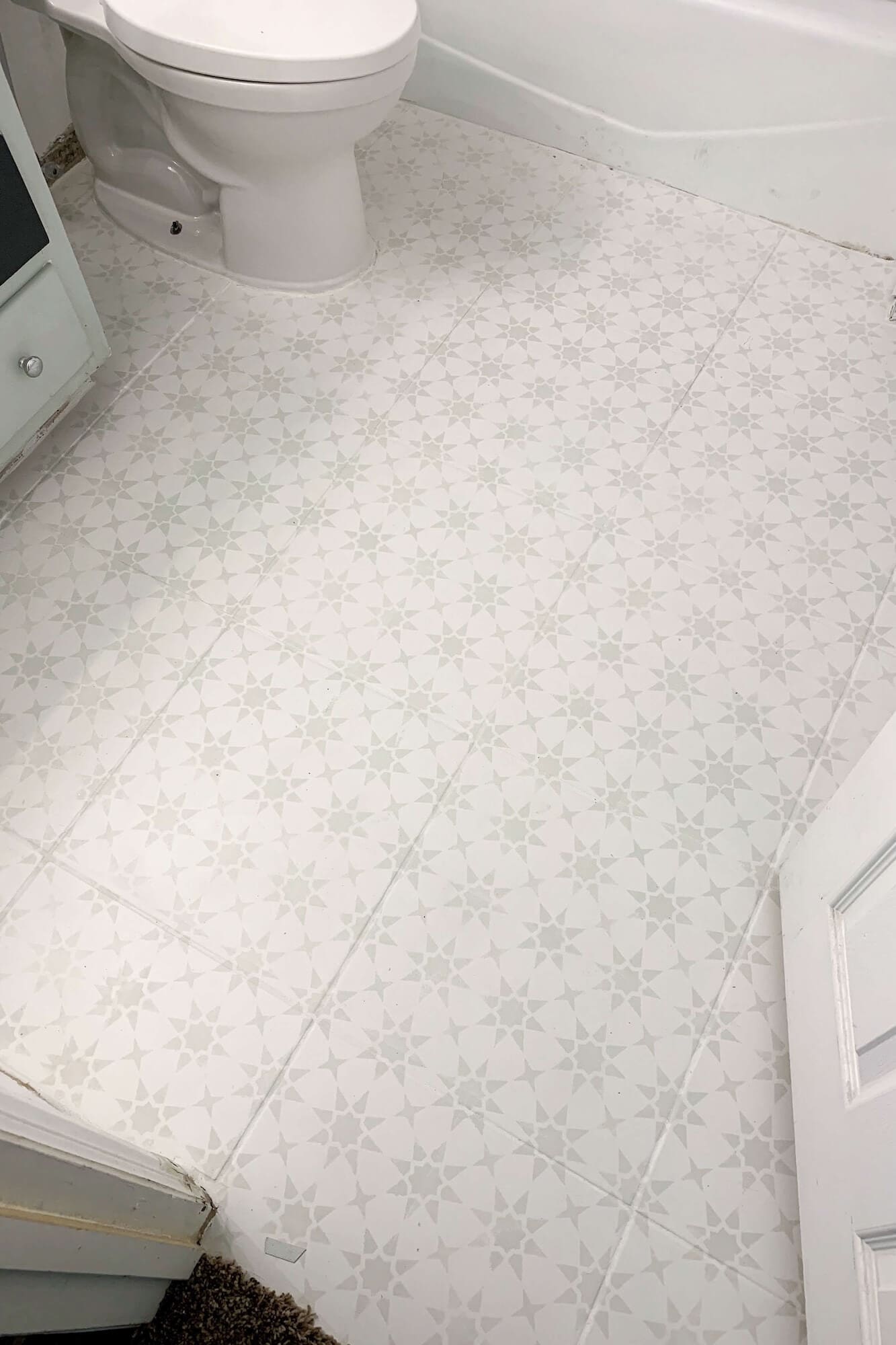
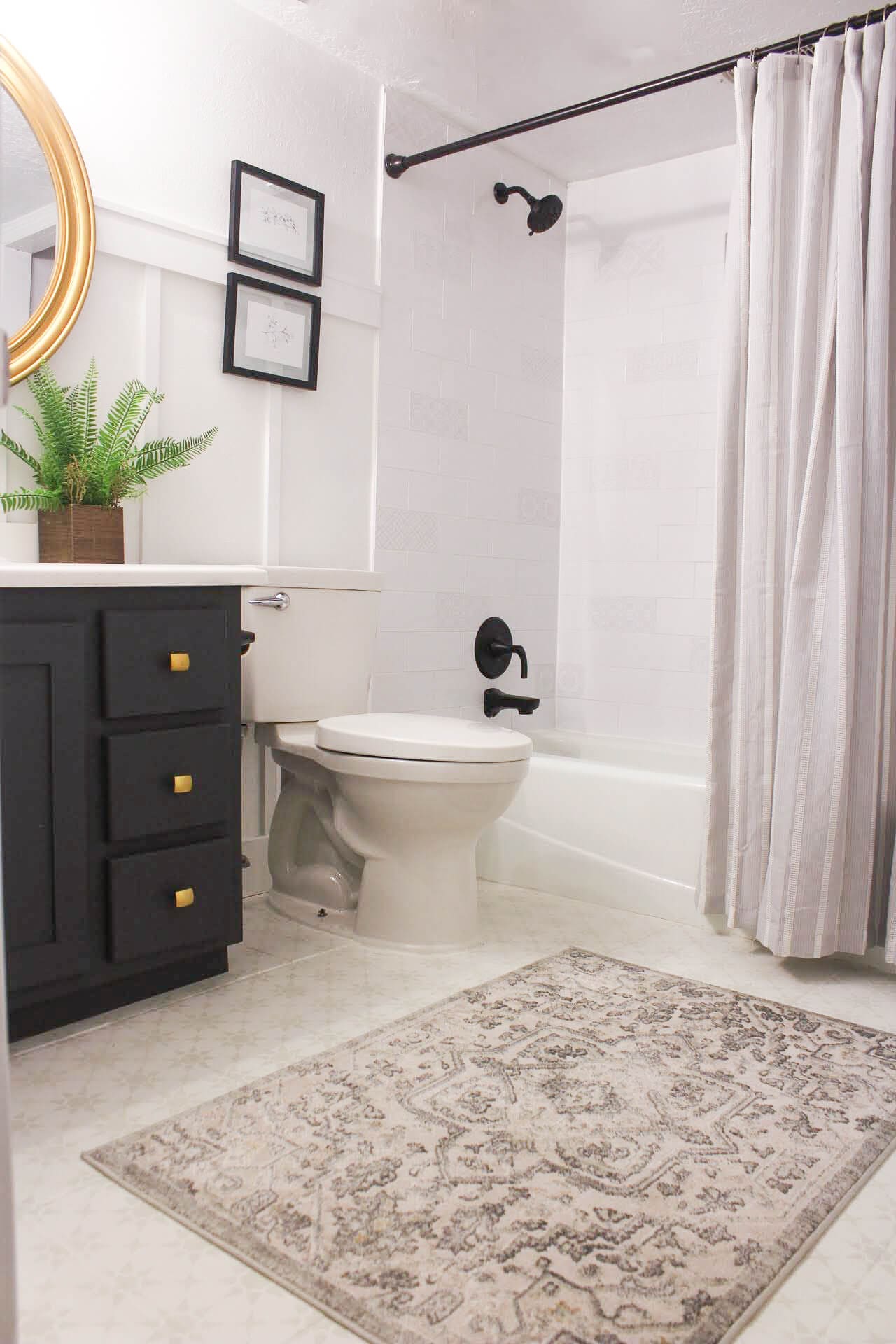
In this post, I’ll show you exactly how to prep, paint, and stencil your own tile floors from start to finish. Whether you’re working with ceramic, porcelain, or even vinyl tiles, this project will walk you through everything you need to know about stenciling a floor.
How to Paint Tile Floors in a Bathroom: At a Glance
Before we get into photos and details, here’s the basic flow for a bathroom floor makeover without replacing tile:
- Deep-clean and degrease the tile so primer and paint can actually bond.
- Sand lightly if needed and tape off baseboards, tub, and toilet.
- Roll on a bonding primer—the best primer for painting tile floors is one made to grab smooth surfaces.
- Apply a solid base coat of floor or enamel paint.
- Use a tile stencil to add your pattern with a contrasting color.
- Tackle tight spots around the toilet and walls with a trimmed stencil.
- Optionally seal everything with a clear topcoat for extra durability.
Table of Contents
- How to Paint Tile Floors in a Bathroom: At a Glance
- Tools & Materials for Painting Bathroom Floor Tiles
- The Before: Budget Bathroom Floor Makeover Without Replacing Tile
- Step 1: Prep the Tile Floor
- Step 2: Prime and Paint the Base Coat
- Step 3: Stenciling the Floor
- Step 4: Tackle the Tricky Spots
- Step 5: Sealing Painted Bathroom Floor Tiles (Optional but Helpful)
- How Long Do Painted Bathroom Floor Tiles Last?
- Another Idea: DIY Painted Tile Floor in a Laundry Room
- Final Thoughts: Budget Bathroom Floor Makeover
- Other DIY Projects from This Basement Bathroom Remodel
- 📌 Save Painting Bathroom Floor Tiles for Later
- FAQs About Painting Bathroom Floor Tiles
Tools & Materials for Painting Bathroom Floor Tiles
You don’t need fancy tools for a DIY painted tile floor, but you do need the right products so the finish holds up.
- Krud Kutter degreaser
- Vacuum
- Painter’s tape
- High-adhesion bonding primer (the best primer for painting tile floors is specifically labeled for glossy or tile surfaces)
- Durable floor paint, cabinet enamel, or trim enamel (look for something that’s rated as the best paint for bathroom floor tiles or for high-traffic surfaces)
- Foam roller + paint tray
- Angled paint brush
- Small stencil brush (stippling brush works best!)
- Tile stencil
- Scissors (for trimming stencil as needed)
- Optional: water-based polycrylic topcoat for sealing painted bathroom floor tiles in high-traffic rooms
The Before: Budget Bathroom Floor Makeover Without Replacing Tile
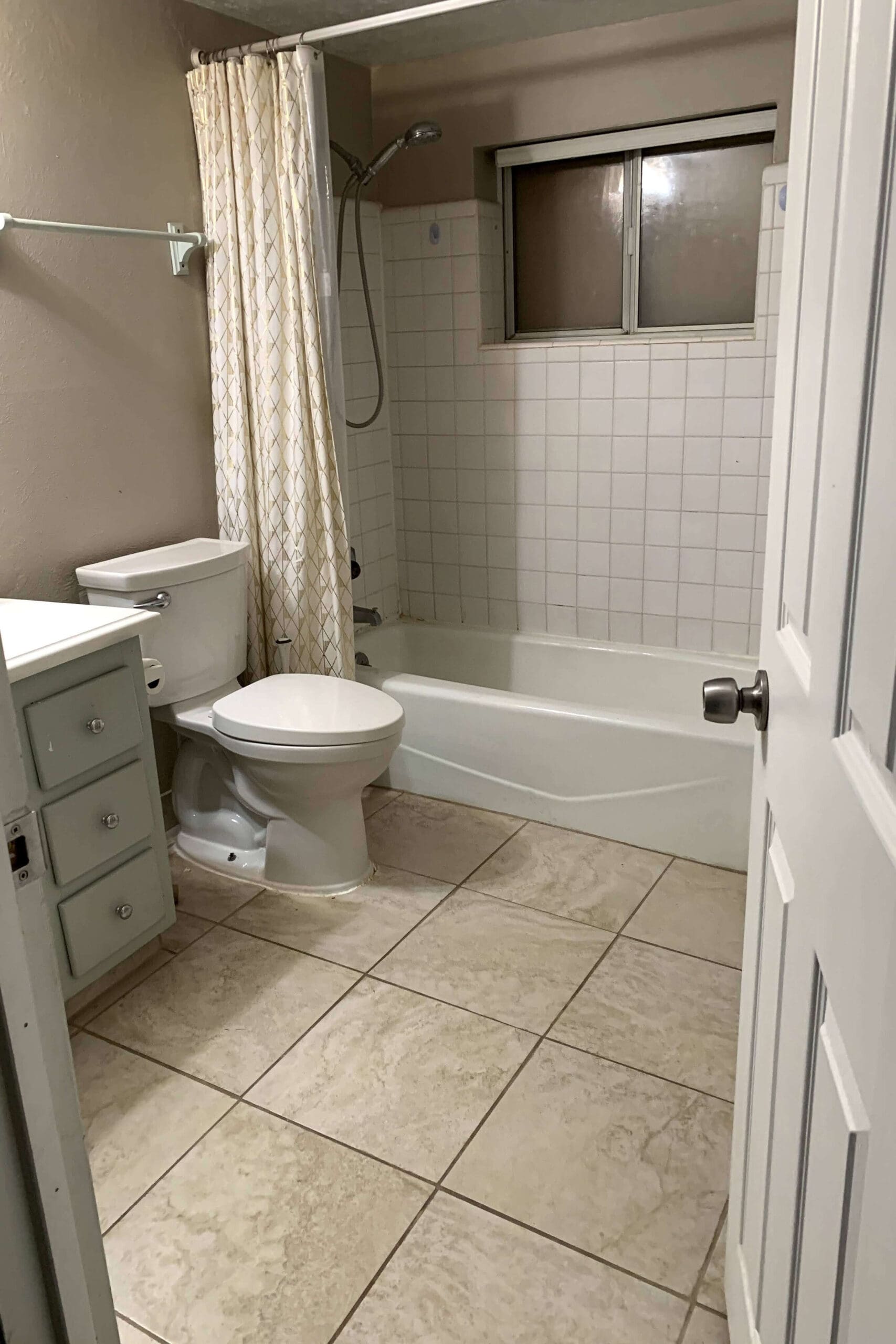
This basement bathroom started with large beige tiles that felt heavy and dated, especially paired with tan walls and a basic shower surround. I’d already retiled the shower to freshen things up, but the floor still made the whole room feel tired.
Instead of ripping out all the tile, I wanted a cheap bathroom floor idea that still looked intentional—something that could pass as patterned cement or artisan tile. That’s when I decided to try a painted and stenciled tile floor: keep the existing tile, but give it a totally new look with paint and pattern.
Step 1: Prep the Tile Floor
Prep is where a DIY tile floor succeeds or fails. Paint will not stick to a dirty, dusty, or glossy surface.
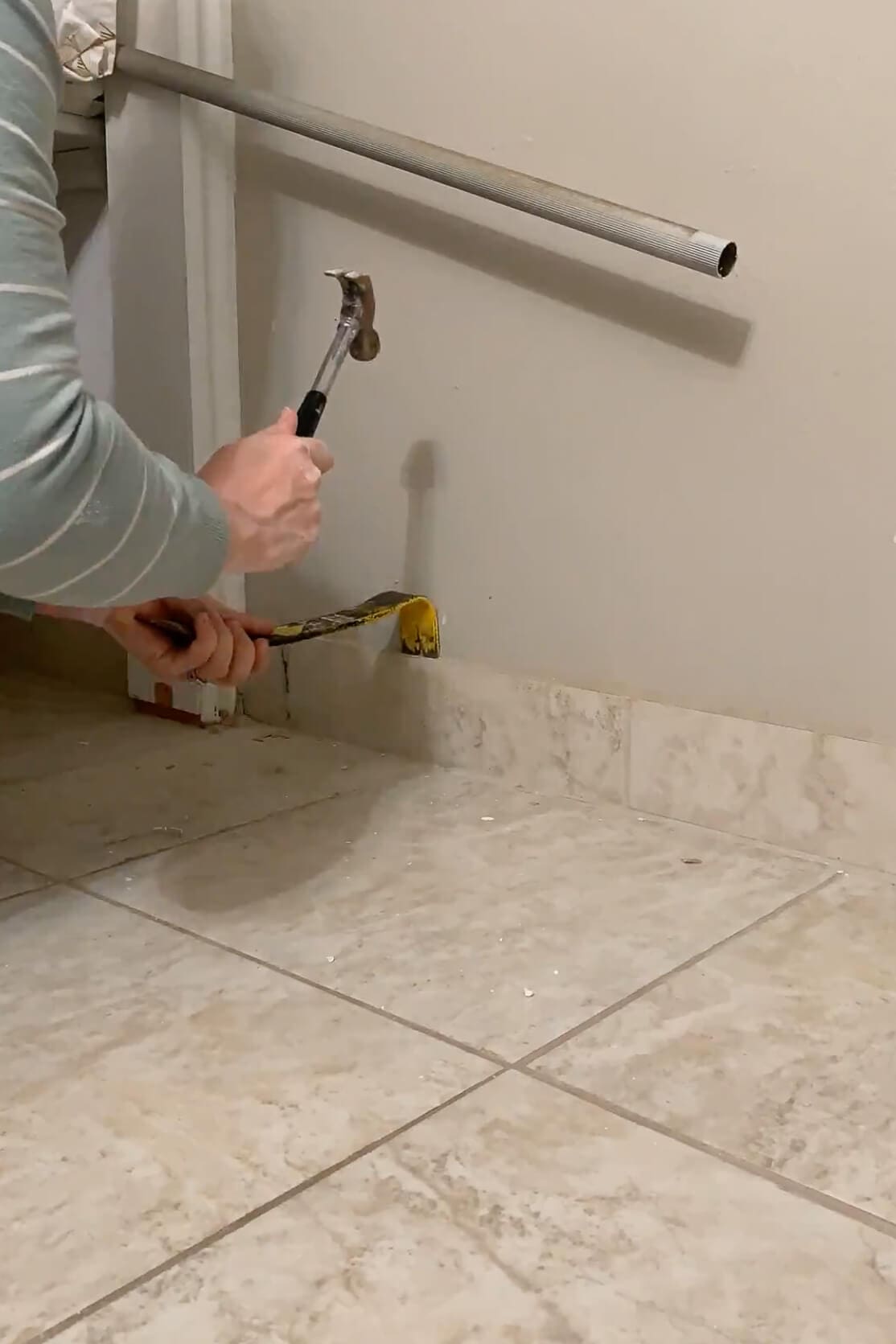
Remove baseboards if needed.
In this bathroom the “baseboard” was actually a row of tile, so I carefully pried it off with a hammer and pry bar. Removing it gave me a clean edge and kept the painted pattern from looking chopped off at the wall.
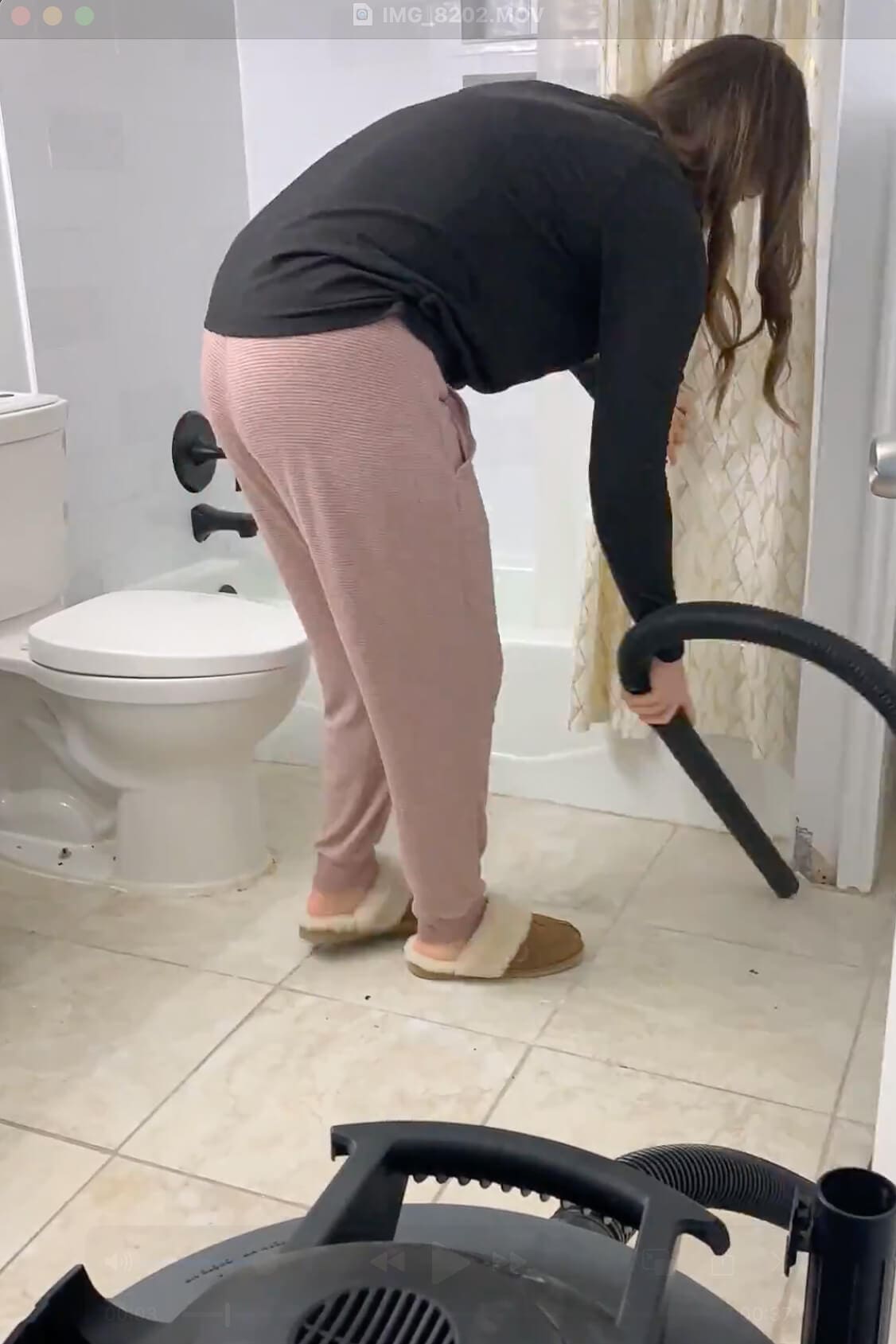
Vacuum thoroughly.
Vacuum the entire floor, including along the tub and behind the toilet, to pick up grit and dust.
Deep-clean with degreaser.
Spray the tile with a strong cleaner/degreaser and scrub well. This step matters whether you’re working over ceramic, porcelain, or vinyl. Any residue-soap scum, hairspray, oils—will keep the primer from bonding.
Let it dry completely.
Don’t rush this. Moisture hiding in grout lines can mess with adhesion.
Can you paint ceramic bathroom floor tile?
Yes-if you clean it thoroughly and use a bonding primer + durable paint. The same applies to porcelain tile. Vinyl tile can sometimes be painted too, but it needs extra cleaning and a product that’s approved for flexible surfaces-and it won’t usually last as long as paint on ceramic or porcelain.
Step 2: Prime and Paint the Base Coat
With the tile spotless and dry, it’s time to lock in the surface and build your base color.
Roll on bonding primer.
Use a roller for the main areas and a brush for edges and around the toilet. The primer is what lets paint grab onto the tile, so don’t skip it.
Let the primer cure according to the can.
Follow the time on the label; this is not the place to rush.
Paint the base color.
Once the primer is dry, apply your base coat—mine was a warm white to brighten the room. Cut in around edges and fixtures with an angled brush, then roll the rest with a foam roller.
Add a second coat if needed.
For most paint bathroom floor tiles projects, two thin coats look better and last longer than one heavy coat.
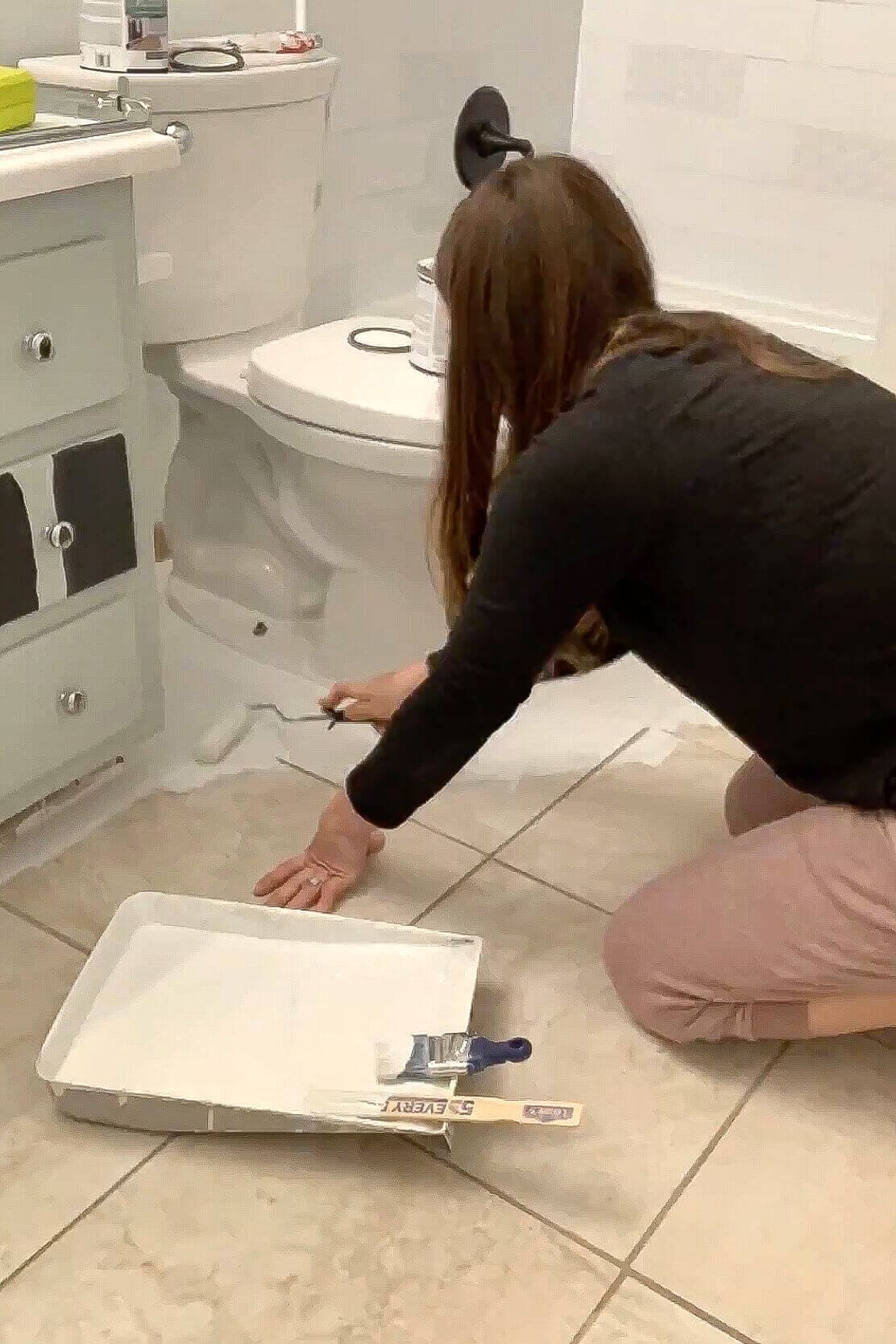
You’ve now finished the “solid color” part of how to paint tile floors in a bathroom. You could stop here and keep a clean painted floor-or move on to stenciling.
Step 3: Stenciling the Floor
Now for the fun part: turning a plain painted floor into a stenciled bathroom floor.
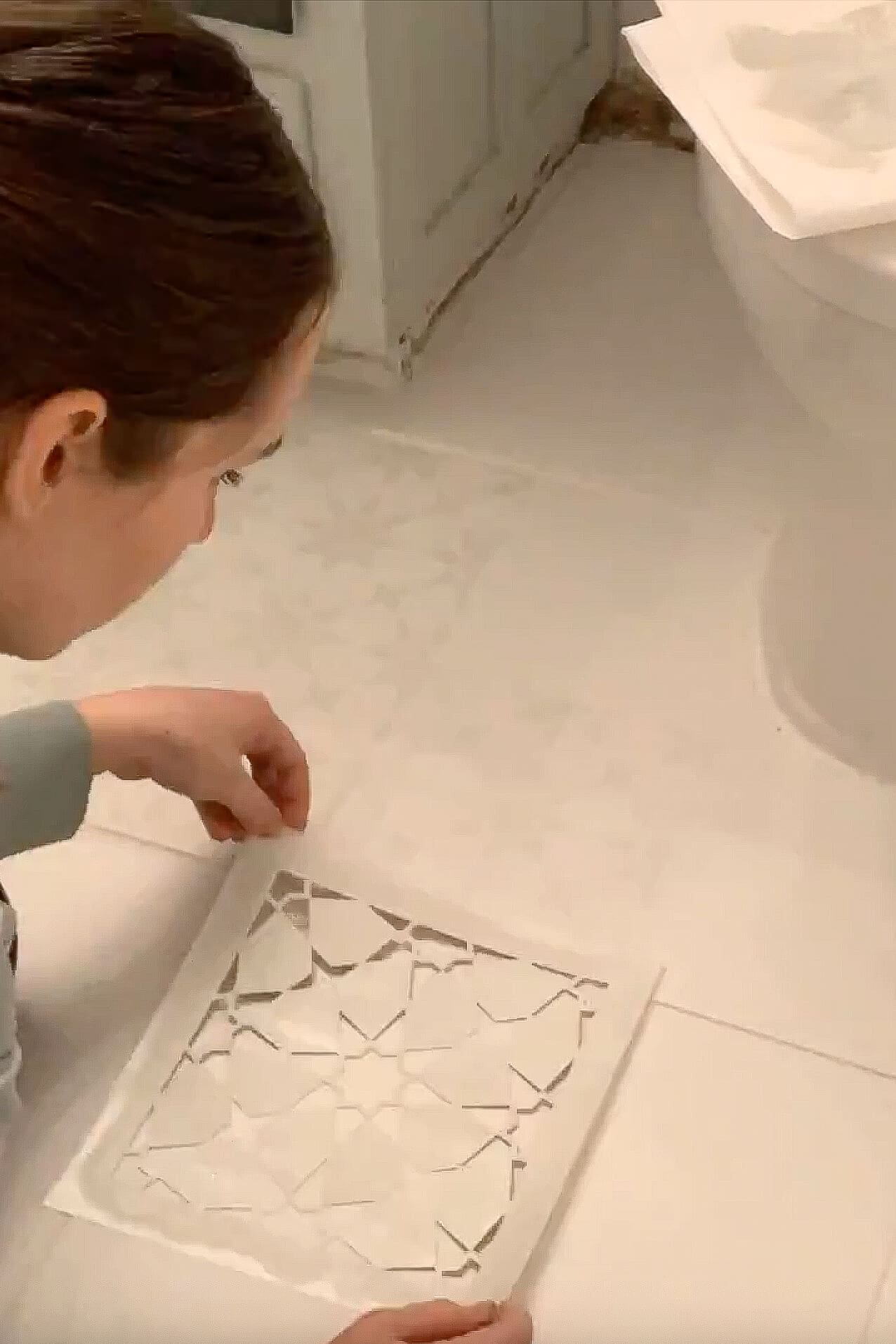
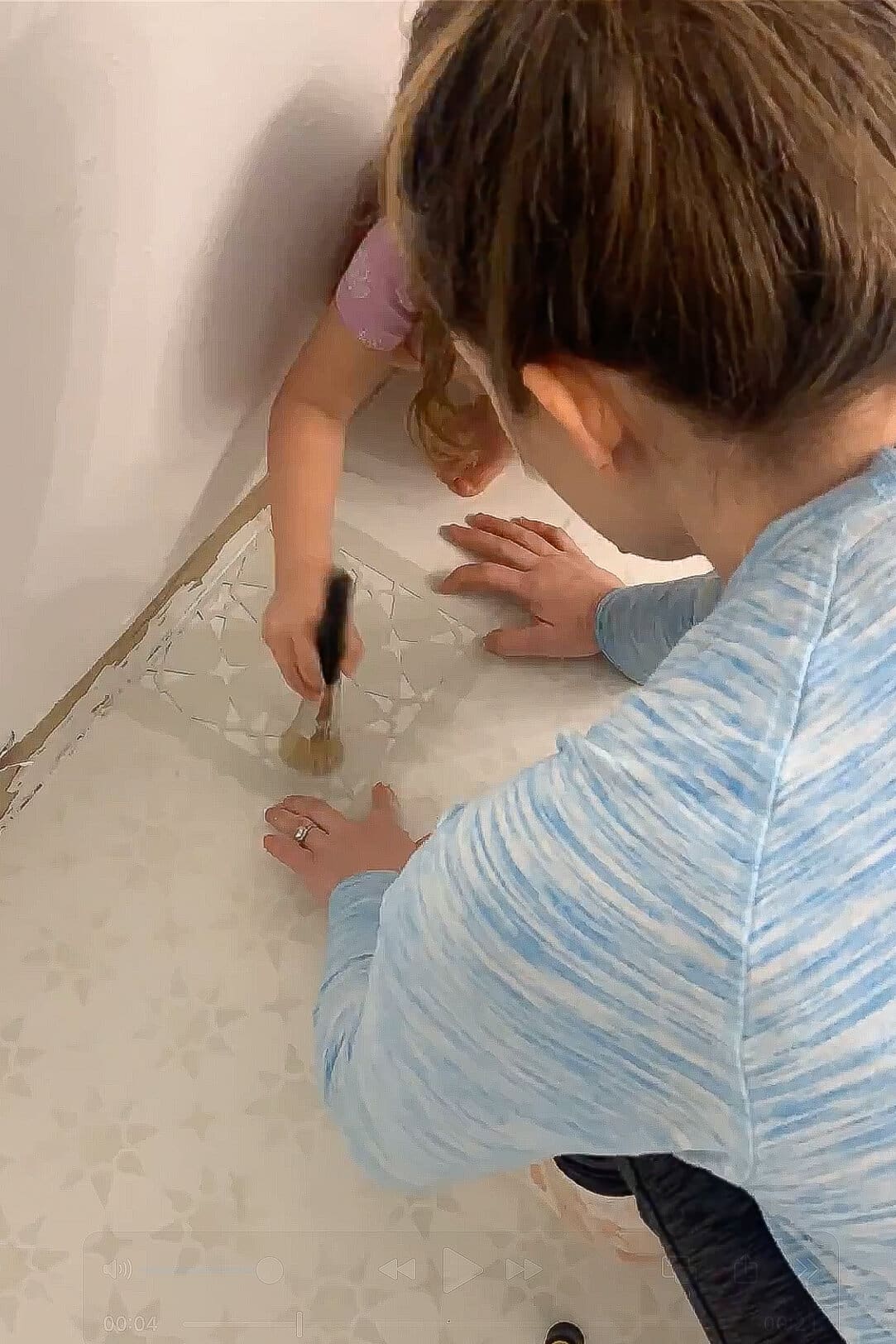
- Lay the stencil over your first tile or group of tiles, making sure it’s straight.
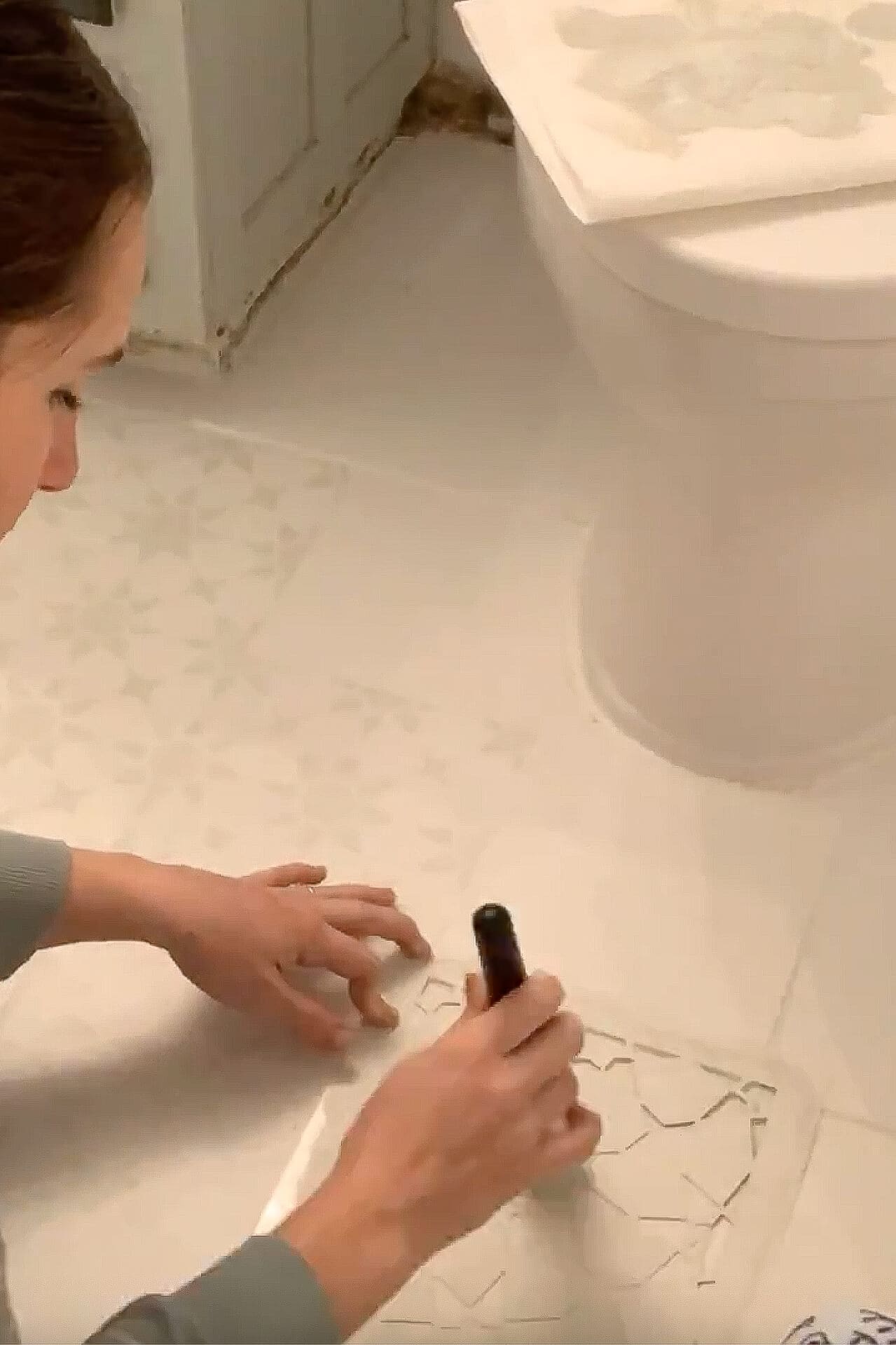
- Load a small round stencil brush with just a little paint, dab off the excess on a paper towel, and use an up-and-down stippling motion. Rolling tends to push paint under the stencil; stippling keeps lines crisp.
- Once you’re done with the first repeat, lift the stencil straight up, reposition it using the built-in registration marks, and continue.
I worked through all the easy, full-stencil areas first. That let me see the repeating pattern and get my rhythm before dealing with corners and tight spots.
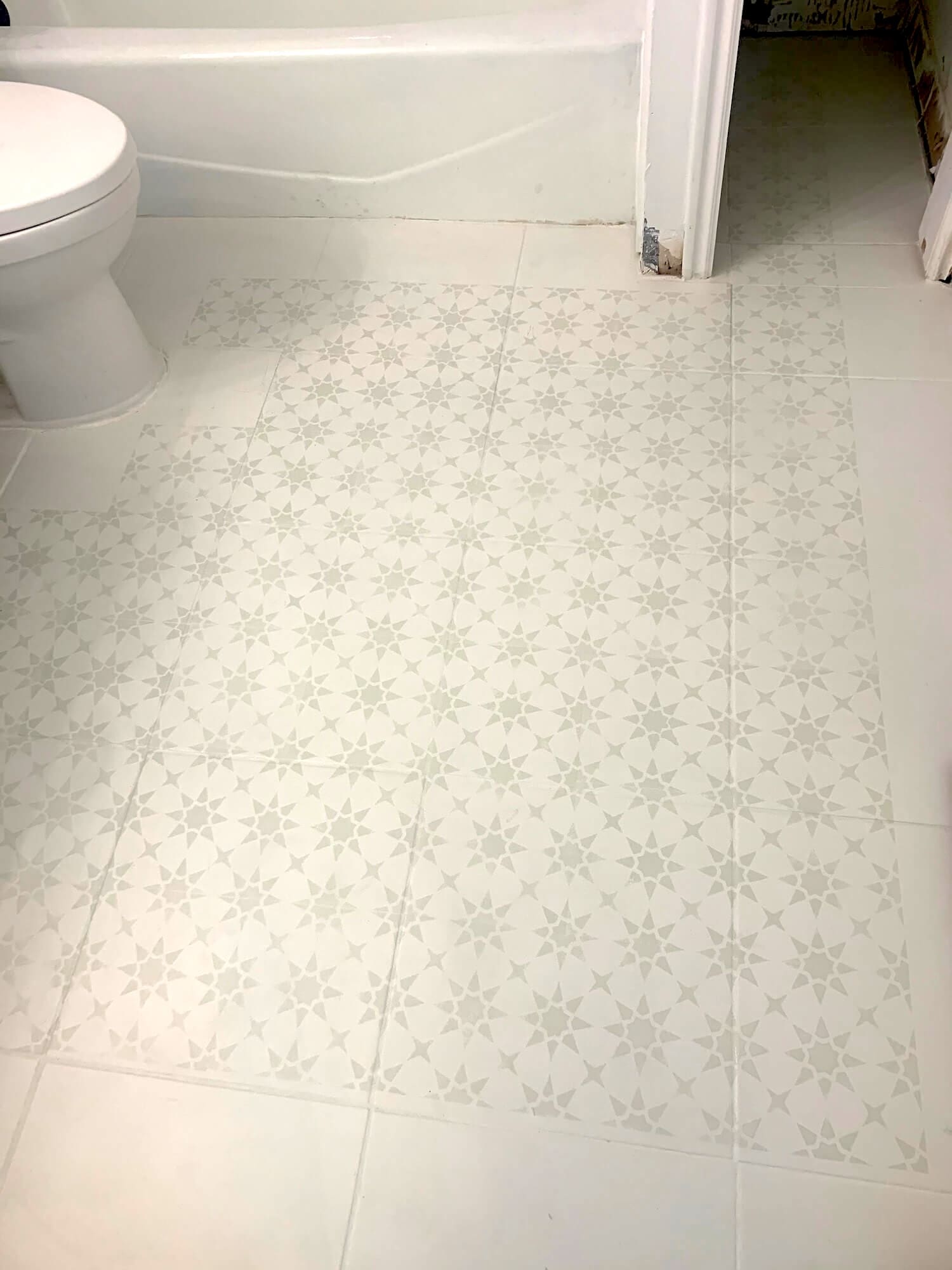
This method works for lots of bathroom floor tile stencil ideas-geometric shapes, stars, florals, or simple borders. The color contrast doesn’t need to be huge; even a soft gray over white looks beautiful and hides dirt well.
Step 4: Tackle the Tricky Spots
Every stenciling a tile floor project has a few awkward areas, especially in a small bathroom.
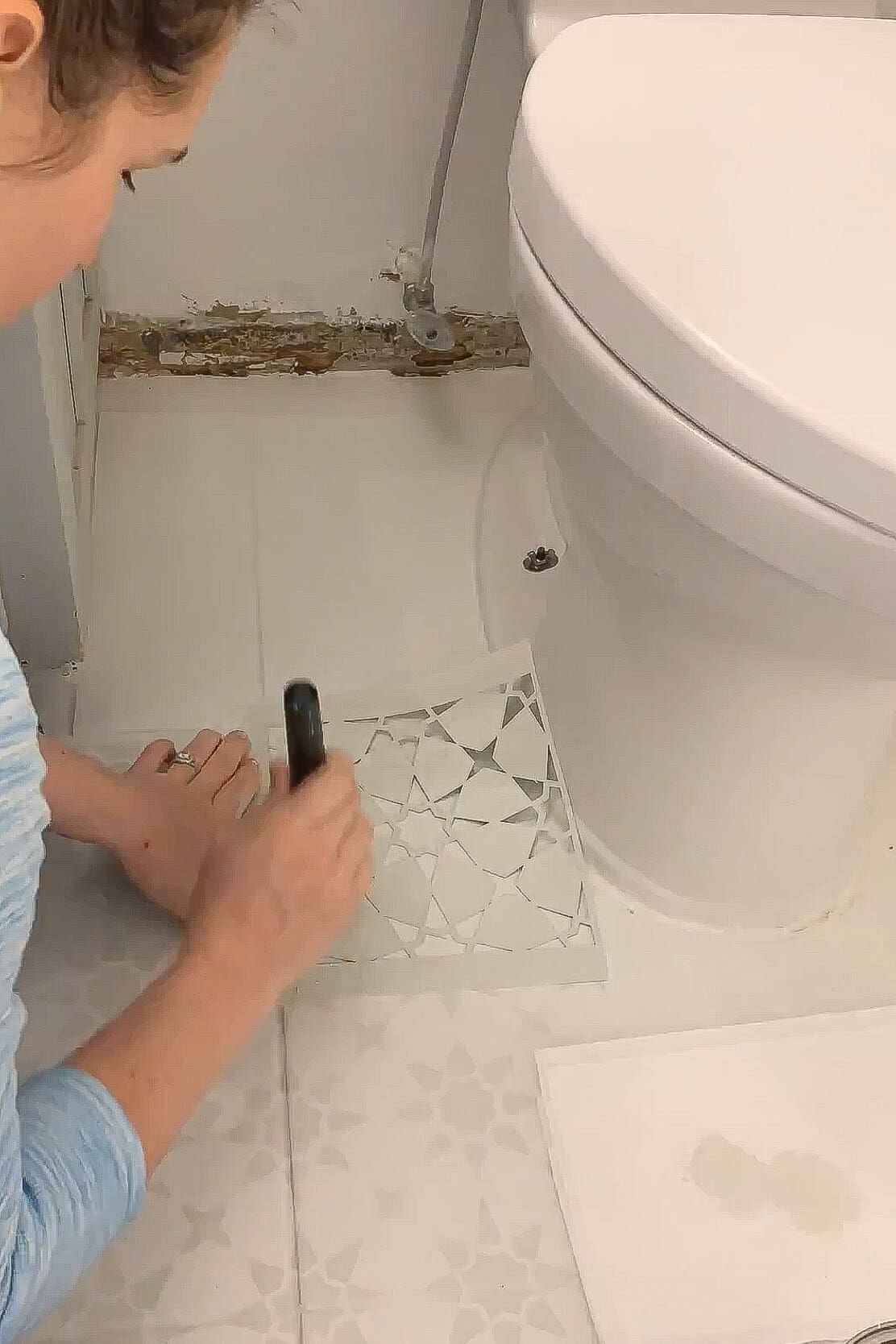
- Around the toilet:
Gently bend the stencil up the wall and around the toilet base so you can get as much of the pattern as possible without smearing paint. - Along walls and tub edges:
When the full stencil no longer fits, trim a second stencil with scissors so you have smaller pieces—one for edges and one for tight corners. This saves your original stencil and makes it easier to get close to walls. - Work last in these areas.
Finish all the full-tile repeats first. Once those are done and dry, move on to the trimmed stencil to fill in gaps.
Step 5: Sealing Painted Bathroom Floor Tiles (Optional but Helpful)
Once the stencil layer is completely dry, step back and decide if your floor needs extra protection.
- In a low-traffic bathroom like a basement guest bath, I chose to skip a topcoat and the floor has held up well.
- In a main bathroom, hallway, or laundry room, I recommend sealing with a water-based polycrylic designed for floors.
Do you need to seal painted tile floors?
Technically, no-but sealing painted bathroom floor tiles in high-traffic or splash-heavy rooms will help protect the design from scuffs, scratches, and moisture.
Apply the topcoat in thin, even layers with a clean roller, following the manufacturer’s dry times. Avoid heavy coats that can puddle in grout lines.
How Long Do Painted Bathroom Floor Tiles Last?
If you’ve used good products and followed the prep, painted bathroom floor tiles can last several years. Factors that affect durability:
- How well the tile was cleaned and degreased
- Whether you used a true bonding primer
- The quality of the paint and topcoat
- How much traffic and water the room sees
For best results, avoid dragging heavy furniture across the floor, wipe up standing water, and add washable rugs in front of the sink and tub.
Another Idea: DIY Painted Tile Floor in a Laundry Room
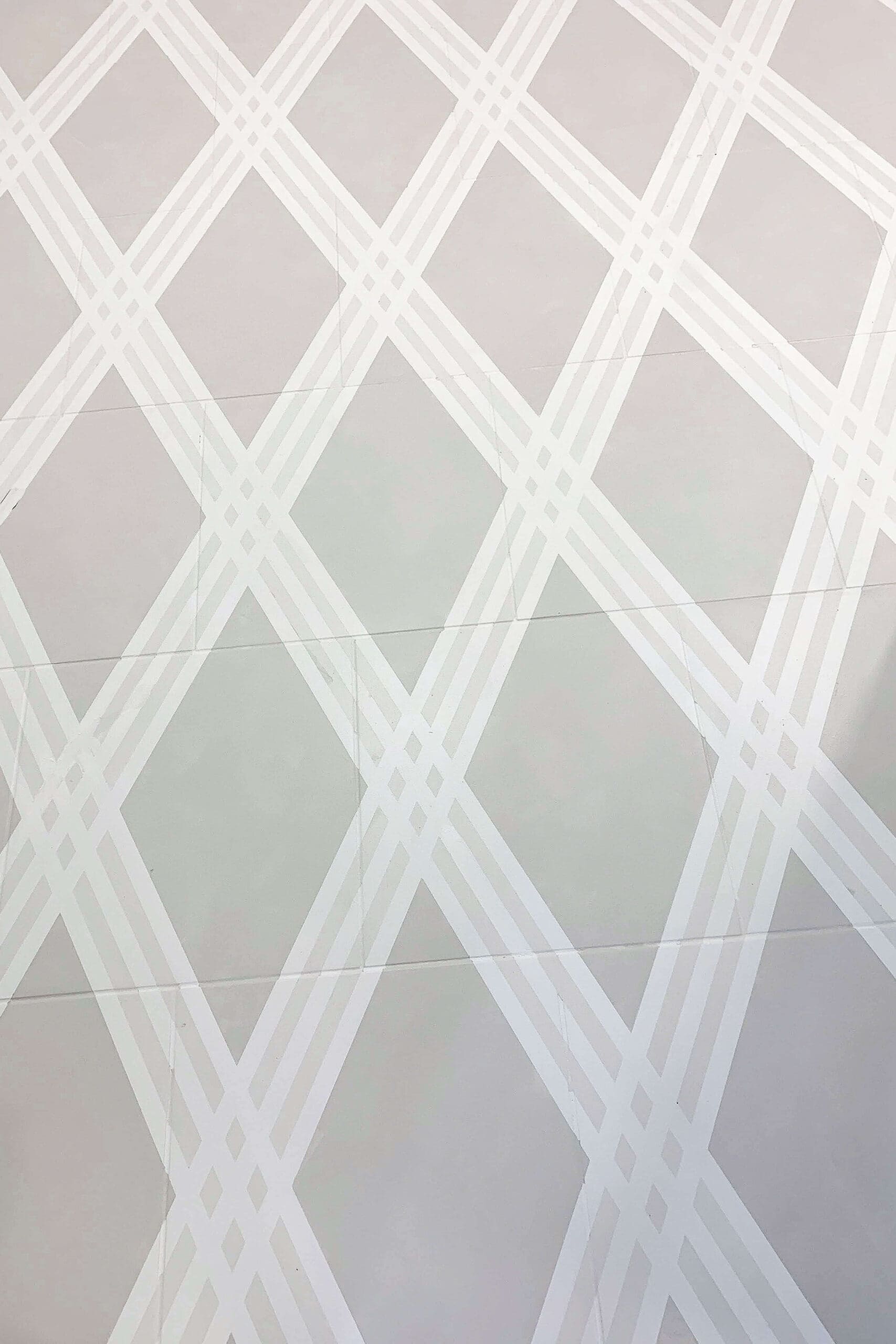
This bathroom wasn’t my only DIY painted tile floor project. I also updated my aunt’s laundry room tile using painter’s tape to create a plaid pattern instead of a stencil. It’s a great example of painted tile floor ideas if you prefer straight lines over repeating motifs, and the process uses the same prep, primer, and paint steps.
Final Thoughts: Budget Bathroom Floor Makeover
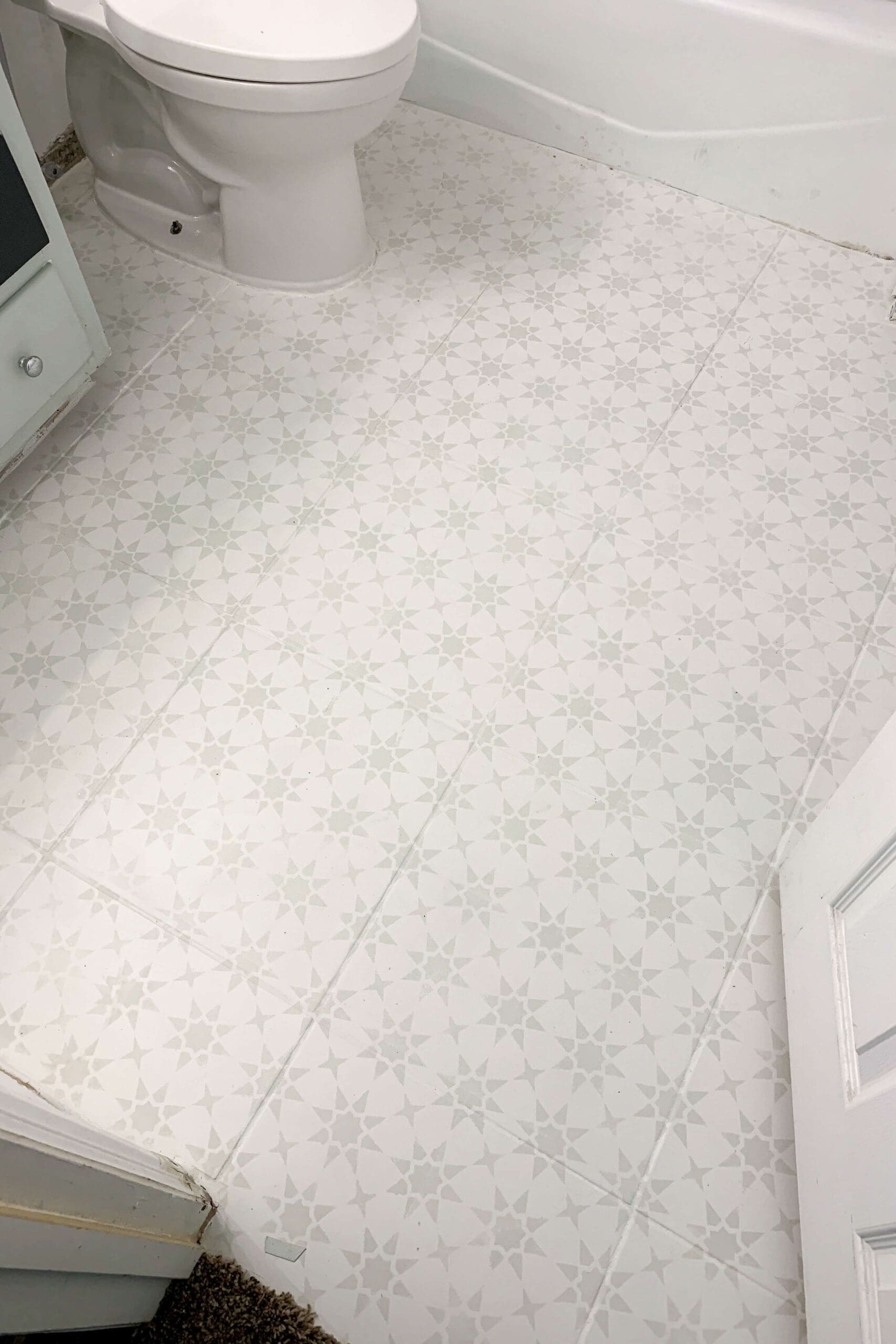
This budget bathroom floor makeover completely changed the personality of our basement bath. The stenciled pattern looks like hand-laid artisan tile, but it cost a fraction of a full replacement and didn’t require a single piece of demo.
If you’re craving a new look but full retiling isn’t in the budget, painting bathroom floor tiles and stenciling a tile floor is a practical, creative way to get there. Clean carefully, choose the right primer and paint, take your time with the stencil, and you’ll end up with a floor you’re excited to show off every time you walk into the room.
Other DIY Projects from This Basement Bathroom Remodel
If you’ve been following along, this painted floor was just one part of our full basement bathroom makeover. Here’s everything that went into transforming the space:
- How to Tile a Shower Wall – My full step-by-step tiling tutorial for creating a bright, waterproof shower surround.
- DIY Board and Batten Bathroom Wall – Adds texture and height to small bathrooms for an instant custom look.
- How to Paint a Bathroom Vanity – The exact method I used for a smooth, durable vanity finish.
- DIY Gold Bathroom Mirror – A quick project that elevated the whole room’s style.
- How to Remove Mold from a Shower + Prep the Walls for Tile – The essential first step before the tiling began.
📌 Save Painting Bathroom Floor Tiles for Later
Pin now and come back anytime you’re ready to try painting bathroom floor tiles in your own home!
FAQs About Painting Bathroom Floor Tiles
If the tile is properly cleaned, primed, and sealed (especially in high-traffic areas), painted bathroom tile can last several years. Using a bonding primer and optional topcoat like polycrylic will help extend the durability.
For best results, use a high-adhesion bonding primer followed by a durable floor paint, cabinet paint, or enamel paint designed for high-traffic surfaces. Avoid chalk paint or anything not made for heavy wear.
Yes! Stenciling a floor works great over painted tile. Once the base coat is dry, just align your stencil over each tile and use a stippling brush for the best results. It’s an easy way to mimic the look of custom or artisan tile without replacing anything.
Sealing isn’t always necessary in a low-traffic bathroom, but if your painted floor will get a lot of use or water exposure, applying a water-based polycrylic topcoat will help protect the paint and stencil from scratches, chipping, and moisture.
