


Concrete Patio Sealing: Don’t Skip This Easy Step


Updated September 18, 2026
Concrete patio sealing is the difference between a patio that still looks new in a few years and one covered in leaf stains, pot rings, and dark spots you cannot scrub out. The good news is that it is genuinely easy. One afternoon, one pump sprayer, no special skills required.
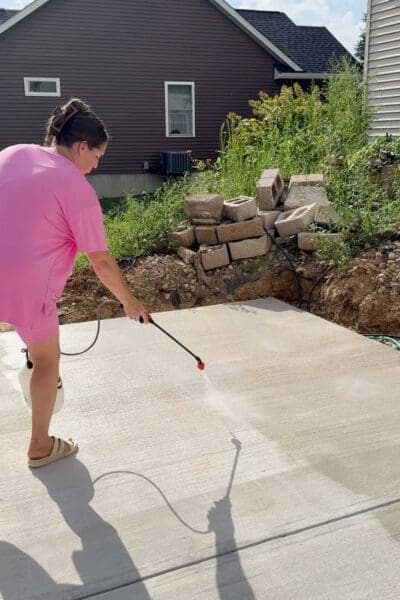
Table of Contents
- Why I Won’t Skip Sealing My Concrete Patio
- Why I Chose a Penetrating Sealer
- When Can You Seal a Brand New Concrete Patio?
- What You Need for Concrete Patio Sealing
- How to Seal a Concrete Patio, Step-by-Step
- Mistakes to Avoid When Sealing a Concrete Patio
- How Often Do You Have to Reseal a Concrete Patio?
- Concrete Patio Sealing FAQs
- 📌 Pin This for Later
- More Patio and Backyard Projects
Why I Won’t Skip Sealing My Concrete Patio
If you have been following along, you know we spent a very long, very splintery weekend ripping out our old deck. And now, finally, we have a beautiful new concrete patio back there. It is smooth, it is level, and it is the exact blank canvas I have been daydreaming about since we moved in.
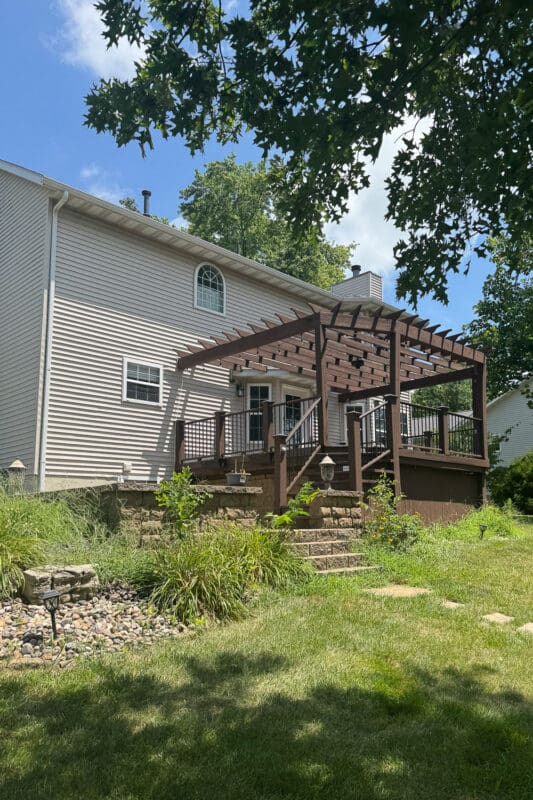
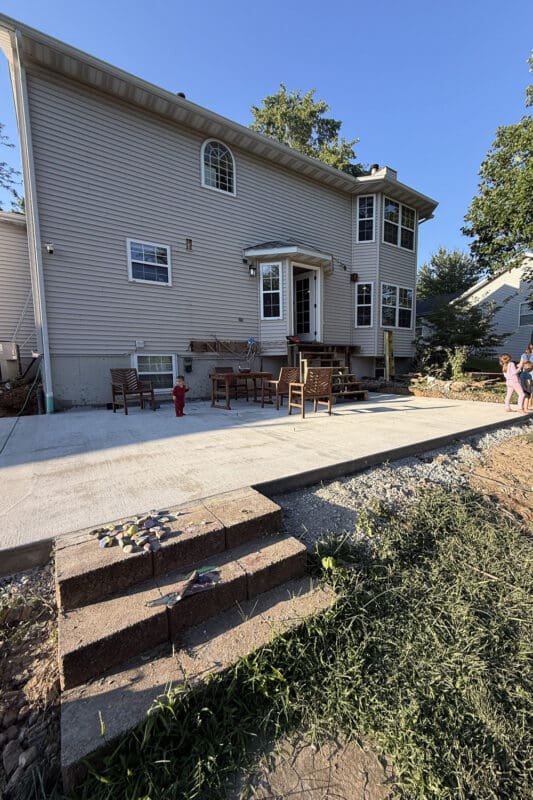
So naturally, the first thing I did was not sit on it and enjoy it. The first thing I did was get to sealing my new concrete patio, because I have made this mistake before and I am not doing it again.
At our old house I did absolutely nothing to our concrete patio other than enjoy it. And honestly, I didn’t know better.
I was shocked by how many stains I had to take care of before we put our house on the market. Everything from leaves to dirt to bird poo and water rings from planters left their mark on the patio. I eventually spent a whole day deep cleaning and scrubbing those stains out, and you can read that process here: How to Clean a Concrete Patio: My Bleach Hack That Actually Works
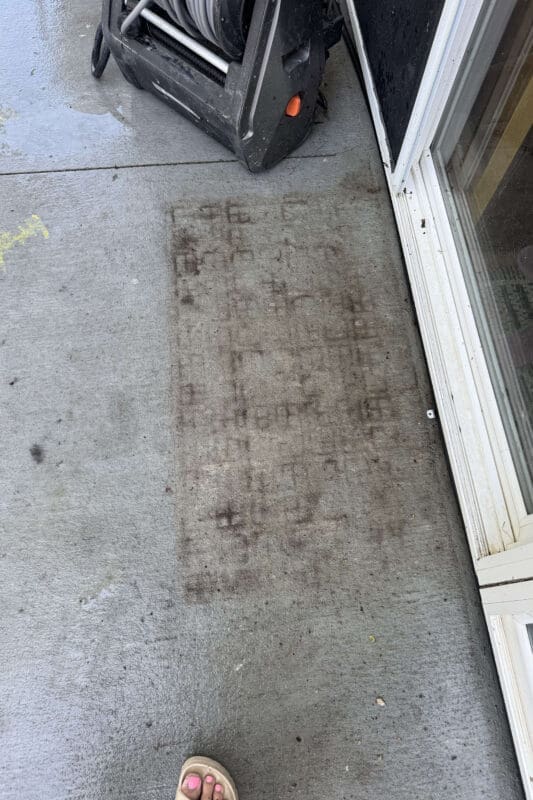
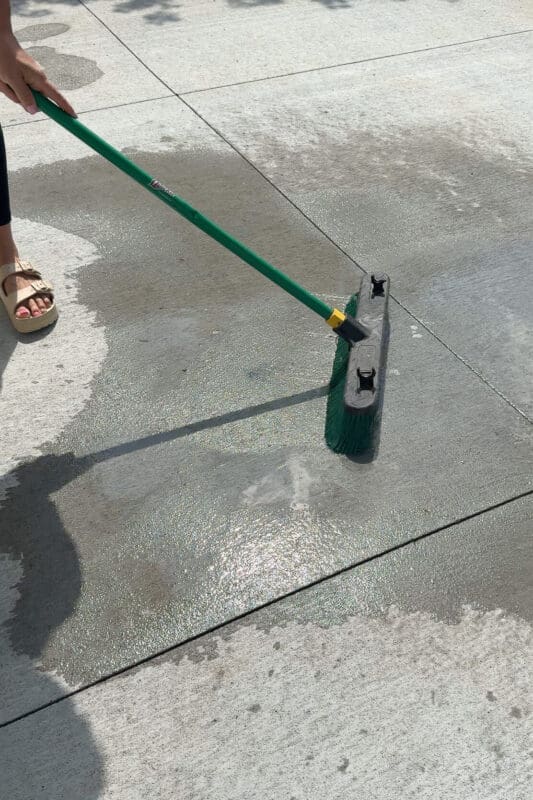
It mostly worked. But “mostly” is the word, and I would rather seal for one afternoon than scrub for another weekend.
What’s important to understand here is that concrete is porous. It’s full of tiny channels and air pockets, and every one of them is an open door. Water does not sit on unsealed concrete and evaporate away. It soaks in and brings whatever it is carrying with it. Leaf tannins, grease, dirt, bird poo… Once a stain is in the concrete instead of on it, you’re not going to be able to wipe it off. You’re trying to pull it back out.
Basically, I paid good money for a nice new patio. Sealing it is the cheapest and easiest way to keep it looking nice and new.
Why I Chose a Penetrating Sealer
There are two camps here, and it is worth knowing which one you are buying.
Film-forming sealers, usually acrylics, sit on top like a clear coat. You get that wet look with a little shine, which plenty of people love. The catch is that a film can peel, flake, or go cloudy, it gets slick when it rains, and you are back out there redoing it every couple of years.
Penetrating sealers soak in and react inside the pores. Nothing sits on top, so there is nothing to peel or scuff, the concrete stays breathable, and the patio looks completely untouched.
I used Ghostshield Siloxa-Tek 8500, the ready-to-use version. Water-based, low odor, cleans up with soap and water, dries invisible.
One note. The 8500 repels water and salt, which covers everything that wrecked my last patio, but it is not an oil barrier. Ghostshield points you to their 8505 or 8510 if that is your concern. So keep a mat under the grill to catch any grease before it stains your patio.
When Can You Seal a Brand New Concrete Patio?
Not the week it was poured, no matter how badly you want to. Wait 28 days. A penetrating sealer has to soak in, and fresh concrete is still full of water. (Why that rule works a little differently for penetrating sealers is down in the FAQs.)
After that, you just need the right conditions:
- Dry concrete. Give it 24 to 48 hours after any rain or pressure washing
- 40 to 95 degrees, surface and air
- No rain expected for 12 hours, and keep it dry for 24 to 48 hours after you seal
- Nothing dropping below freezing within 8 hours
What You Need for Concrete Patio Sealing
Truly a short list, which is my favorite kind of list.
- Concrete sealer. I used this one
- A pump sprayer. This is what I used, and it made the whole job take about an hour.
- A stiff push broom and a pressure washer for cleaning
- Painter’s tape and drop cloths for the house siding and anything else you want to protect
How to Seal a Concrete Patio, Step-by-Step
1. Get it clean, and I mean clean
Whatever is on the concrete when you seal is on the concrete for good. Sweep every leaf, pull the weeds out of the expansion joints, hose the whole thing down, pressure wash it if needed, and hit any stains, oil spots, or grease with a cleaner. Anything left on the surface blocks the sealer from getting in.
Then let it dry completely. Not damp, not “it looks dry.” Give it 24 to 48 hours after you rinse it.
2. Tape and cover anything you do not want sealed
Siding, trim, window glass, plastic, any plants right up against the edge. If you do get overspray somewhere, clean it off right away instead of letting it sit. spot.
3. Fill and prime the sprayer
Stir the sealer really well first, and keep stirring occasionally while you work. Pour it into the pump sprayer, pump it up, and test the spray pattern on cardboard. You want an even fan, not a fine mist.
Quick heads up so you do not panic: it comes out milky white. It dries clear. This is normal.
4. Start at the far corner and spray toward your exit
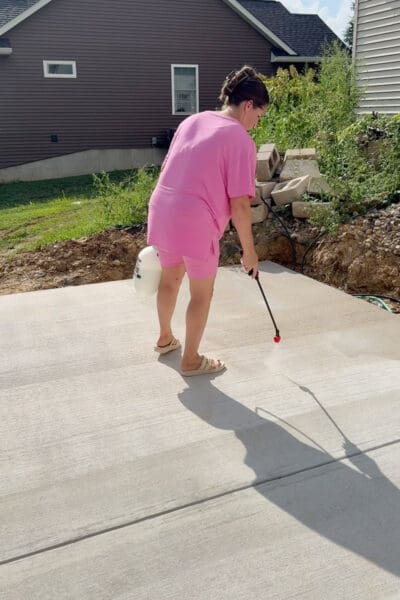
Plan your path before you start so you do not paint yourself into the middle of the patio. Keep the wand moving in steady sweeps, holding it about a foot off the surface.wide, keeping the wand moving in steady sweeps and holding it about a foot off the surface.
5. Spray the second coat while the first one is still wet
You do not let the first coat dry in between coats. You spray a section, give it a second to soak in, and go right back over that same section a second time while it is still wet. There is a real reason for this. Once that first coat dries it is already hydrophobic, which means it will actively repel the second coat you are trying to put down.
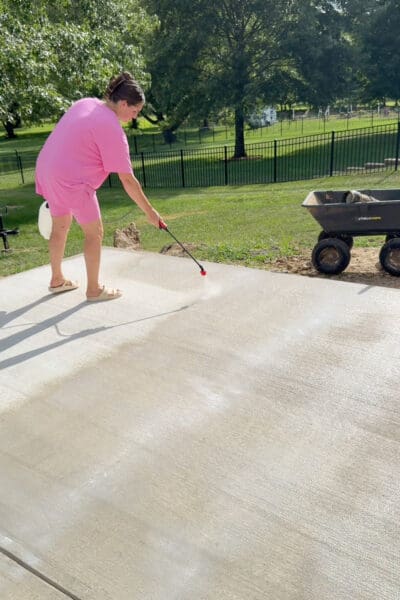
So the rhythm is: spray a section, spray it again, move on.
6. Give it time
Six hours before you walk on it, 24 before you drive on it or drag the patio furniture back out, and keep rain off it for the first 24 to 48 hours.
Then be patient with the results. The water repellency keeps developing for about a week, so if you dump a glass of water on it the next morning and it is not beading dramatically, nothing went wrong. Give it seven days.
Mistakes to Avoid When Sealing a Concrete Patio
Do not seal damp concrete. This is the big one for penetrating sealers. If the pores are still holding water, the sealer has nowhere to go and you get patchy coverage.
Do not seal over a stain. You will lock it in and it will be there permanently, staring at you.
Do not over-apply. More is not better here. Puddles do not soak in, they just sit there and dry weird. Saturate and move on.
Do not trust the coverage number blindly. The range is wide because porous concrete drinks more. Buy a little extra.
Do not judge it on day one. Full repellency takes about a week to develop.
Do not set planters straight down on it. Sealer is protection, not a force field, and standing water under a pot for three months is still standing water. Use a pot foot or a saucer.
How Often Do You Have to Reseal a Concrete Patio?
Here is the part I love about going with a penetrating sealer. Because it reacts inside the concrete instead of sitting on top of it, there is no film to wear off, peel, or yellow in the sun. Ghostshield is confident enough in that to put a very long warranty on it, and it is not a product anyone talks about redoing every other summer.
Rather than watching a calendar, just test it. Splash a cup of water on the patio. If it beads up and sits there, you are good. If it soaks in and darkens the concrete, it is time to reapply.
Concrete Patio Sealing FAQs
About 28 days. New concrete needs to fully cure and release its moisture first, and sealing too early can trap that moisture and cause a cloudy or peeling finish. Always check your specific product label.
Yes. With film-forming acrylic sealers, the worry is trapping moisture in the slab under the film. Penetrating sealers are breathable, so that’s not the issue. Instead, they need to soak in, and fresh concrete is still saturated with water. If the pores are full, the sealer can’t penetrate. Manufacturers generally want the concrete at roughly 80 percent of its design strength, which typically takes 14 to 28 days.
Yes, and it is by far the fastest way to do it. Just make sure your sprayer is compatible with your sealer. Water-based sealers work fine in a standard garden pump sprayer, but solvent-based sealers need a solvent-resistant sprayer or they will destroy the seals.
You do not have to, but unsealed concrete absorbs water, dirt, leaf tannins, grease, and just about anything else that lands on it, and those stains are very hard to remove later. Sealing keeps spills on the surface where you can clean them up.
No. It soaks in rather than sitting on top, so the concrete looks the same once it dries. The sealer goes on milky white and dries completely clear, and because it is UV stable it will not yellow over time. If you want a wet look with shine, you want a film-forming acrylic instead.
Not with a penetrating sealer. There is no film on the surface, so the texture and traction of the concrete stay exactly the same. Film-forming acrylic sealers are the ones that can get slick when wet.
📌 Pin This for Later
Planning your own patio project? Pin this so you can find it when your concrete is cured and ready to go.
More Patio and Backyard Projects
We mostly bought this house for the yard and have been working hard to transform it one DIY project at a time. Here are a few that we’ve accomplished so far in this house, and a couple of favorites from our last one. Be sure to follow along on Instagram if you want to follow our house projects in real time.