

Updated September 30, 2026
These DIY terracotta pumpkins are the easiest Pottery Barn dupe I have ever made: paint, baking soda and a few foam pumpkins, about $8 a pumpkin, and the only slow part is waiting for them to dry. If you have been eyeing the terracotta pumpkins at Pottery Barn or Walmart, you can get the same rustic, clay-like look at home in an afternoon with store-bought pumpkins and a paint sample pot. This textured pumpkin craft is quick and beginner-friendly, and the kids can help with the messy part.
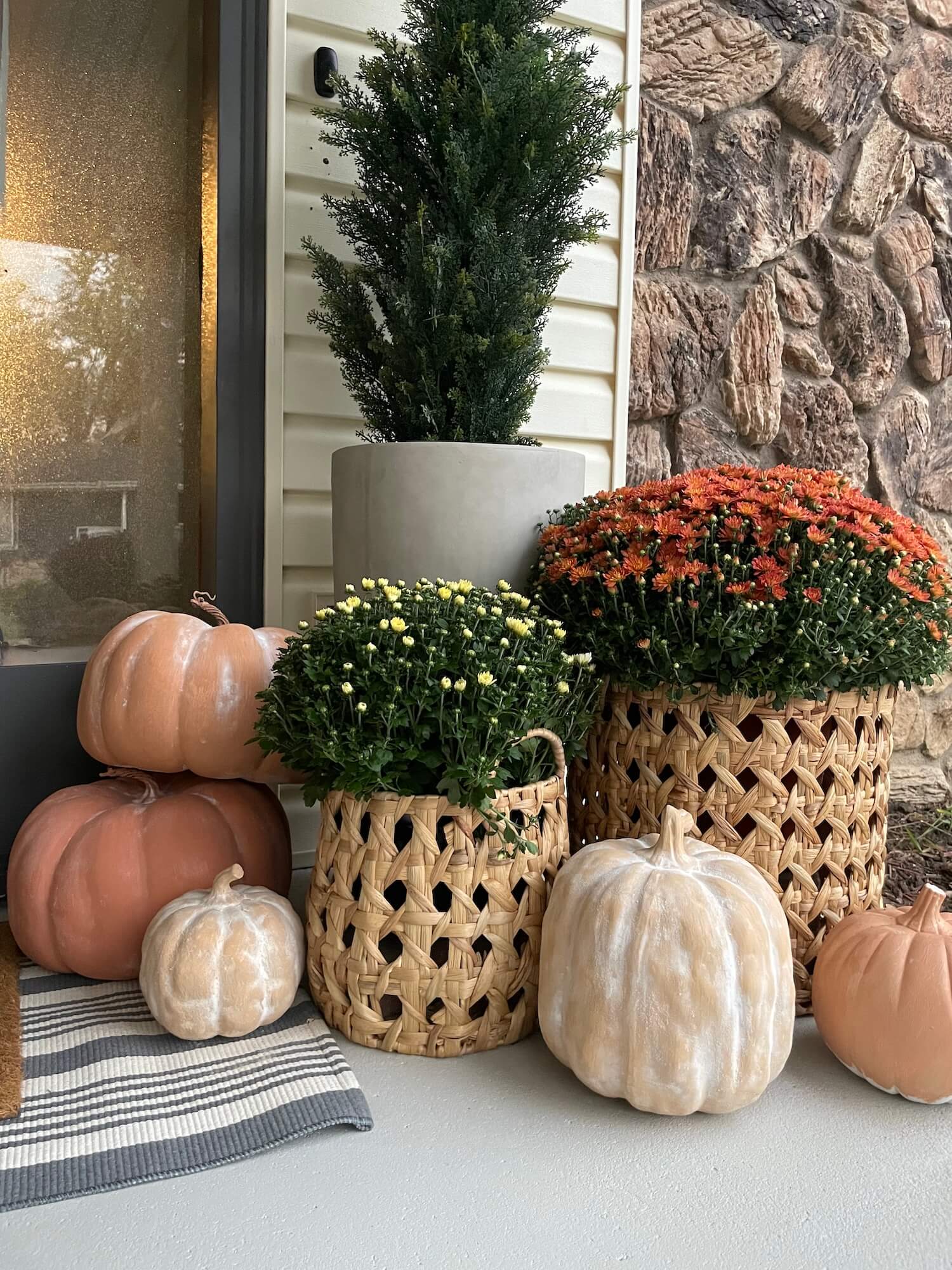
How do you make terracotta pumpkins at home?
Prime foam or plastic pumpkins, mix paint and baking soda one to one, and brush it on. While it is wet, sprinkle more baking soda over the sides and pat it in with a gloved hand, then let them dry for a few hours. The baking soda turns flat paint into a gritty, clay-like finish, so a $1.25 craft pumpkin ends up looking like the Pottery Barn terracotta ones.
Table of Contents
Watch the Terracotta Pumpkins Come Together
Here’s the whole baking soda paint trick in under a minute, mess and all.
DIY Terracotta Pumpkins at a Glance
- Cost: About $8 per pumpkin buying everything new, about $1.25 per pumpkin once you own the paint and primer.
- Time: About 15 minutes of painting per pumpkin, then a few hours to dry.
- Difficulty: Beginner. If you can frost a cupcake, you can do this.
- Best pumpkins: Foam or plastic, any size. Real ones rot under the paint.
What You Need for DIY Terracotta Pumpkins
- Foam or plastic pumpkins in various sizes: Dollar Tree ones are $1.25 and take the paint perfectly.
- Flat paint: I used Sherwin-Williams sample pots in Totally Tan and Chrysanthemum. Any matte latex or acrylic craft paint works.
- Baking soda: the secret to the clay texture. One box does a dozen pumpkins.
- Spray primer: helps the paint stick evenly to slick plastic or foam.
- Gloves: a must, because you pat the baking soda in by hand.
- Paintbrush: a cheap chip brush is ideal, since the grit ruins a good one.
Everything I used for these pumpkins, plus the mums, baskets and lanterns on the porch, is in my Amazon storefront.
Step 1: Prime the Pumpkins
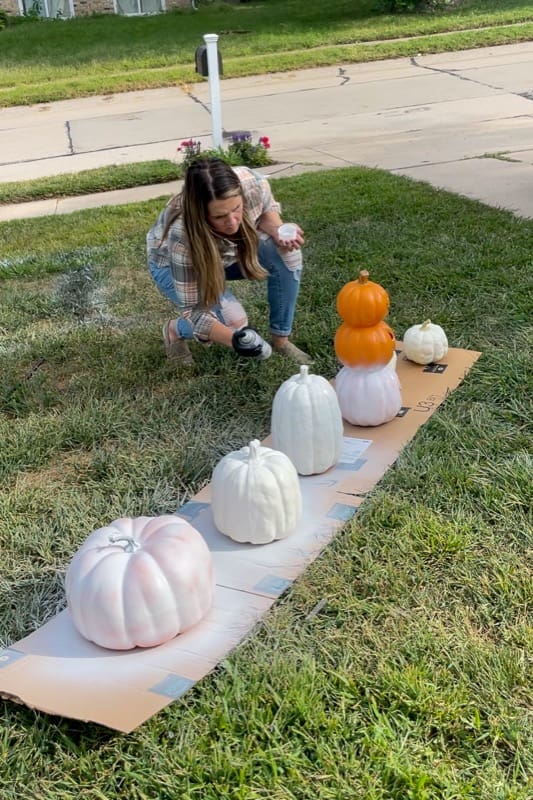
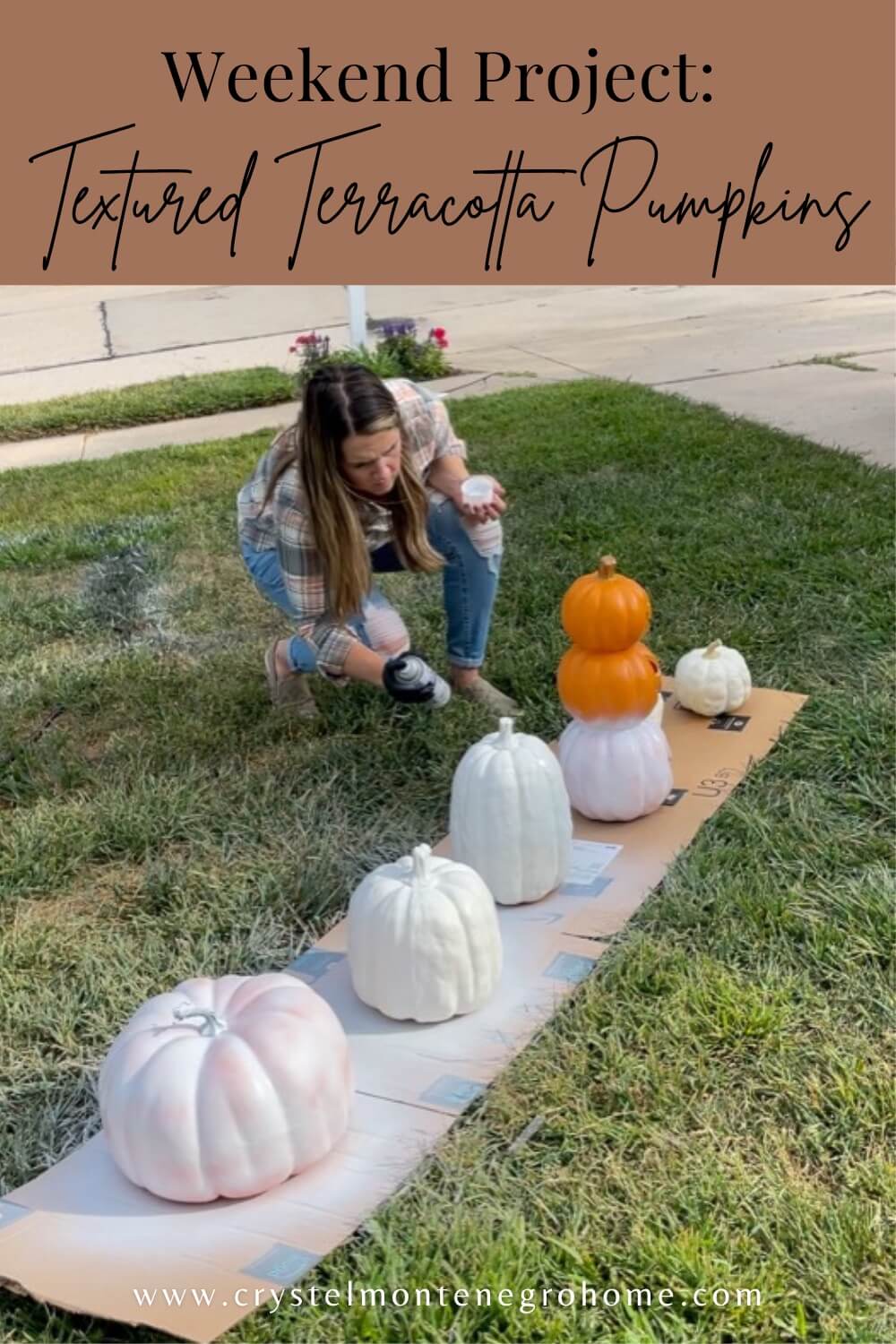
First, let’s prep your pumpkins! Give each one a thin, even coat of primer. This is an important step because it helps the paint and baking soda stick perfectly, giving you a smooth, long-lasting finish. Hold the can about 8 to 10 inches away from the pumpkin and use light, sweeping motions to avoid drips. Let the primer dry completely before you move on.
Step 2: Mix the Baking Soda Paint and Add the Texture
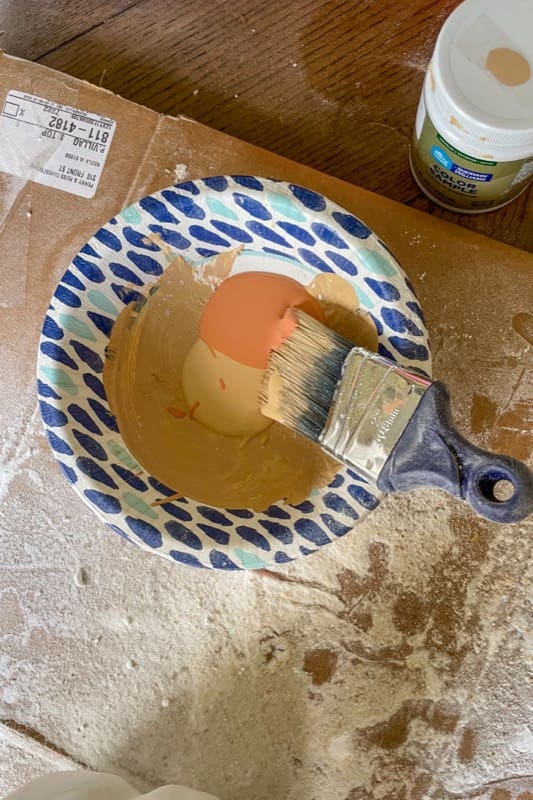
Now for the magic! In a small bowl, mix your paint and baking soda together in a 1:1 ratio. The baking soda is what gives the paint that amazing, gritty texture that mimics real clay. This baking soda paint trick is the whole secret behind every terracotta pumpkin dupe you have seen, and it works with any flat paint color.
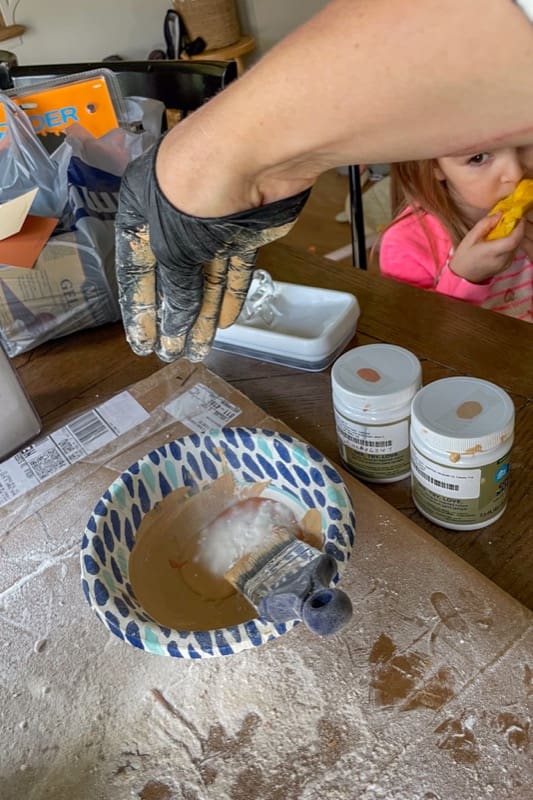
Brush the mixture onto your pumpkin, making sure you get every inch of the surface.
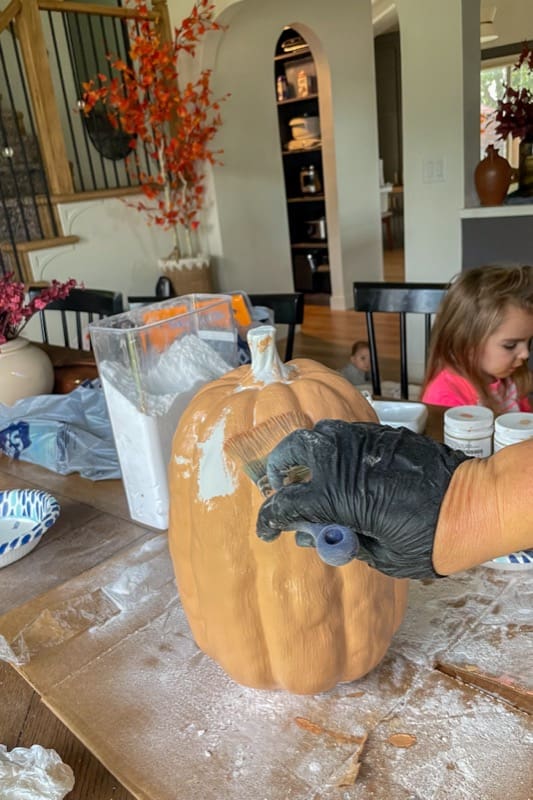
While the paint is still wet, sprinkle a little extra baking soda onto the sides and gently pat it into the paint with your gloved hand. This creates even more depth and makes your pumpkins look truly authentic. Be sure to work on one pumpkin at a time so the paint doesn’t dry too quickly.
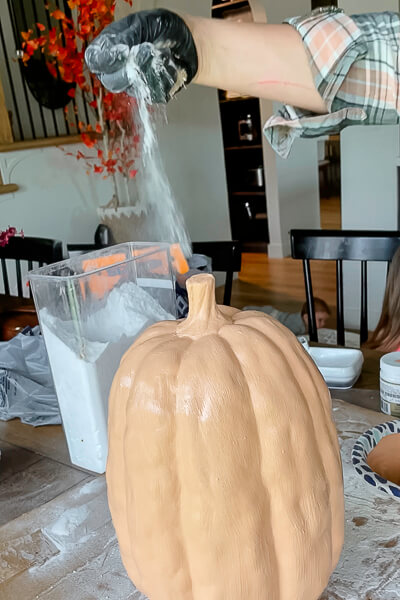
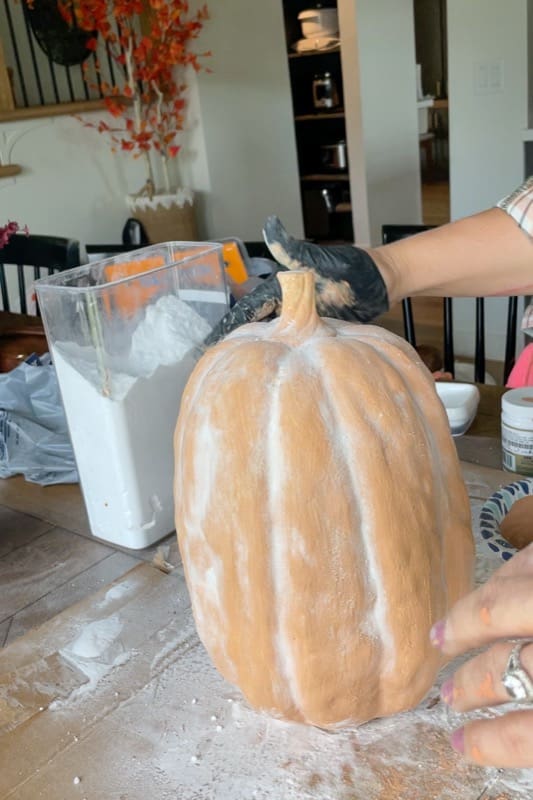
Pro tip: For a more natural, varied look, try mixing two different paint colors together. I used Totally Tan and Chrysanthemum to create pumpkins with subtle, unique shades.
Step 3: Let the Terracotta Pumpkins Dry
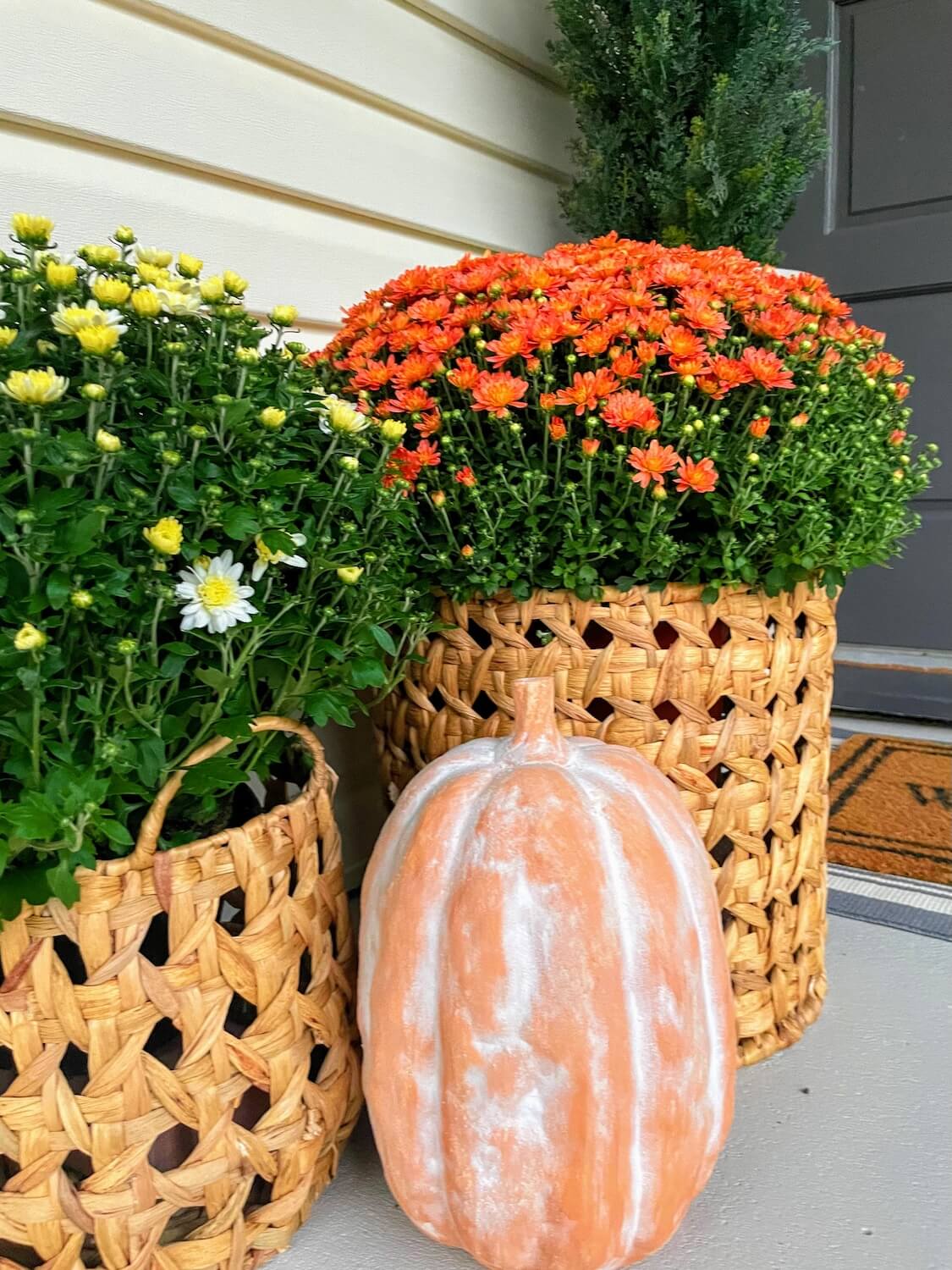
That’s it! Now, all you have to do is let your beautiful terracotta pumpkins dry completely. Depending on how thick your paint is, this could take a few hours. Once they’re dry, you’ll have pumpkins that look like they’re made from real clay, without all the weight and expense.
Step 4: Style Your Terracotta Porch Pumpkins
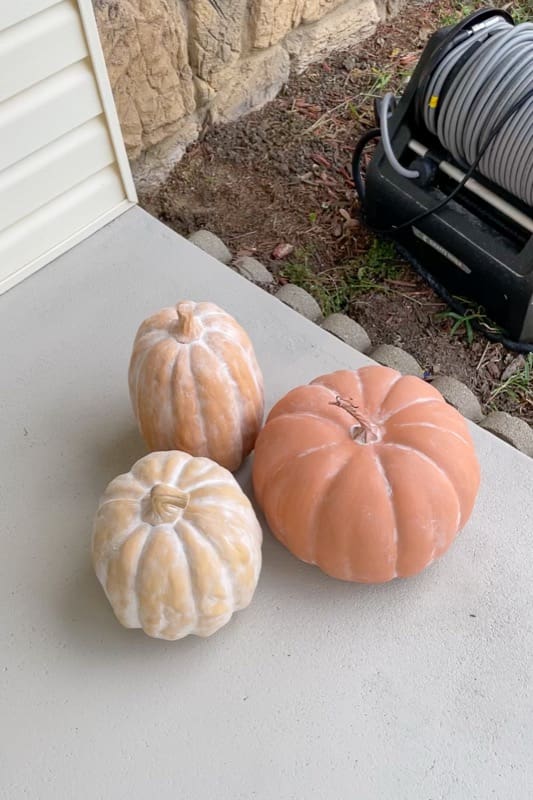
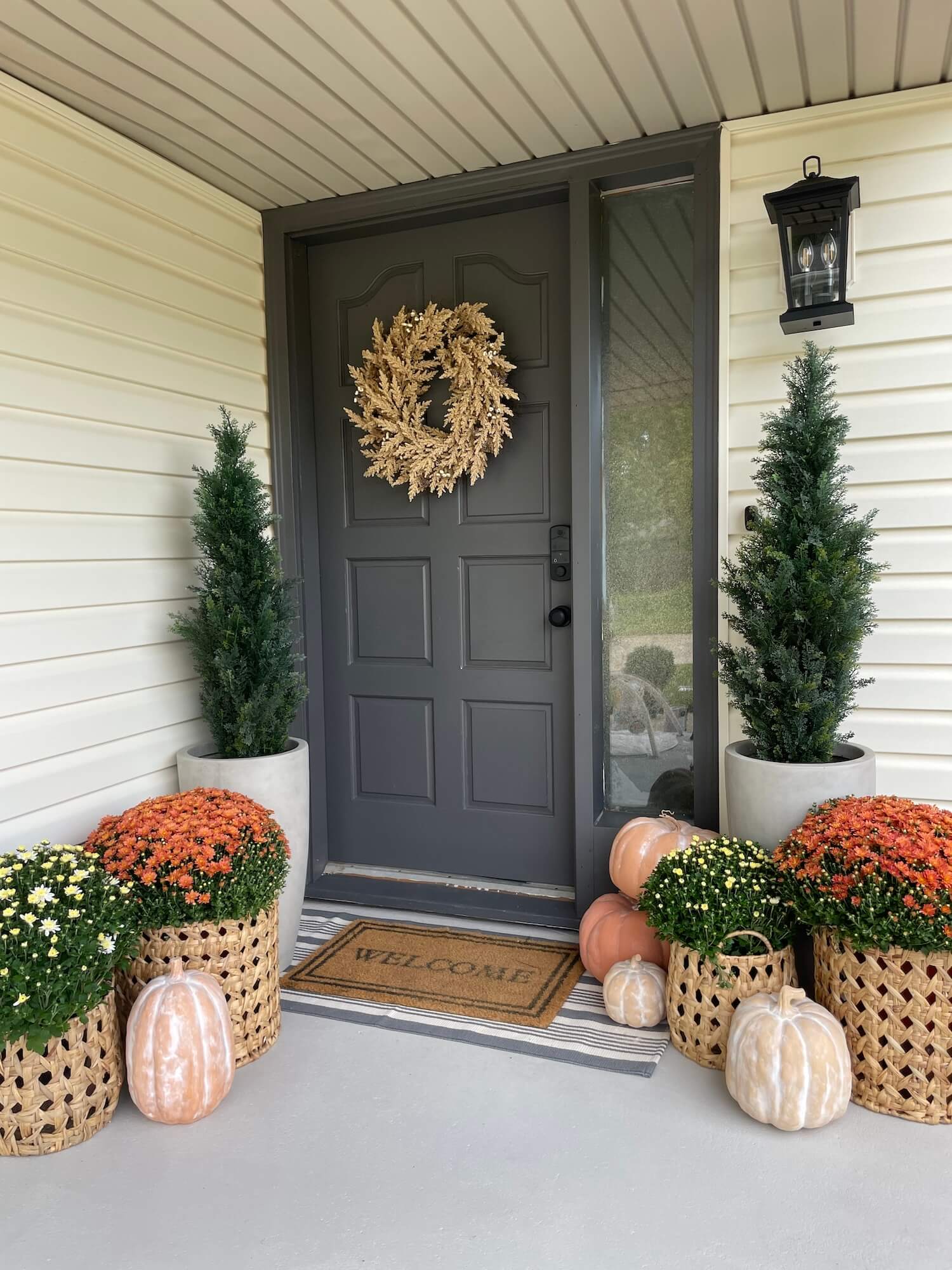
Now that your pumpkins are prepped and ready, it’s time for the fun part: decorating! Terracotta porch pumpkins look best in a group of three or five with mixed sizes, tucked beside mums and a woven basket, and they are light enough that a gust of wind is the only thing you have to plan around. Set the biggest one on the step and stagger the rest.
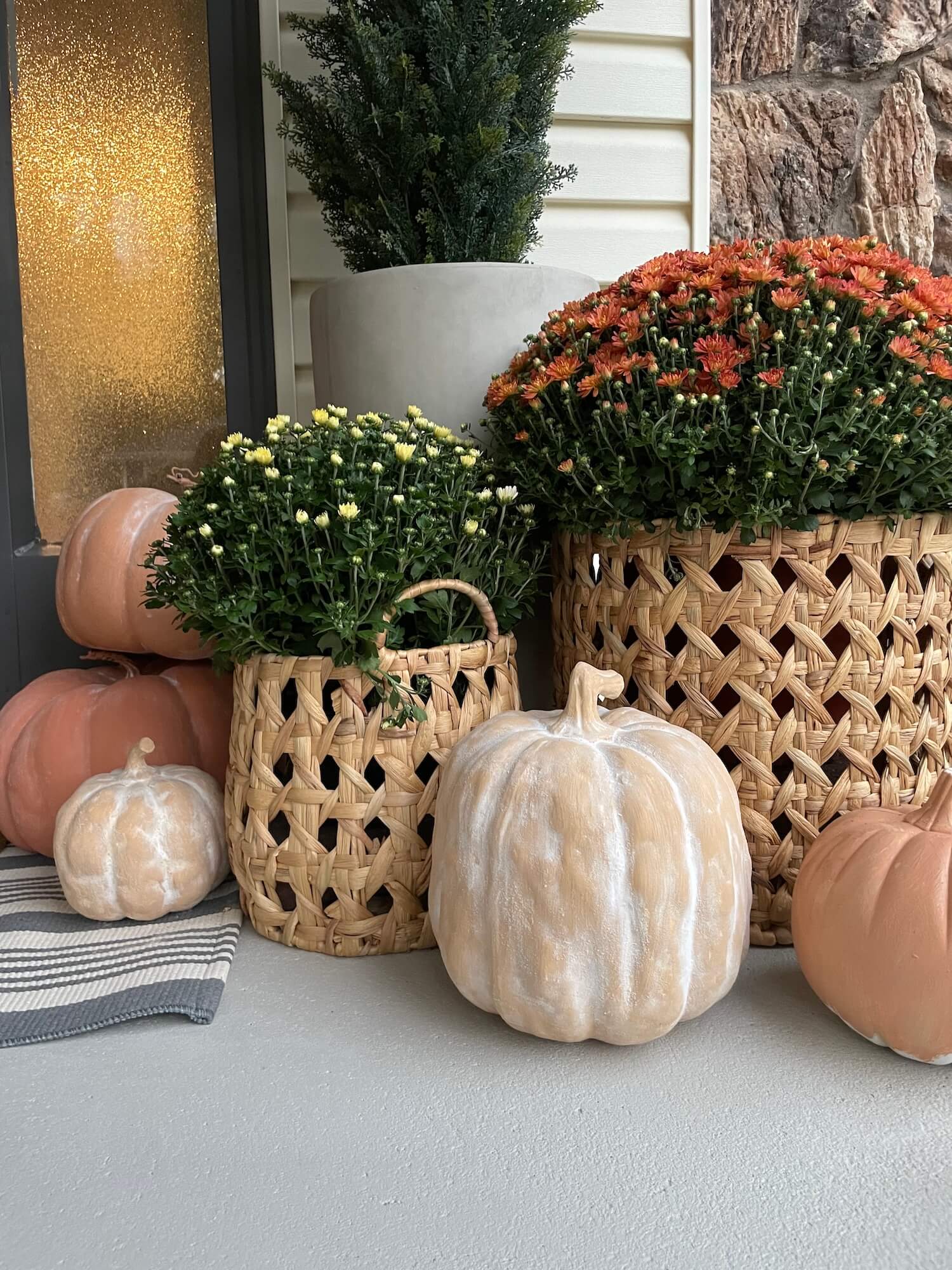
If you’ve been eyeing that deep gray door in my photos, I’ve got you covered! I shared the full tutorial on How to Paint a Front Door in 3 Easy Steps. It’s one of the easiest, most budget-friendly ways to give your entryway an instant refresh and it pairs perfectly with these terracotta pumpkins for a cohesive fall look.
Love the look of my front doorstep? I wrote a whole blog post about it. You can get all the details, styling tips and the exact items in my post on How I Decorated My Fall Front Porch.
How Much Do DIY Terracotta Pumpkins Cost?
About $8 a pumpkin buying everything new, and about $1.25 a pumpkin after that, because the paint and primer do a dozen. Dollar Tree foam pumpkins are $1.25 each, two Sherwin-Williams sample pots run about $5 each, a can of spray primer is about $7, and a box of baking soda is under $2. Our three pumpkins came to about $25 all in. The Pottery Barn terracotta pumpkin set of three that started this whole trend sold for around $218, and the Walmart dupes run about $20 apiece, so making your own is the cheapest version by a mile and the only one you can size and color yourself.
More Halloween Projects
- Tomato Cage Ghosts: Easy DIY Light-Up Porch Ghosts
- 31 Family Costume Ideas: Easy DIY Halloween Costumes
- My 2024 Classic Fall Front Porch Decor
- Halloween Mantel Decor
📌 Save These DIY Terracotta Pumpkins for Later
Pin this so you can find the baking soda paint recipe when pumpkin season hits.
DIY Terracotta Pumpkins FAQs
Prime them first so the paint grips the slick surface, then brush on a one to one mix of paint and baking soda. The baking soda is what turns a smooth plastic pumpkin into something that looks like fired clay. While the paint is still wet, sprinkle extra baking soda over the sides and pat it in with a gloved hand for more grit. Let them dry a few hours. Foam pumpkins take the finish exactly the same way, and both are lighter than the real thing.
Any flat or matte latex paint works, and wall paint sample pots are the cheapest way to get the right color. I used Sherwin-Williams samples in Totally Tan and Chrysanthemum and mixed them for a natural, uneven clay look. Acrylic craft paint works too if you already have it. Skip glossy or satin finishes, because the shine fights the clay texture. Two sample pots covered three pumpkins with paint left over.
Equal parts, one to one by volume. Stir it in a small bowl until it looks like thick, gritty frosting. If it gets too stiff to brush, add a splash more paint rather than water, since water thins the color and the texture with it. Mix only as much as you will use in about 20 minutes, because it starts to set in the bowl, and work on one pumpkin at a time.
Not for indoors or a covered porch; the baking soda finish is surprisingly tough once it has fully dried. If they will sit out in rain or heavy dew, spray them with a matte clear topcoat so the texture does not soften or streak. Use matte only. A gloss sealer will turn your clay look into a shiny painted pumpkin, which is the opposite of the point.
You can, but the finish outlives the pumpkin. Real pumpkins start to soften within a few weeks, and the paint goes with them. Foam or plastic pumpkins from the craft store or Dollar Tree take the baking soda paint the same way, weigh almost nothing, and come back out every fall. If you only want them for one party, real is fine. If you want a set you keep, go faux.
A few hours for the paint to be dry to the touch, and I let ours sit overnight before moving them onto the porch. The baking soda makes the paint layer thicker than a normal coat, so it holds moisture longer than you expect. Drying them in the sun speeds it up. Do not stack them or set them on a good surface until the next day, because the underside stays soft longest.
About $8 a pumpkin buying everything new, and closer to $1.25 a pumpkin once you own the paint. A Dollar Tree foam pumpkin is $1.25, two paint sample pots are about $5 each, a can of spray primer is about $7, and a box of baking soda is under $2. Three pumpkins came to about $25. The Pottery Barn terracotta set of three that started the whole trend sold for around $218, so the savings are not subtle.
Yes. The baking soda texture works with any color, so a black sample pot gives you the black terracotta pumpkin look and a warm white gives you the whitewashed clay version. Mix and pat in exactly the same way. If you want a two-tone effect, paint the pumpkin one color, let it dry, then dry-brush a second color lightly over the ridges so the texture catches it.
The Bottom Line on DIY Terracotta Pumpkins
Paint plus baking soda on a foam pumpkin gets you the Pottery Barn terracotta look for about $8 a pumpkin, and about $1.25 each once you own the paint. Fifteen minutes of painting, a few hours of drying, and they come back out every fall. The one thing I would tell a friend: buy the gloves. You will pat baking soda into wet paint with your hands and it is exactly as messy as it sounds.
If you make these, tell me in the comments what color you went with. I want to try a black set next year.