When to Reseed a Lawn (+ the Easiest Overseeding Method)


Updated October 12, 2025
If you’ve ever wondered when to reseed a lawn, the answer might be sooner (or later) than you think. Timing is everything when it comes to reseeding and overseeding. Get it right, and you’ll end up with a thick, green lawn that fills in bare spots fast. Get it wrong, and you’ll waste seed, water, and weekends without much payoff. In this post, I’ll break down the best times of year for reseeding a lawn, plus the fastest and easiest overseeding method I’ve used to transform patchy grass into a yard worth showing off.
Below I share exactly when to reseed a lawn and the simple how to overseed a lawn process that worked in our yard.
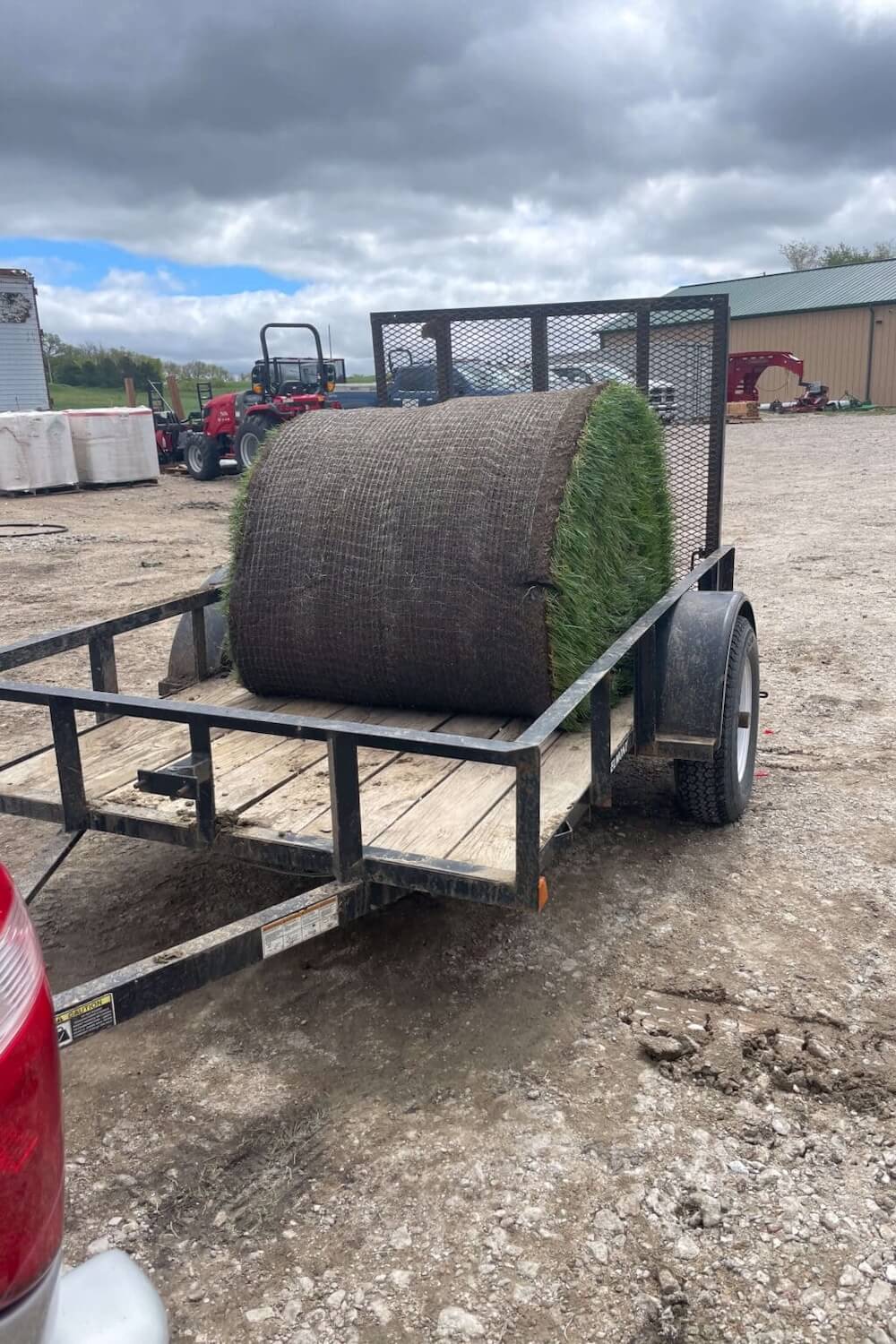
Related: DIY Automatic Watering System • DIY Laying Sod the Simple Way
Table of Contents
Why Fall Is the Best Time to Reseed a Lawn

When we moved into this house in June, the lawn was looking pretty rough. It was patchy, thin, and definitely in need of some love. As tempting as it was to start reseeding right away, summer just isn’t the right season to grow grass from seed. So when should you reseed a lawn? Fall is hands down the best time to do it. Here’s why:
- Cooler temperatures – Grass seed germinates better without the stress of summer heat.
- Warm soil – After a hot summer, the soil is still warm enough to encourage fast germination.
- Less weed competition – Weeds die back in the fall, giving grass seed the upper hand.
- Stronger roots before winter – Grass planted in fall has time to develop deep roots, so it bounces back even better in spring.
When to Reseed a Lawn: Timing + Weather Window
If you grow warm-season grasses (like Bermuda, Zoysia, St. Augustine), the best time to overseed is late spring to early summer once soil temps are ~65°F+. For cool-season grasses (fescue, bluegrass, rye), early fall is ideal.
The exact answer to when to reseed your lawn has less to do with the calendar and more to do with the weather. The sweet spot is after daytime temps dip into the 70s, but at least 45 days before your average first frost. That window gives new grass time to germinate, take root, and grow strong before winter sets in. With warm soil, cooler air, and fewer weeds competing, the conditions are ideal for reseeding success.
Overseeding vs Reseeding a Lawn
You’ll hear both of these terms thrown around, but what do they really mean? Reseeding usually means filling in bare spots or starting fresh in thin areas, while overseeding is spreading new seed over your whole lawn to make it thicker and healthier. Fall is the best time for both – cooler air, warm soil, and fewer weeds give grass seed the perfect chance to germinate and grow strong roots before winter.
In our yard, I’m doing a bit of both. Reseeding in the bare spots, but also overseeding in the parts of the yard that still look good.
How to Reseed a Lawn (Easiest Method)
Reseeding or overseeding a lawn sounds intimidating, but it’s actually easier than you might think. With just a few simple steps, you can go from patchy grass to a thick, green yard without needing fancy equipment or professional help.
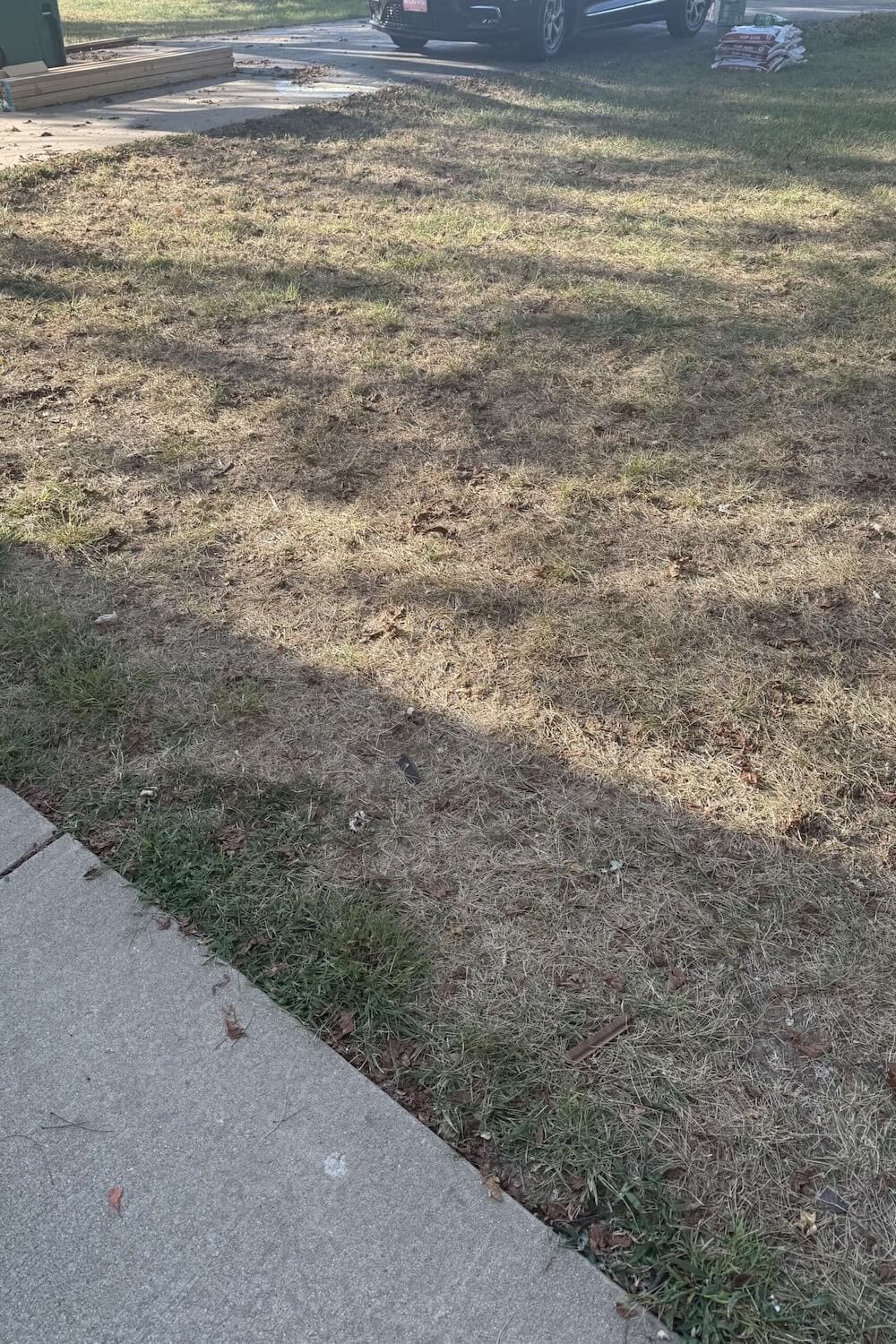
Step 1: Mow Low to Get Started
Start by mowing your lawn down lower than usual. Cutting it short helps the new grass seed reach the soil instead of sitting on top of tall blades, and it gives seedlings a fighting chance to get established.
Step 2: Rake It Clean and Dethatch
Next, rake up leaves, dead grass, and any thatch that might block your seeds. Dethatching with a lawn rake opens up the soil surface so your new seed can make direct contact and germinate faster.
Step 3: Pick the Right Grass Seed Blend
Not all grass seed is created equal. Pick a blend that matches your climate and yard conditions. For example, our shady spots do fine, but the sunny areas struggled, so I chose this sun-and-shade mix to handle both.

Step 4: Spread the Seed
You can use a seed spreader for even coverage when reseeding your lawn, or take the fun route like we did and let the kids help toss it out by hand. Fair warning: the “kid method” leaves a few patchy or missing spots, so if you want a perfectly even lawn, stick with a spreader like this one.
Step 5: Cover With Soil and Skip Aerating
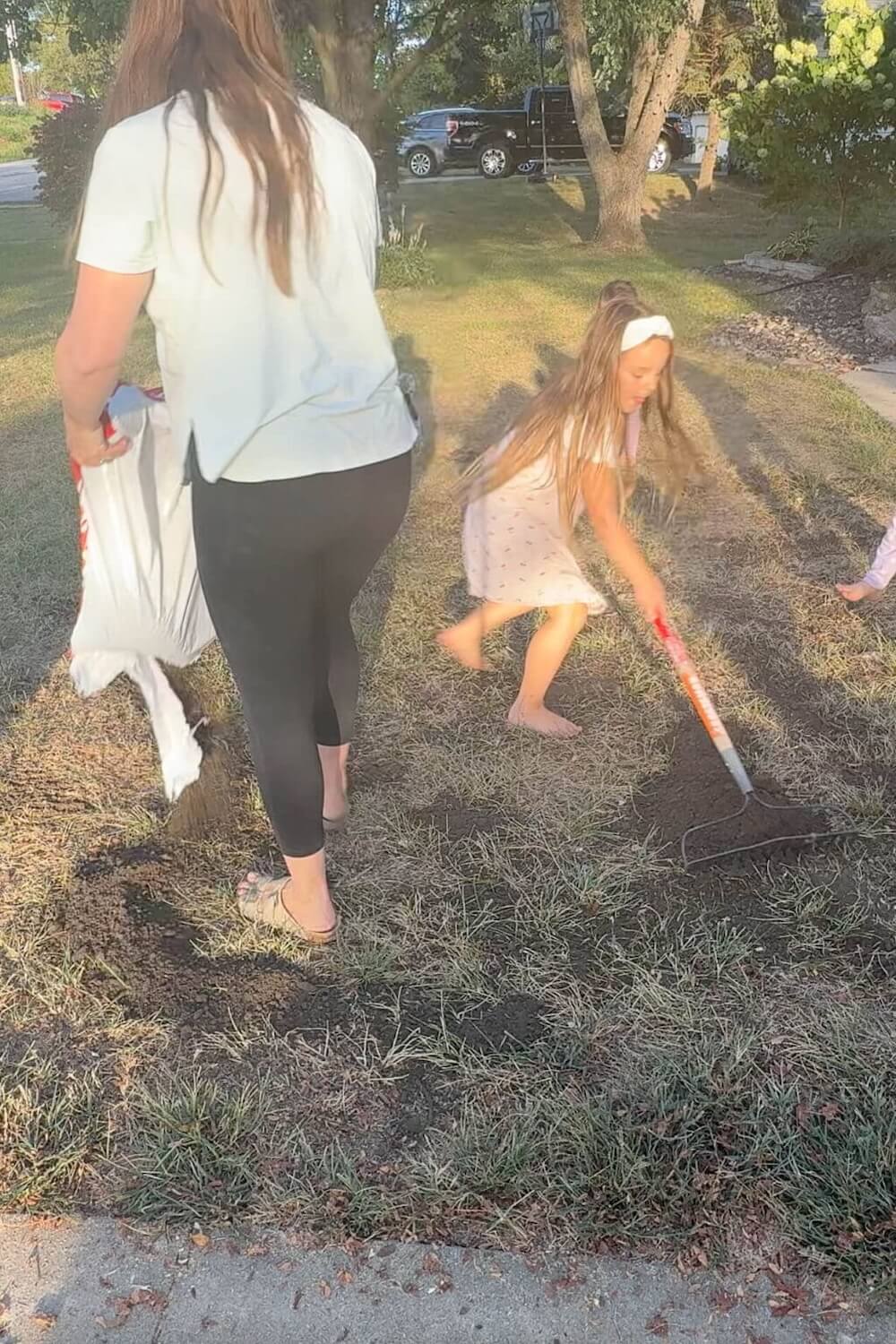
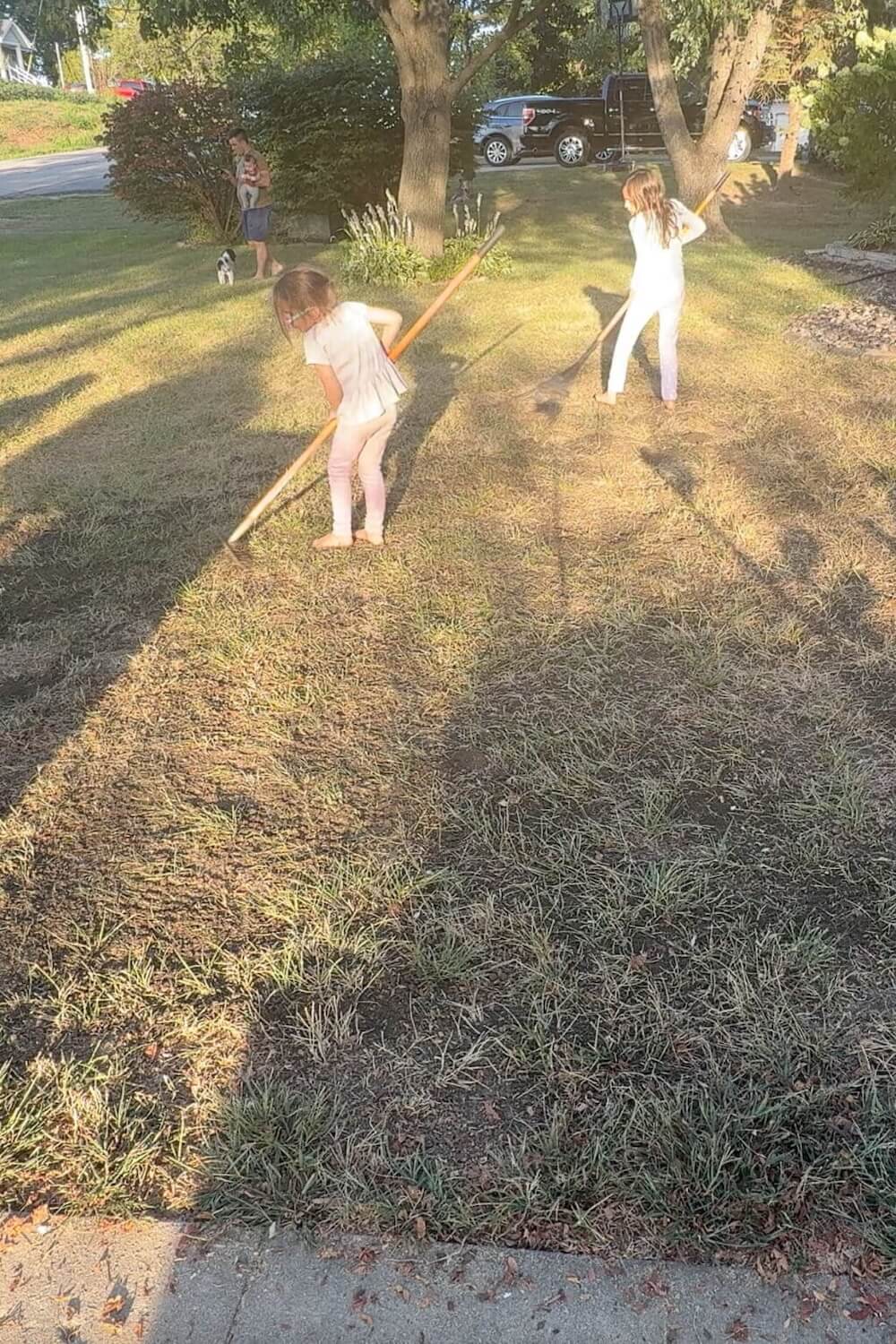
Most people recommend aerating before reseeding or overseeding. I skipped the aerator rental and instead spread a thin layer of soil over the seeds. With rakes in hand, the kids helped me cover everything evenly, giving the seed a soft layer of dirt to sprout in.
Step 6: How to Water New Grass Seed
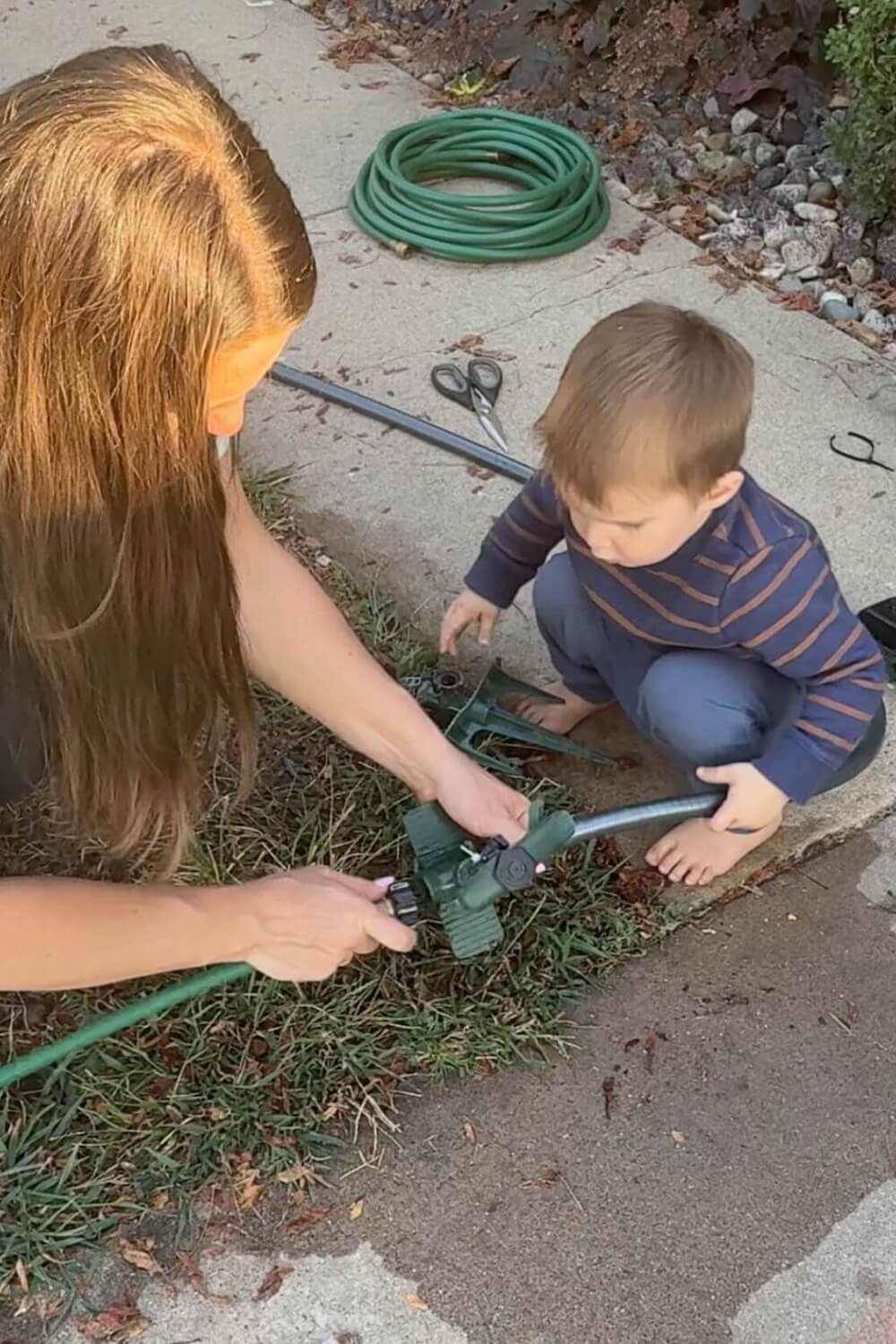
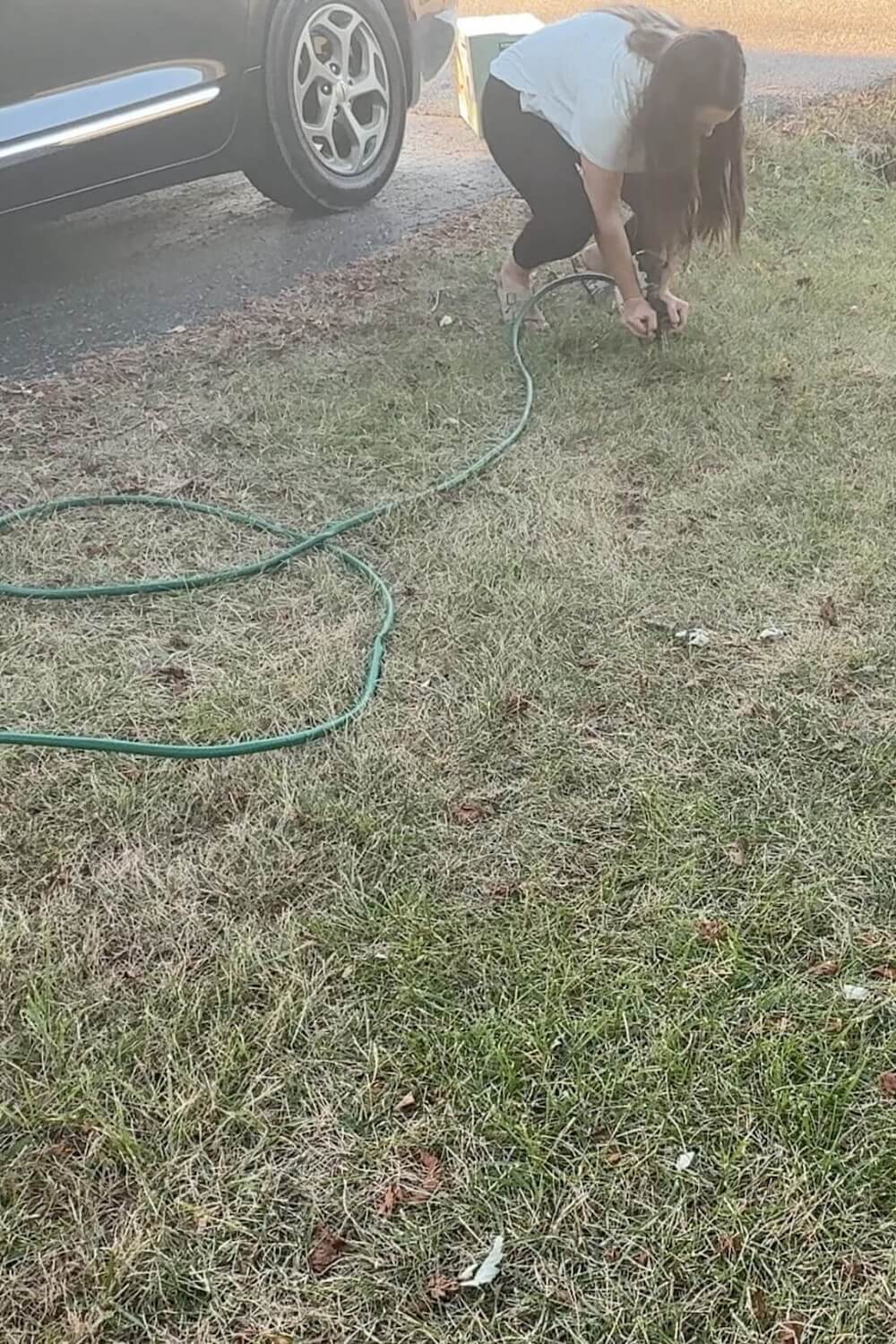
When reseeding a lawn, you’ll have to think about watering. New seed needs consistent moisture. Light, frequent watering keeps the top layer of soil damp without washing the seed away. I used my DIY, set it and forget it sprinkler system to make it easy.
Step 7: How Long Does Grass Seed Take to Grow?
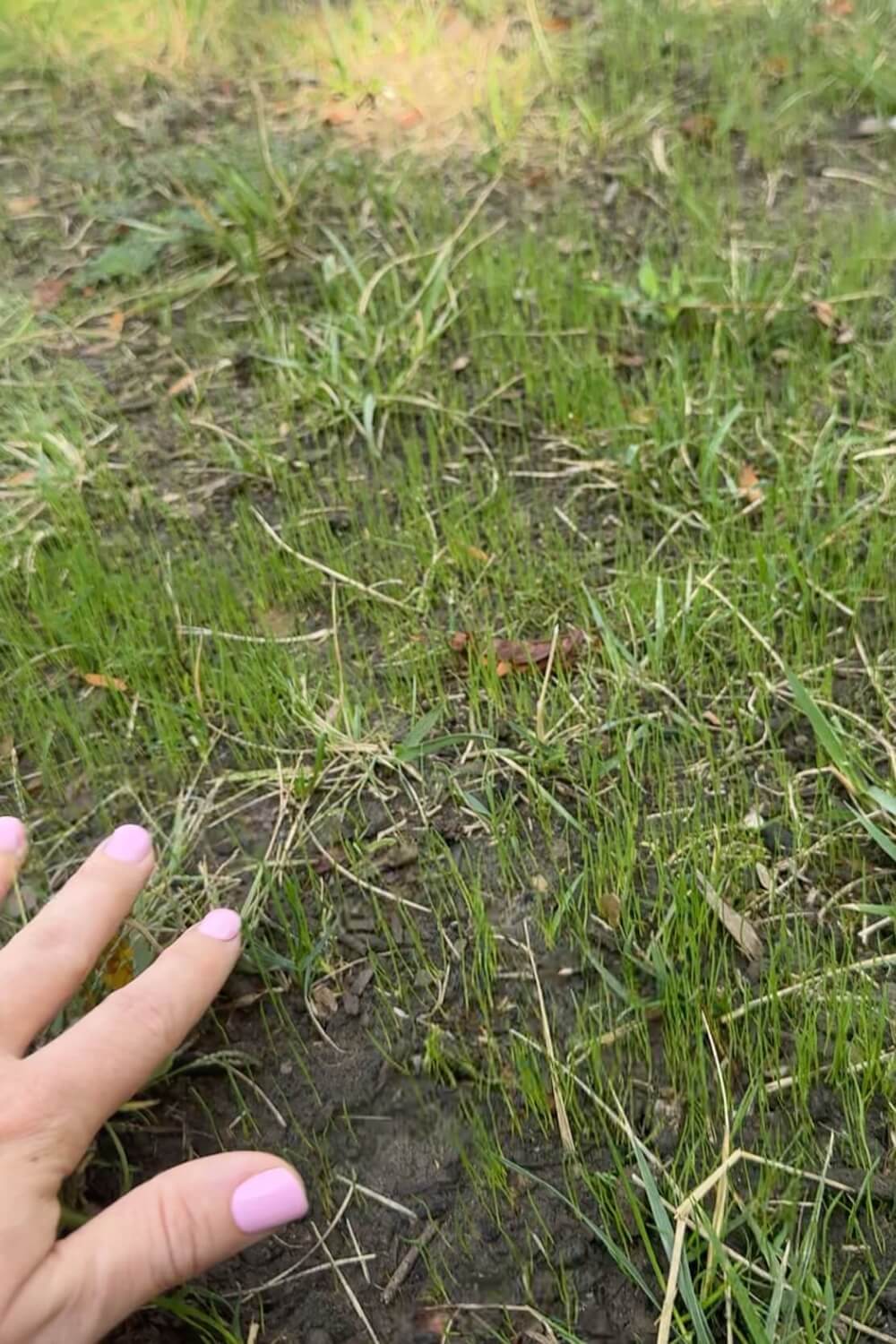
The payoff is quick when reseeding your lawn. You’ll start to see sprouts in as little as two weeks. It’s so satisfying to see patchy spots fill in and the whole lawn start looking healthier. Don’t mow your new grass until it’s at least 3 inches tall. Any sooner and you could stress it, or even pull it out.
Fall Reseeding = Greener Results
Reseeding or overseeding your lawn isn’t complicated. Get the timing right, follow a few simple steps, and you’ll see results fast. Fall gives your grass the best chance to thrive, and within weeks those bare patches can turn into a thick, green lawn you’ll be proud of.
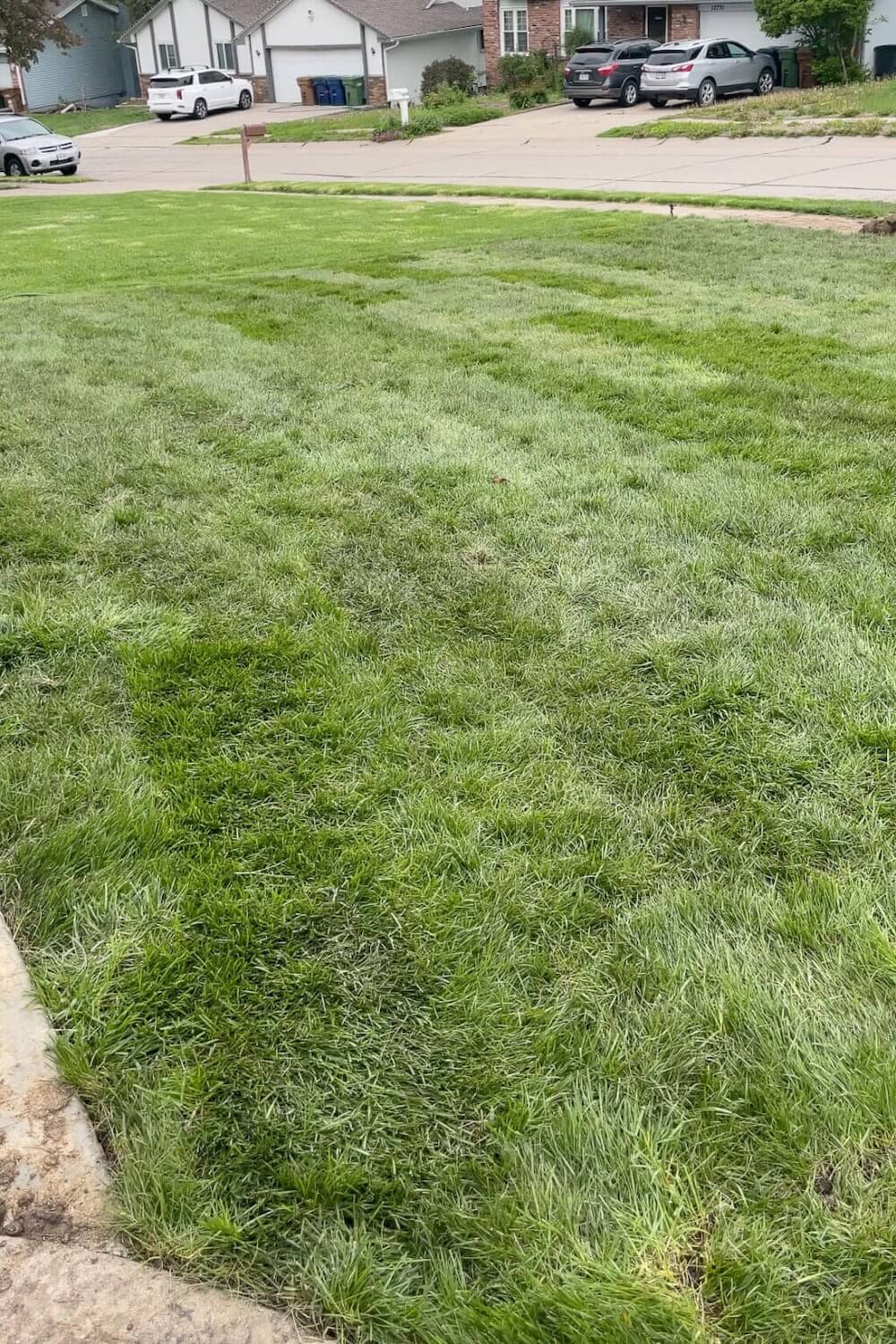
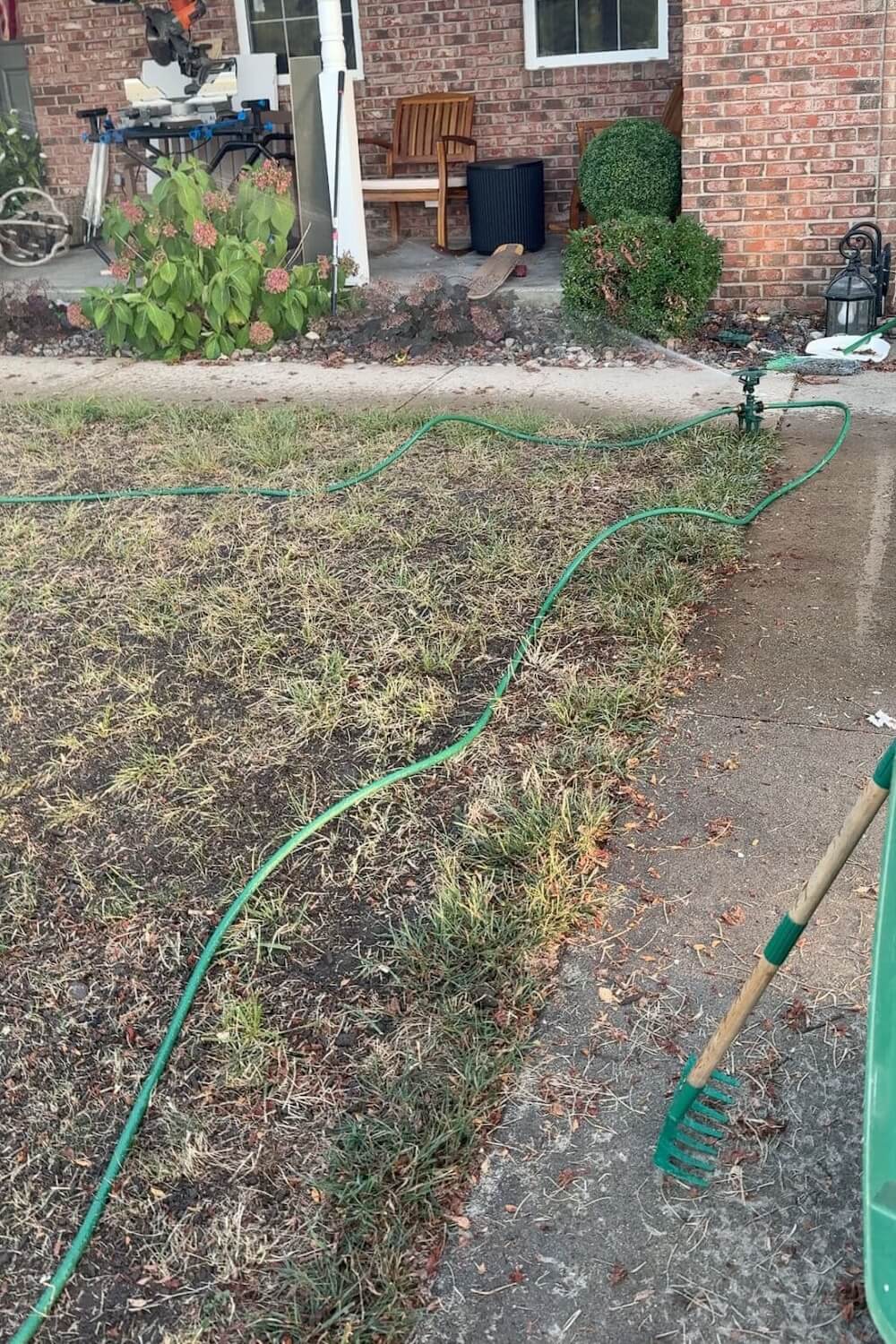
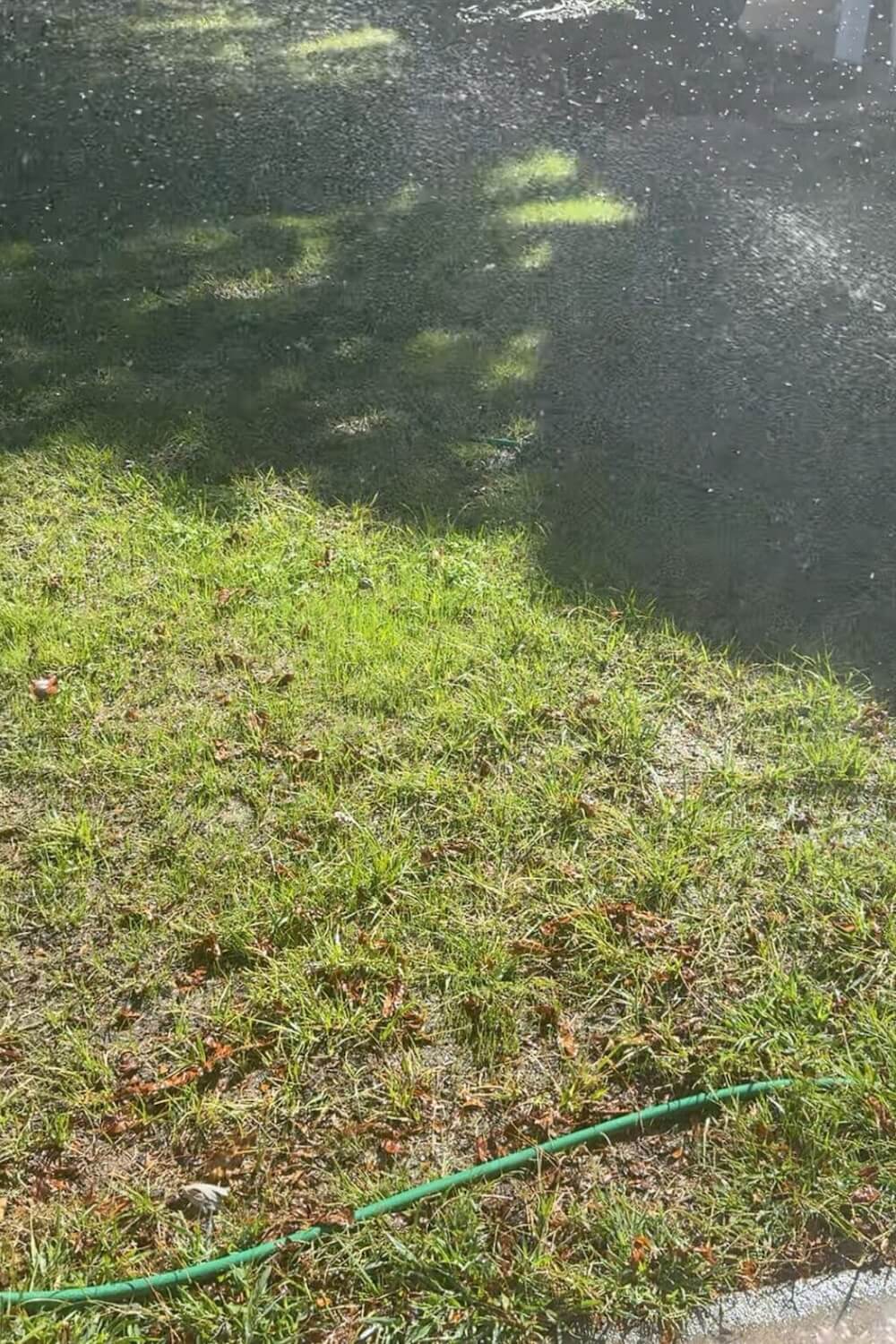
These two pictures are just two weeks apart! I’m blown away by how fast these seeds took off!
📌 Save This Lawn Reseeding Guide for Later
Pin now and come back when you’re ready to give your lawn a fresh start!
FAQs About Reseeding a Lawn
The best time to reseed is in fall, once daytime temps are in the 70s and at least 45 days before your first frost date.
Yes, but it’s less effective. Spring reseeding works, but weeds compete with new grass, and summer heat makes it harder for seedlings to thrive.
Aeration helps seed contact the soil, but it’s not mandatory. You can also spread a thin layer of soil over the seed to encourage germination.
Wait until new grass is at least 3 inches tall before mowing. Cutting too early can stress or pull up young seedlings.
Follow the rate on your bag; for many cool-season mixes it’s about 3–5 lbs per 1,000 sq ft when overseeding. Heavier rates are used for new lawns.
Minimize foot traffic for 2–3 weeks. Resume normal use after the first mow when new grass is ~3″ tall.
Most cool-season grasses sprout in 7–14 days; warm-season varieties can take 10–21 days. Consistent moisture and firm soil contact speed things up.
Skip high-nitrogen fertilizer at seeding time. Use a starter fertilizer (higher phosphorus) or none. Apply regular lawn fertilizer after your first mow.
Want to skip seeds altogether and take the shortcut with sod? We did that in our last house, and it was pretty great to have an instantly lush lawn. You can read the full post here for all my tips on laying sod. > DIY Laying Sod the Simple Way