How to Design a Formal Living Room for Style and Coziness

Published November 4, 2025
While we were visiting my brother and sister-in-law, I gave their formal living room a quick makeover. They wanted a space perfect for hosting. Think comfy chairs, a cozy sofa, a true conversation layout, and classic style that feels warm and welcoming for guests. I’ll walk you through the before and after, clue you in on my design process, and link everything so you can copy the look without the hassle of a full remodel.
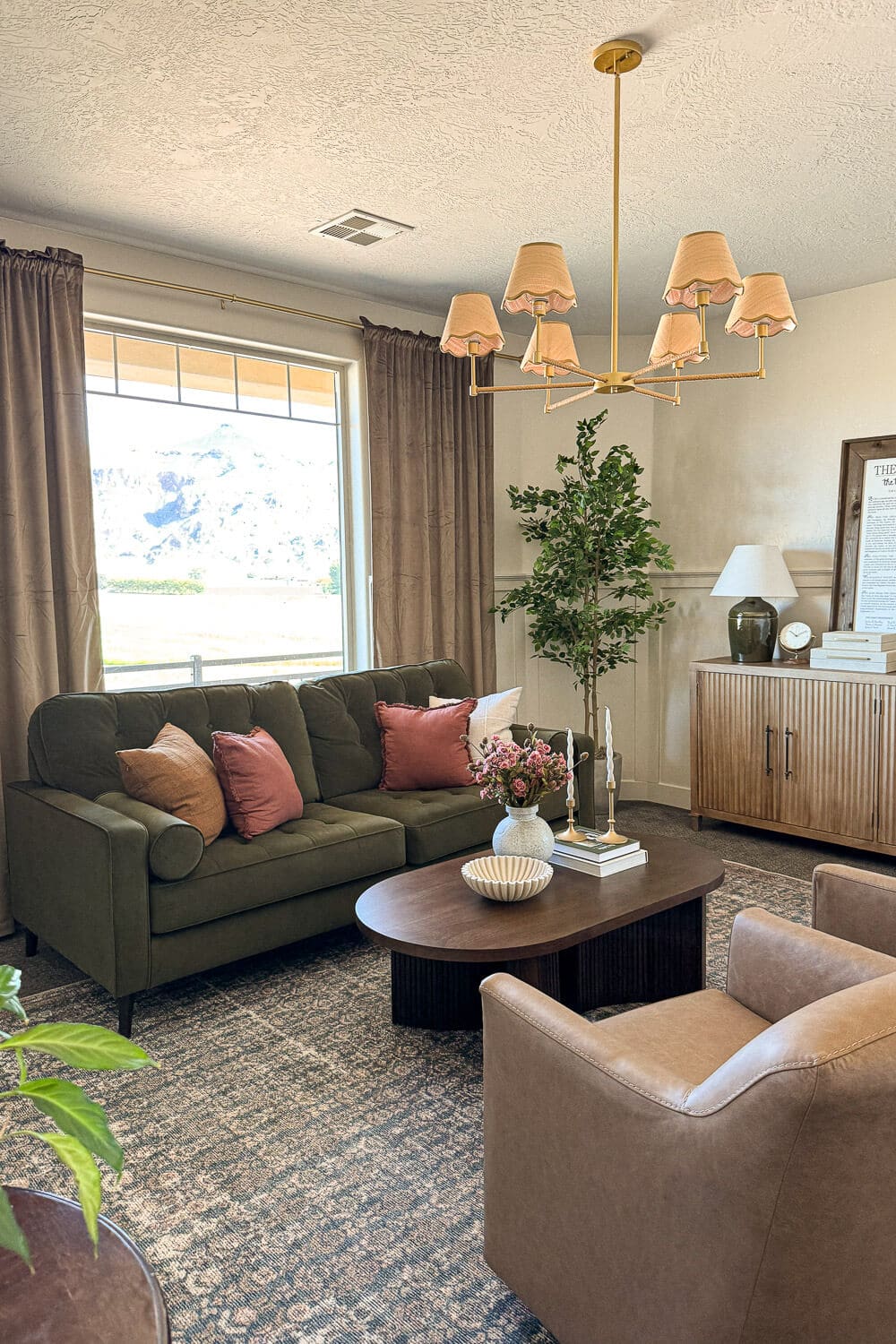
Table of contents
- Before: Where The Formal Living Room Started
- Step 1: Create a Design Plan for the Formal Living Room
- Step 2: Brighten the Formal Living Room With Paint
- Step 3: Replace the Main Light for Warmth and Style
- Step 4: Add a Rug to Define the Conversation Area
- Step 5: Bring In Furniture that Fits and Flows
- Step 6: Add the Final Touches
- Before & After: Formal Living Room Transformation
- Shop the Decor: Formal Living Room Sources
- Finished Formal Living Room Photos
- 📌 Pin This Formal Living Room Makeover
- Formal Living Room FAQs
Before: Where The Formal Living Room Started
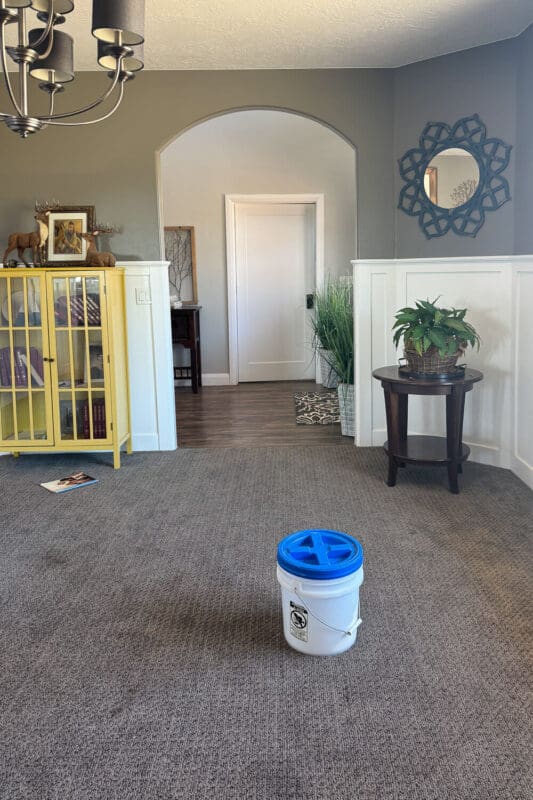
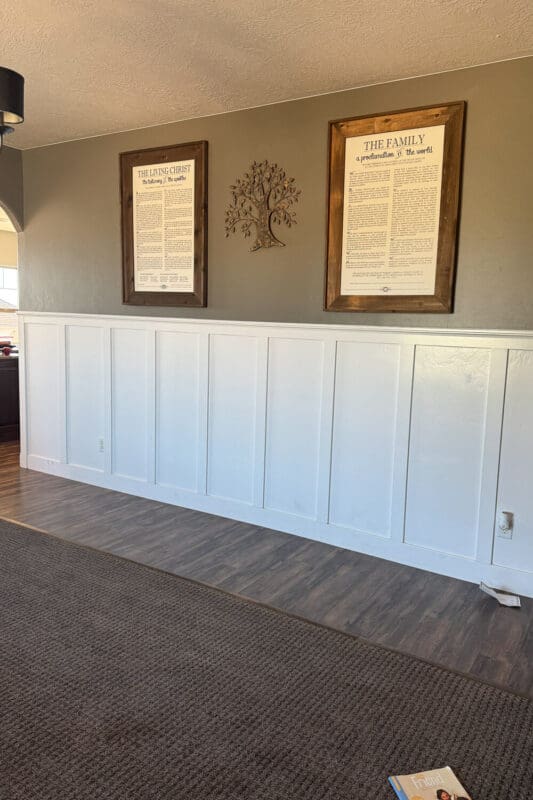
Here’s what the formal living room looked like before we made any changes. The dark gray walls with white board and batten were very early 2000s, and felt dark and heavy. Our goal was to give the room an updated refresh and create a warm and inviting space to host guests and have conversations. They already have a separate TV room with a large sectional for game days, so this space wasn’t meant for screens, just people.
Step 1: Create a Design Plan for the Formal Living Room
Before I touch a paintbrush or buy a single pillow, I like to make a plan. Think about how many people we want to seat, decide on a color palette, and choose the overall vibe. Creating a roadmap for the formal living room design will help you create a space that feels welcoming and cohesive.
ChatGPT is my favorite design assistant for this stage. I use it to brainstorm styles, test floor plans, try out different colors, shop for furniture, and more. I have a full tutorial on how I use ChatGPT for interior design. Check that out if you want to learn more. Using ChatGPT for Interior Design Help
Quick planning checklist
- Measure the room and note traffic paths
- Choose a conversation-first seating layout
- Pick a cohesive color palette
- Plan lighting: overhead, table, and accent
- List key pieces to buy and take inventory of what you already own
- Set the budget
Step 2: Brighten the Formal Living Room With Paint
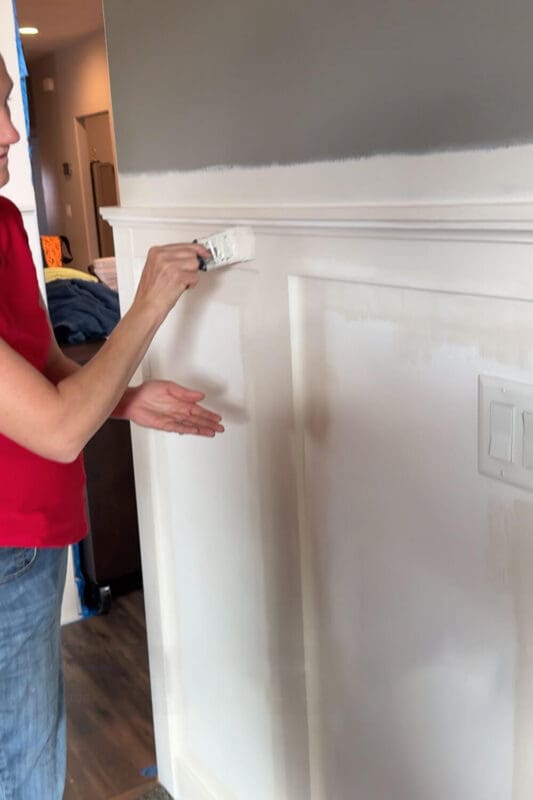
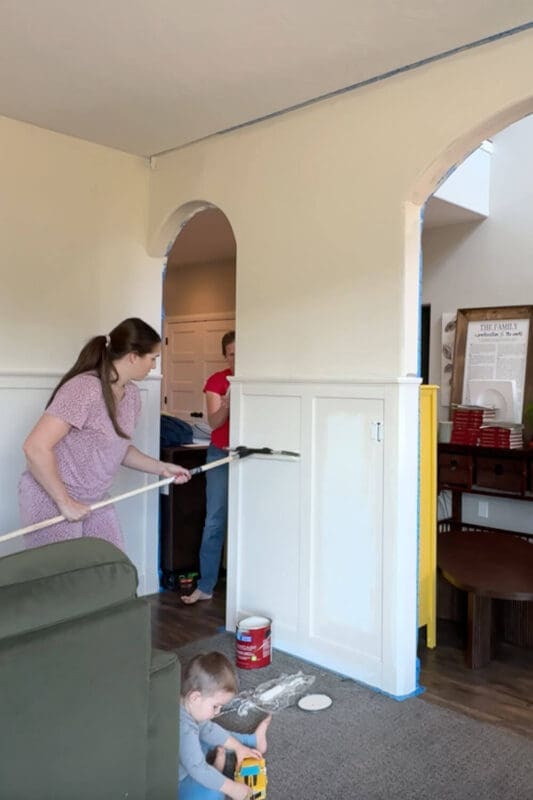
First up, paint. Bye-bye dark gray; hello warm, light neutral. I used Sherwin-Williams Accessible Beige, just lightened it up 50% for this formal living room. I’ve used this color on our kitchen cabinets, the girls’ bunk beds, a bathroom vanity, and more. It always looks good in every single room. It’s the perfect neutral paint color!
When painting board and batten, I first cut in with a paintbrush along corners and ridges, smooth everything with a foam roller to get rid of any brush strokes, then roll the larger panels with the same large roller I use for the walls. Pro tip: an 18-inch roller makes painting a big room like this go so much faster.
Step 3: Replace the Main Light for Warmth and Style
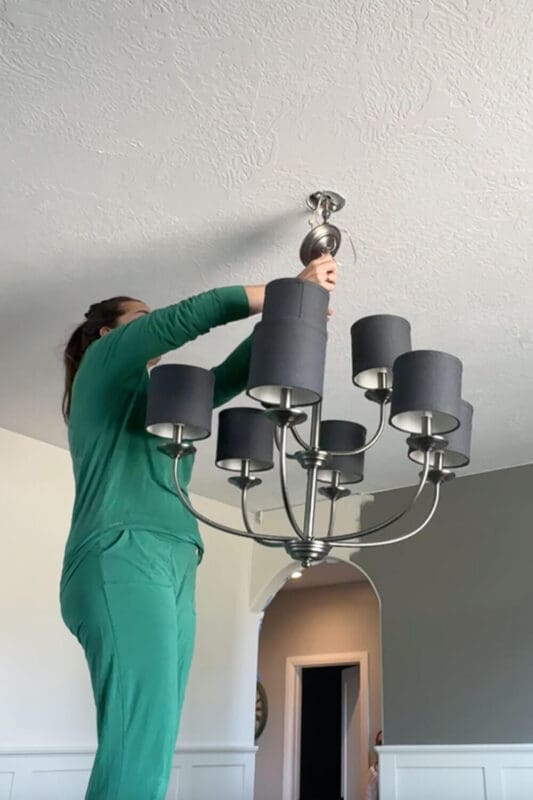
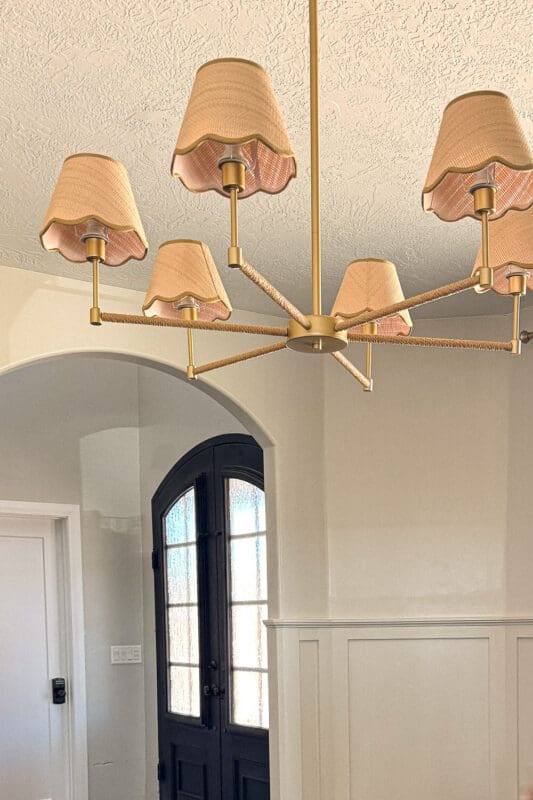
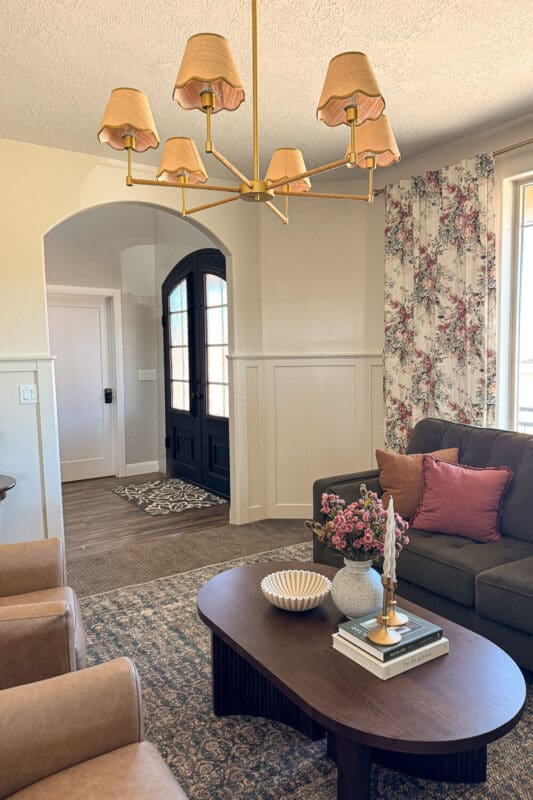
Swapping the builder-grade chandelier made a huge difference. We replaced the old brushed-nickel fixture with a gorgeous brass chandelier and scalloped shades that bring warmth, style, and softer light to the formal living room.
Step 4: Add a Rug to Define the Conversation Area
A large area rug is a must in a formal living room. It adds style, texture, and color, but more importantly, it anchors the seating so the space feels intentional. For sizing, aim for at least an 8×10 under a sofa and two chairs, or a 9×12 if the room allows. It just needs to be large enough that, at a minimum, the front legs of every seat are on the rug.
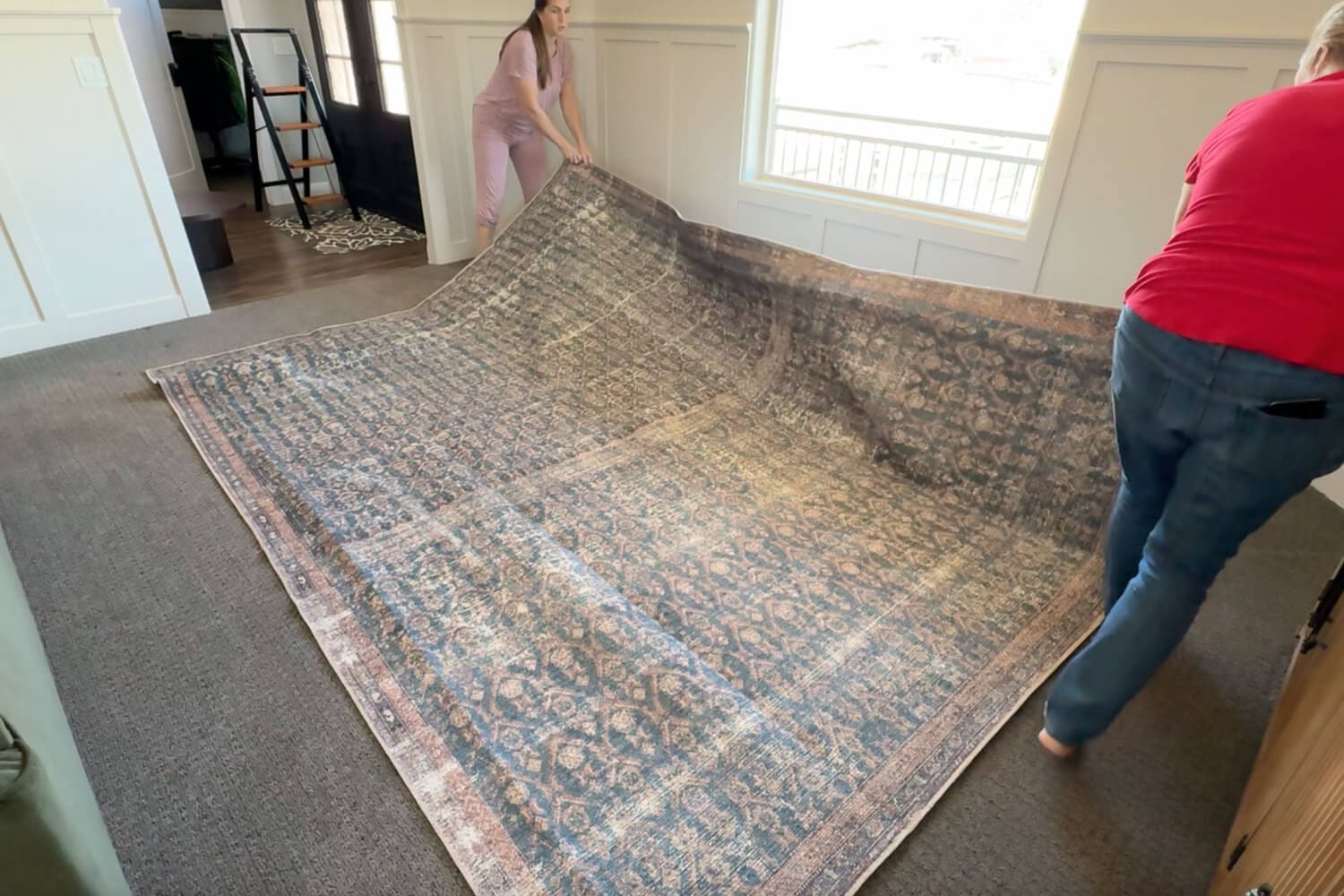
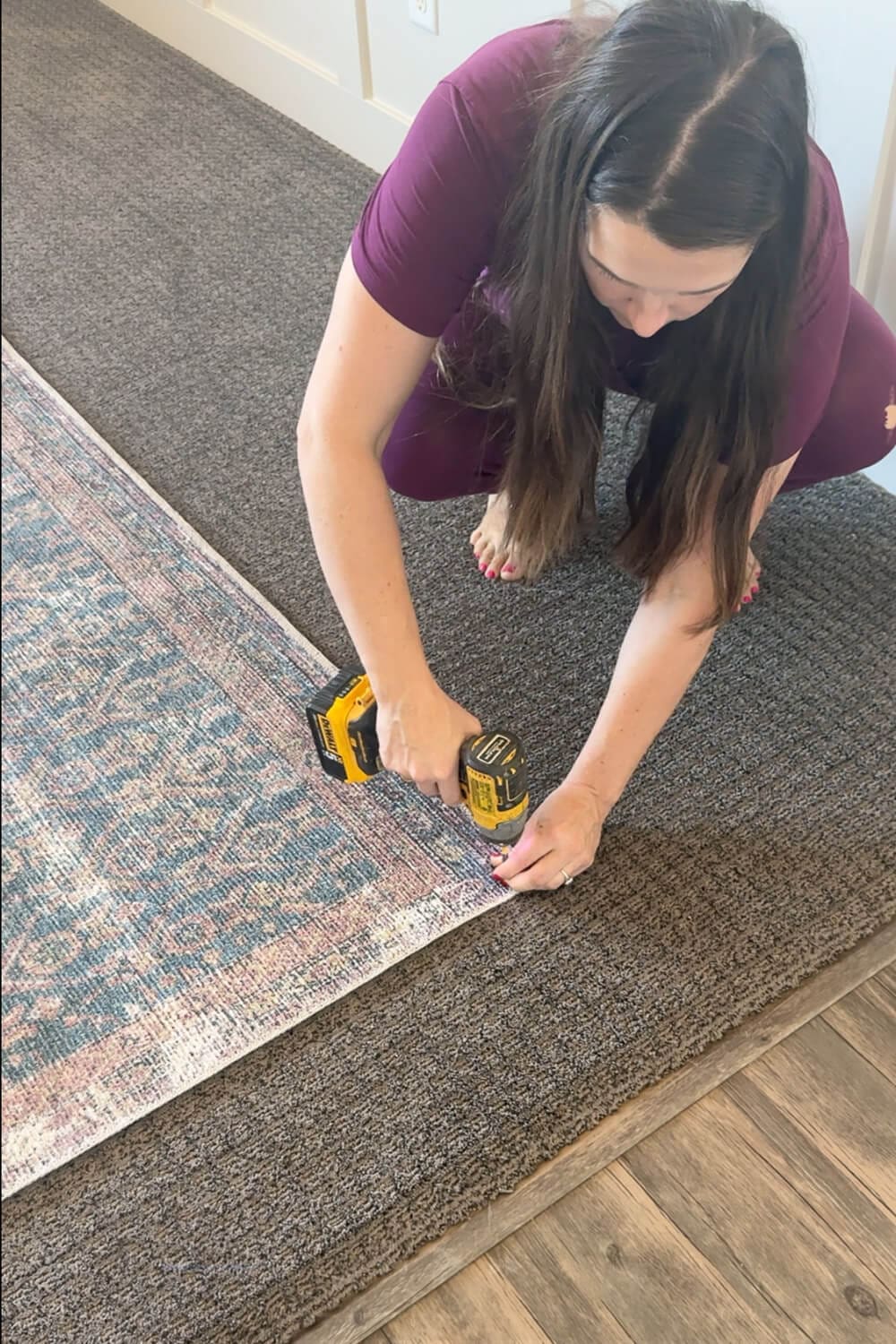
And yes, you can absolutely lay a rug right on top of carpet. In fact, I like to screw it down so it stays put. You read that correctly, screw the rug right to the floor. No shifting, no curled corners. It just stays put!
Step 5: Bring In Furniture that Fits and Flows
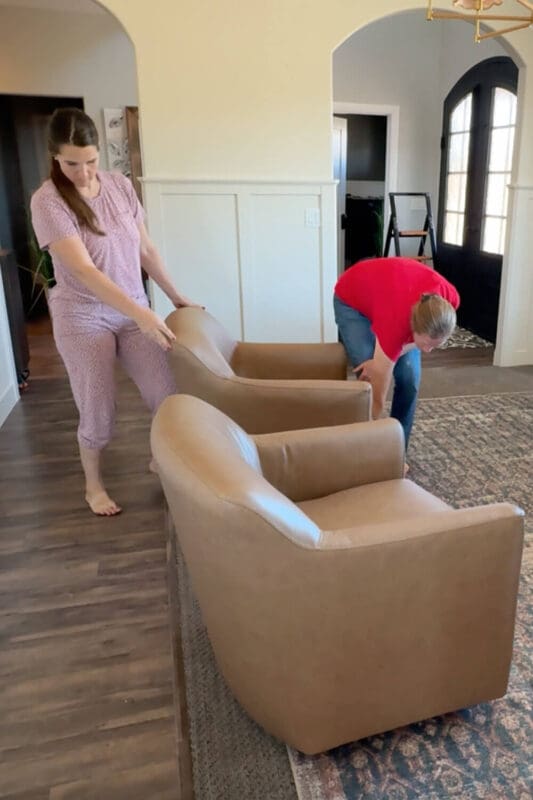
Now for the fun part: furniture. I recommend neutrals in classic silhouettes for the bigger investment pieces. That way, even if your style shifts in a couple of years, those pieces still work when you change up colors or the overall vibe.
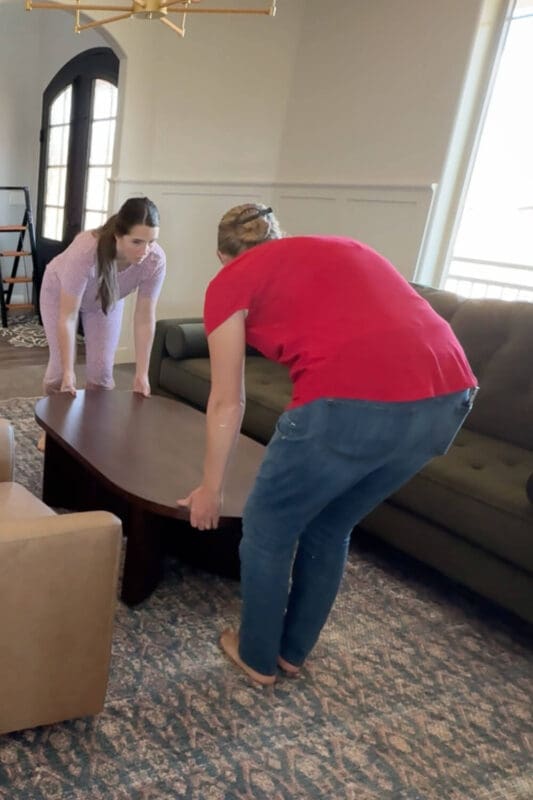
For this formal living room, we leaned into neutrals with gorgeous leather armchairs and a deep brown coffee table. The green velvet sofa isn’t a neutral, but it’s not a wild card either, and it looks amazing here. Skip the matching set and mix textures and shapes for a collected feel. You can even mix wood tones. I used a dark wood coffee table, and you’ll see I went with a much lighter wood on the console table.
Quick Tips for Furniture Layout
- Coffee table to seating: 16–18 inches.
- Main walkways: 30–36 inches (24 inches minimum in tight spots).
- Coffee table length: about 1/2 to 2/3 the sofa length.
- Coffee table height: within 2–4 inches of your seat height.
- Angle chairs slightly toward the sofa for easy conversation.
Step 6: Add the Final Touches
Once the furniture is set, layer in the special touches that make a formal living room feel warm and welcoming. As you choose these decor pieces, repeat your colors throughout the space, but don’t be afraid to mix metals or wood tones.
Colorful, Comfortable Pillows
Pillows are the easiest way to add comfort and color to a formal living room, but don’t go overboard. You still need to be able to sit on your sofa. I aim for two to four pillows for a sofa, and no more than one pillow per chair. Mix textures and patterns with a few complementary tones to tie the room together.
My best throw-pillow tip: size up on your inserts. Unless the cover says otherwise, I use a 22-inch insert in an 18–20-inch cover for a fuller, plusher look that holds its shape. PS… these are the BEST pillow inserts ever. Love them!


Curtains: A Must Have Layer
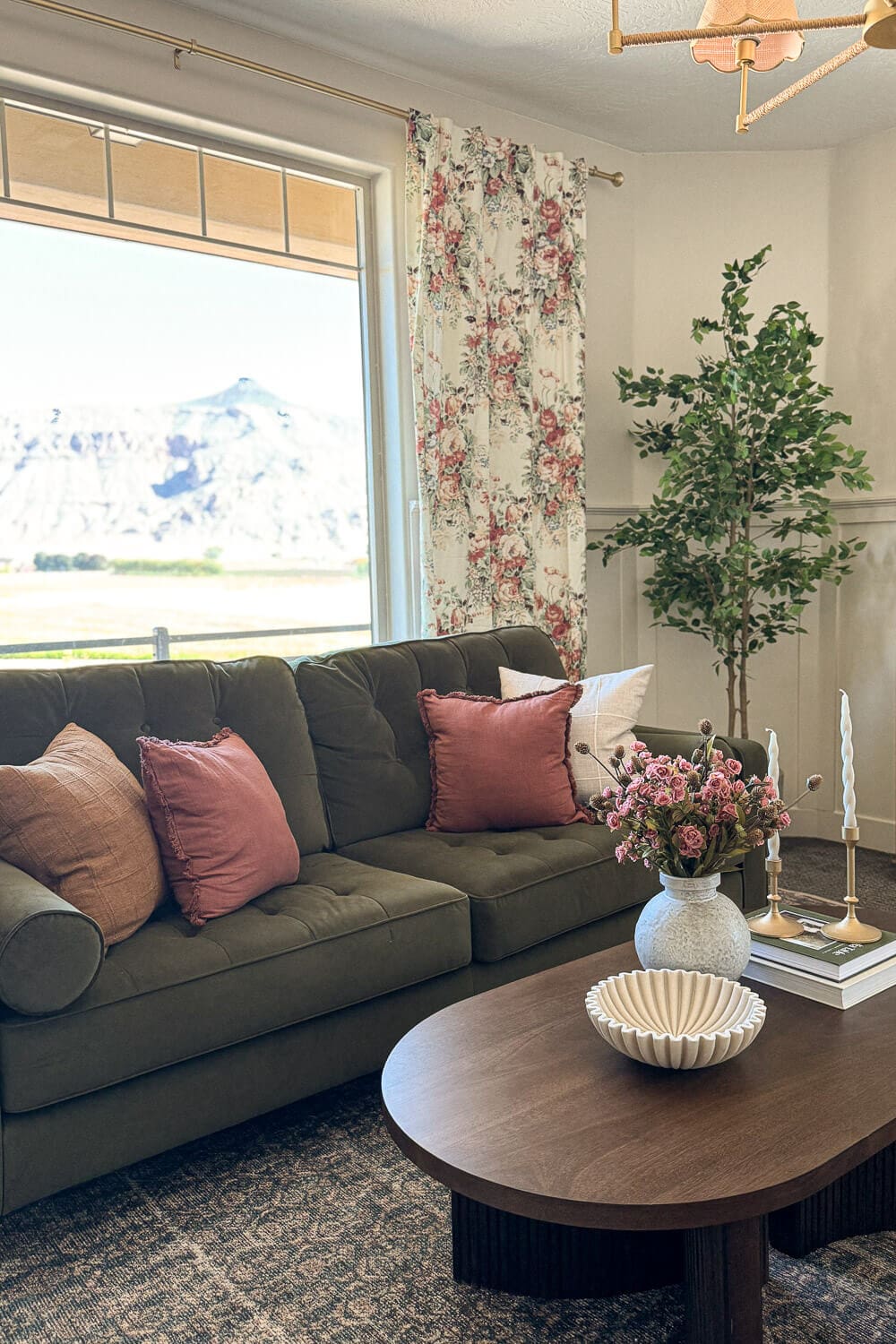
Curtains changed this whole formal living room. I tried two different sets, and it’s amazing how different they make the room look. One’s brighter and more feminine, one’s darker and a little more tailored. I will link both sets for you here. Let me know in the comments which one you like better.
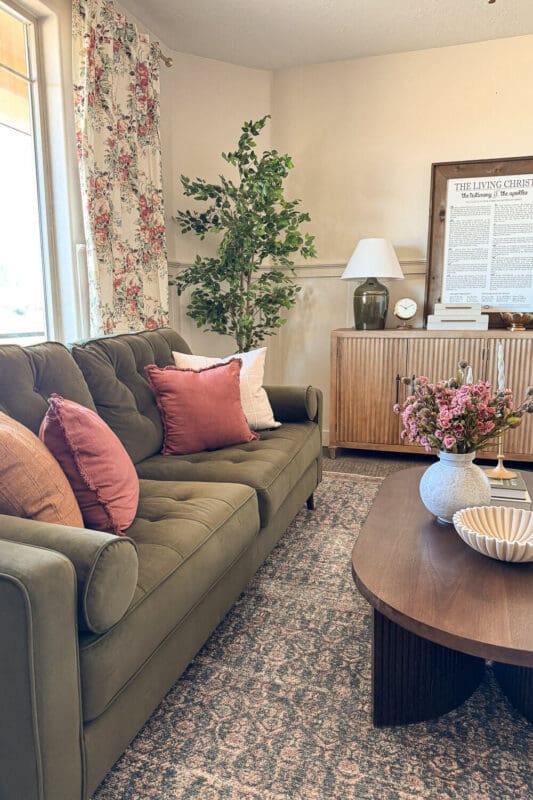
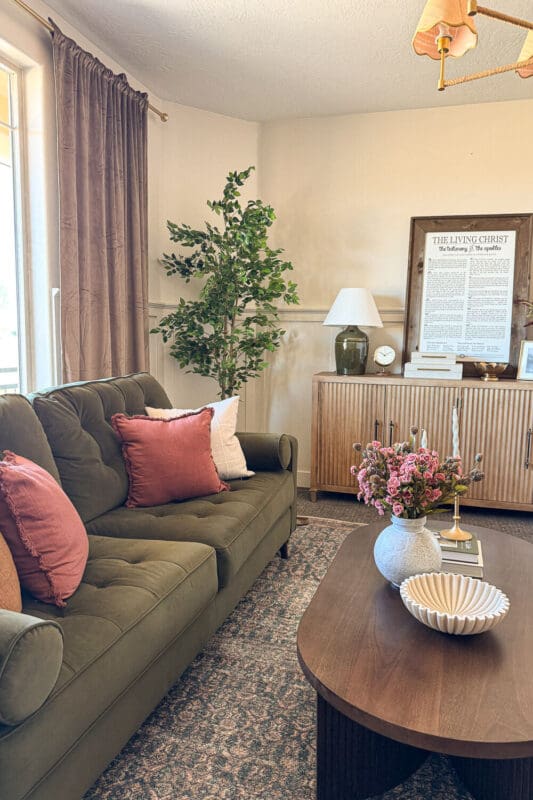
A few quick rules for curtains: hang them high and wide (4–6 inches above the trim or near the ceiling, and 8–12 inches past each side of the window), let panels just kiss the floor, and choose a total panel width that’s about 2–2.5× the window width so they look full, not skimpy.
Decor that Finishes a Formal Living Room
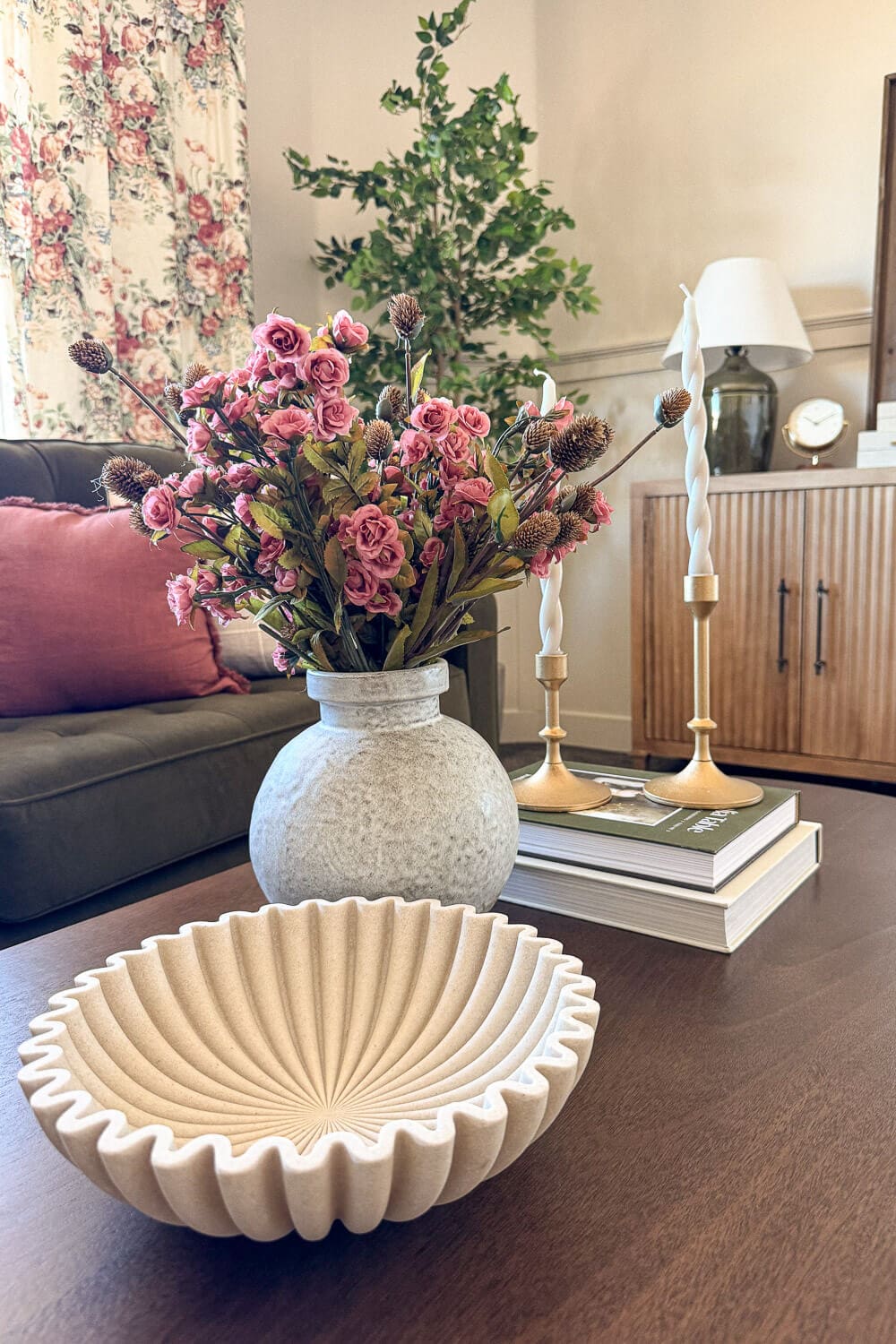
For decor, I want to keep it simple and purposeful. On the coffee table, I went with: books, a sculptural bowl, faux florals in a round vase, and twisty candles placed in gold candlestick holders. Vary the heights and repeat a few colors from the pillows and curtains, so it all ties together.
When styling a console table, start with one large anchor piece in the center. It adds height and gives you a clear focal point. Next, build balance around it: the green lamp on the left adds soft light and is nearly mirrored in size and height by the textured vase and florals on the right. Then layer smaller pieces in front. I went with a brass clock, a scalloped brass candle, functional decorative boxes, and a gold frame. It feels cohesive, not cluttered.
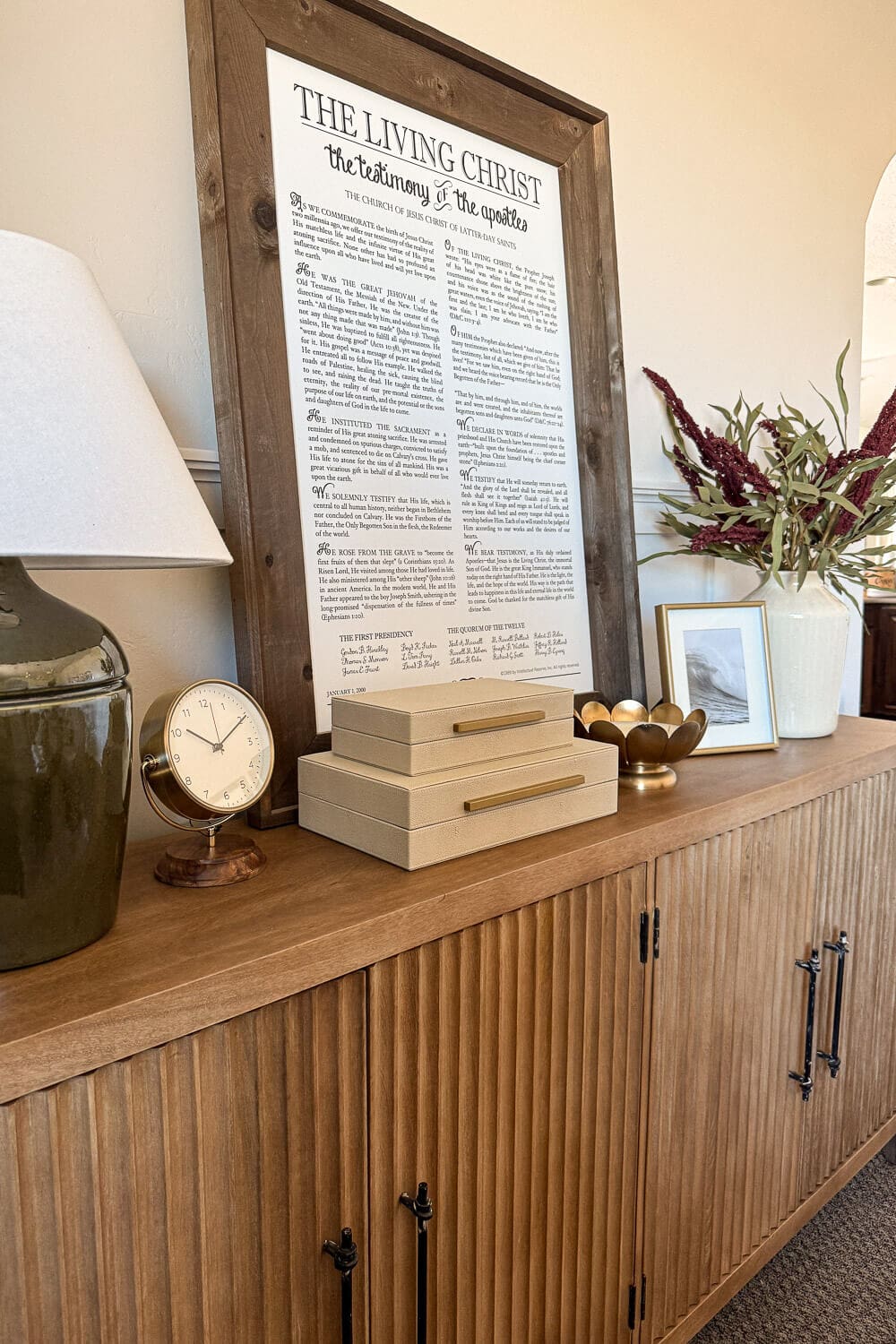
Pro tip: to plug in the lamp, and still be able to push the console table back all the way against the wall, I used one of these! Total game changer!
Before & After: Formal Living Room Transformation
See how a few smart changes turned this formal living room into a welcoming conversation space. Scroll the side-by-sides to compare the dark gray walls and bare layout with the new warm paint, layered rug, mixed seating, and styled decor. Same room, totally different vibe without any demo or heavy remodel. With just paint, new furniture, and some smart decor choices, this room is ready for hosting!
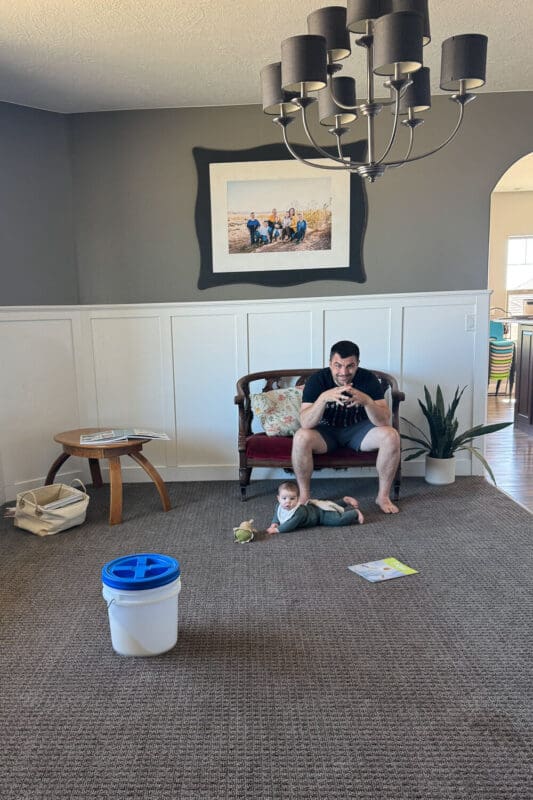
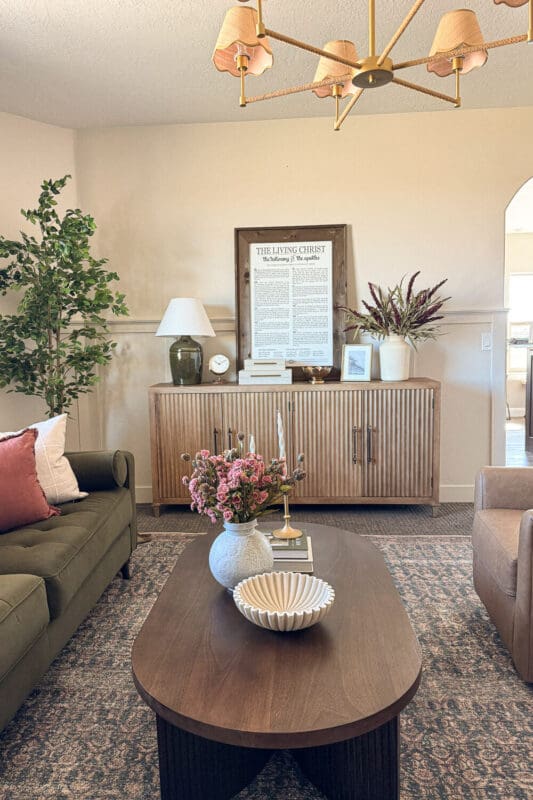
Painting the board and batten to match the walls completely transformed the space. Before, it read as a bold feature; now it blends in and adds subtle texture and interest.
Shop the Decor: Formal Living Room Sources
Here are links to items I used to style this formal living room: pillows, curtains, lighting, coffee table accents, and more.
Furniture and Fixtures
- Coffee table books
- Round vase
- Gold candlestick holders
- Twisty candles
- Stone ruffle edge bowl
Console Table Decor
Finished Formal Living Room Photos
I love this formal living room so much, I just had to add a few more photos of the finished space. Scroll through the finished photos to see the full formal living room makeover in detail. You’ll spot the warm neutral paint, conversation-first seating, layered rug, the repeating color palette, and styled decor working together to create an inviting space for hosting guests. Pin your favorites for layout, color, and styling ideas.
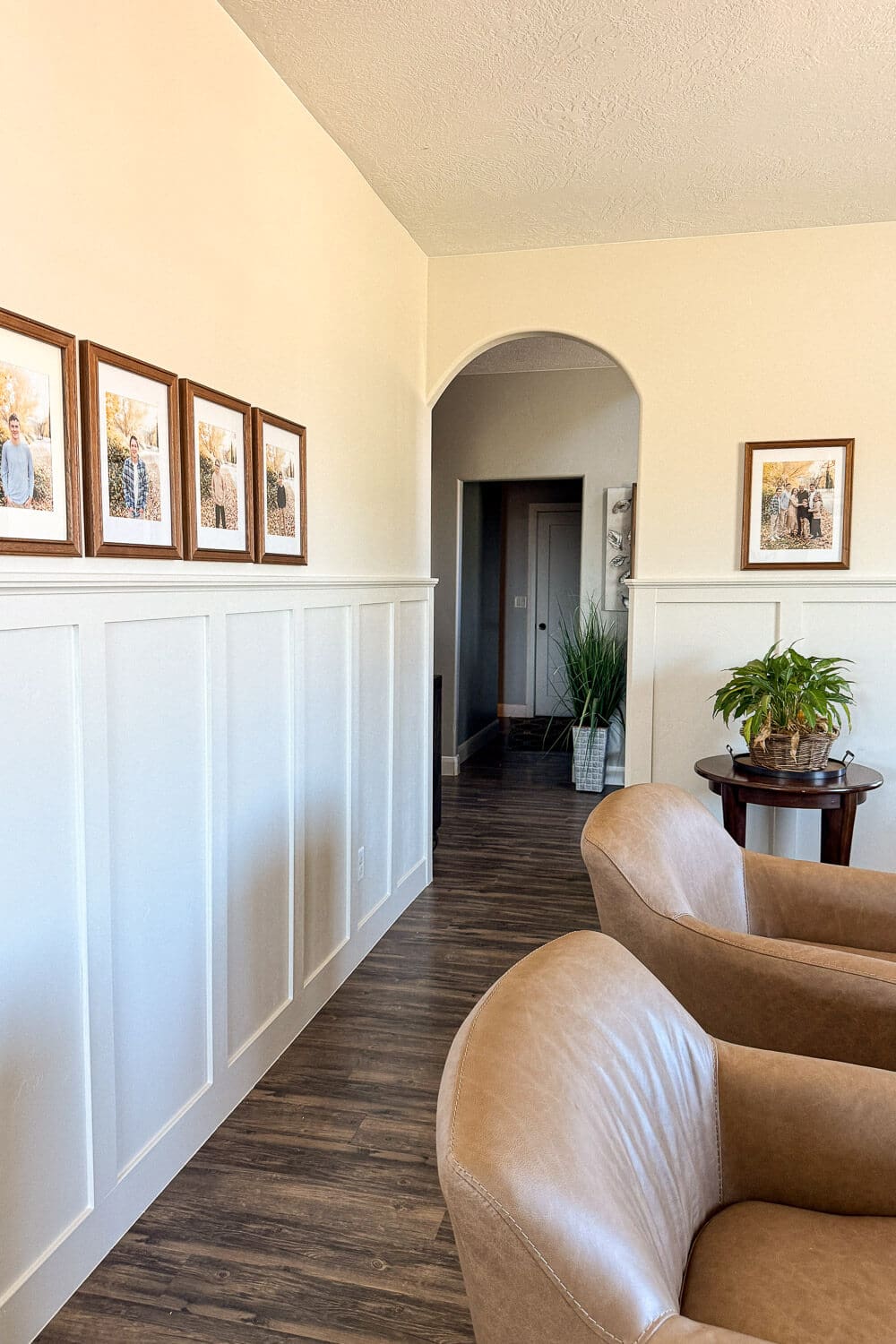
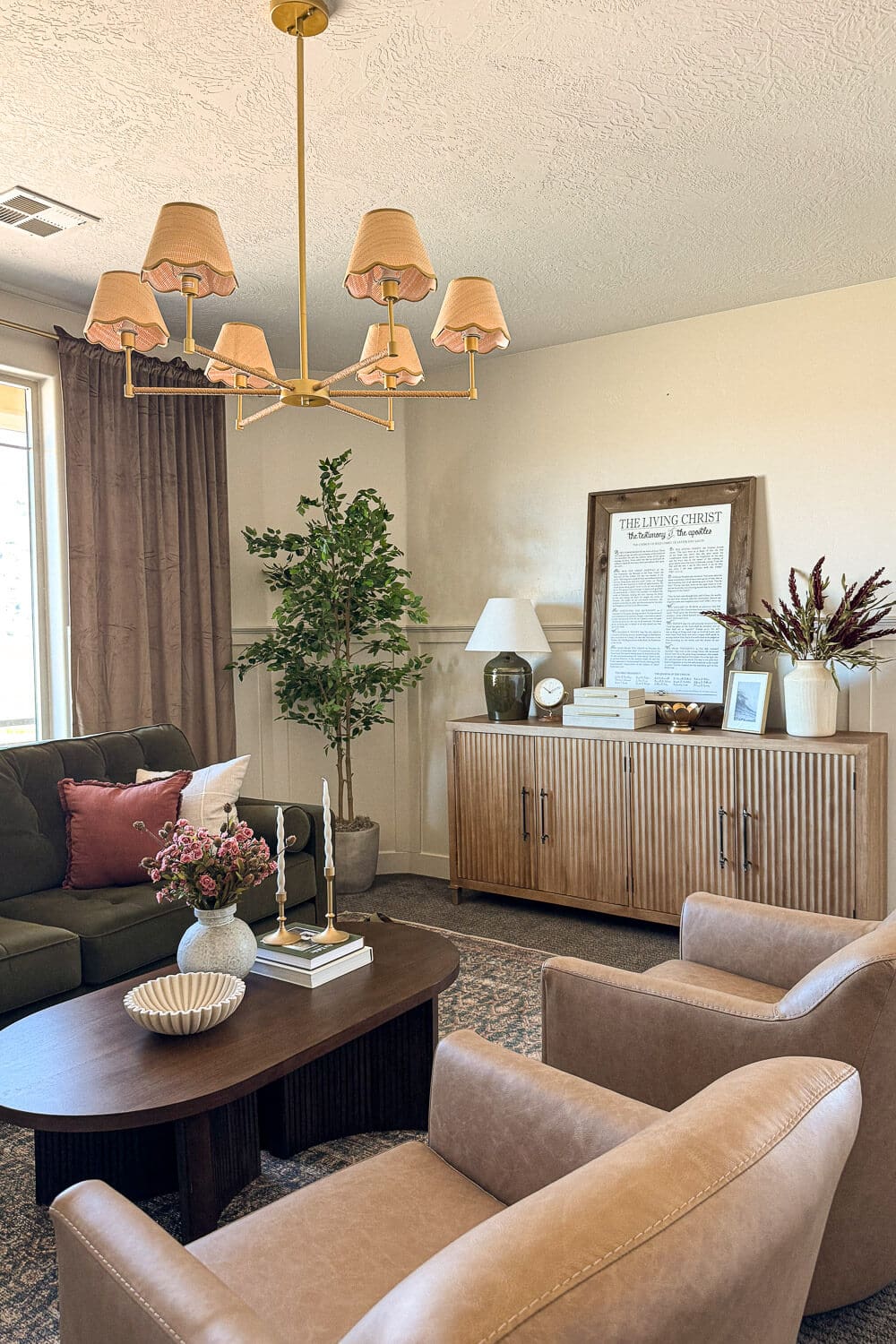
Decorating their living room lit a fire under me to tackle mine in our St. Louis fixer-upper. We’re in the thick of a full downstairs renovation, and I’m craving one finished space. Want to follow along? Come hang out on Instagram and hit follow.
📌 Pin This Formal Living Room Makeover
Pin now and come back when you’re planning your layout.
Formal Living Room FAQs
A formal living room is set up for conversation and hosting rather than TV time. Think comfortable seating, balanced lighting, a clear focal point, and styled decor without toys or media pieces.
Create a conversation zone. Place the sofa and two chairs so everyone can talk without raising their voice. Keep 16–18 inches between the coffee table and seats, and aim for 30–36 inch walkways.
Yes. A rug anchors the seating and adds color and texture. Choose at least an 8×10 for a sofa and two chairs or a 9×12 for larger rooms. The front legs of all seats should sit on the rug.
Sherwin-Williams Accessible Beige. It is a warm light colored neutral that works well in just about any room. It really complements the green, rust, wood tones, and brass in this space.
No. Many homes use the formal living room as a screen-free gathering space. Keep TV time in a separate family room and let this room focus on hosting.
