Board Game Storage Ideas for Small Spaces


Published January 17, 2026
Board game storage is one of those things that sounds simple until you open your game cabinet and get smacked in the face by a pile of crushed boxes, missing pieces, and instructions that disappeared in 2019. We love games in our house, but storing them the “normal” way (aka keeping every original box) was slowly turning our game stash into a chaotic cardboard situation.
So I finally did what any sane person does when they’re tired of the mess. I created a game storage system that’s simple, stackable, and actually easy to keep up with. And yes, it involves ditching a lot of the original packaging. Don’t panic. Your games will survive. Your shelves might even breathe again.
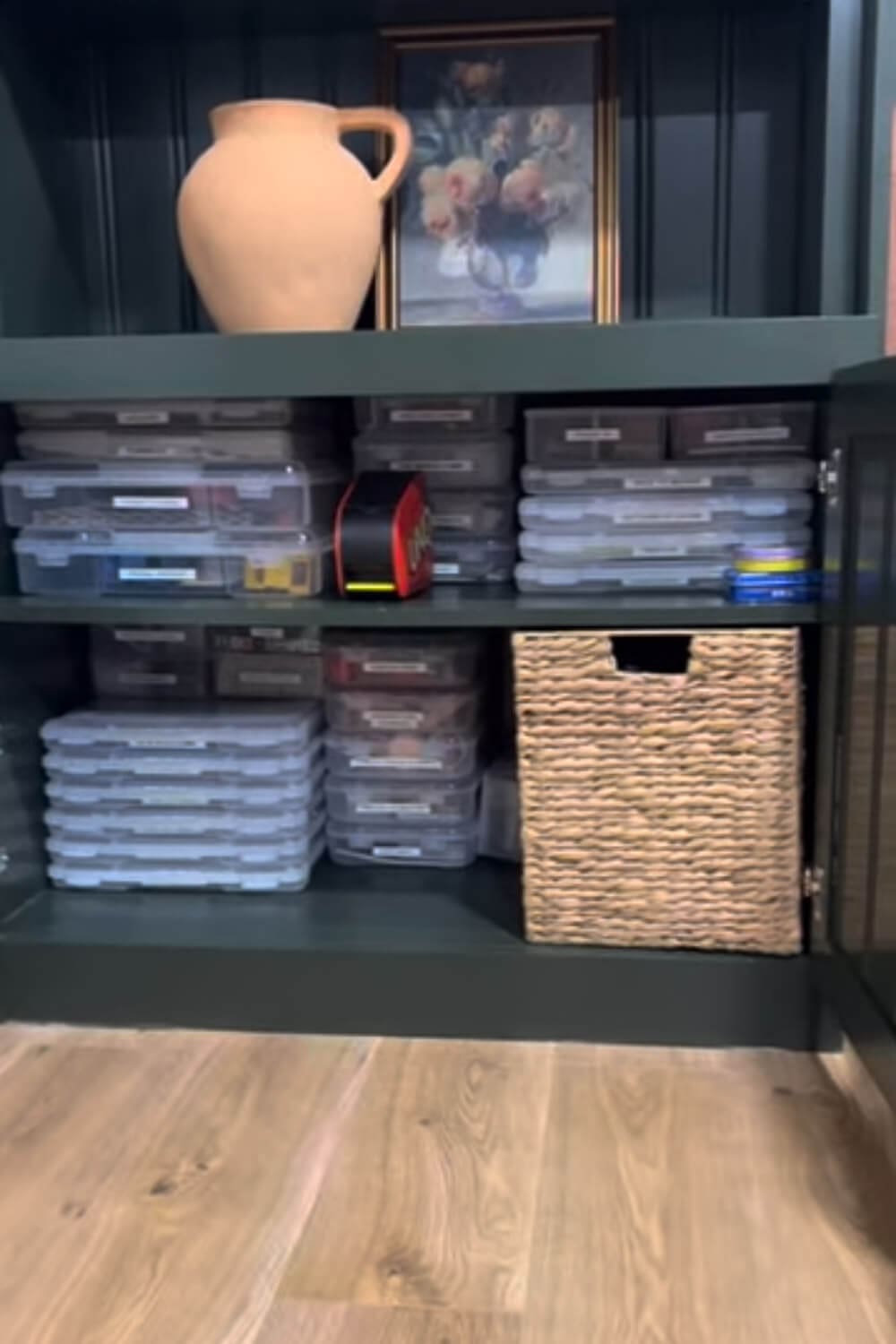
Table of Contents
- Our Family Loves a Good Game Night
- The Problem With Keeping Games in Their Original Boxes
- Board Game Storage Ideas That Save So Much Space
- Board Game Storage Shopping List
- Board Game Storage Ideas That Double as Decor
- Final Thoughts (And Our Favorite Games List)
- More Game Night Ideas
- 📌 Save This Board Game Storage Idea for Later
- FAQ: Board Game Storage
Our Family Loves a Good Game Night
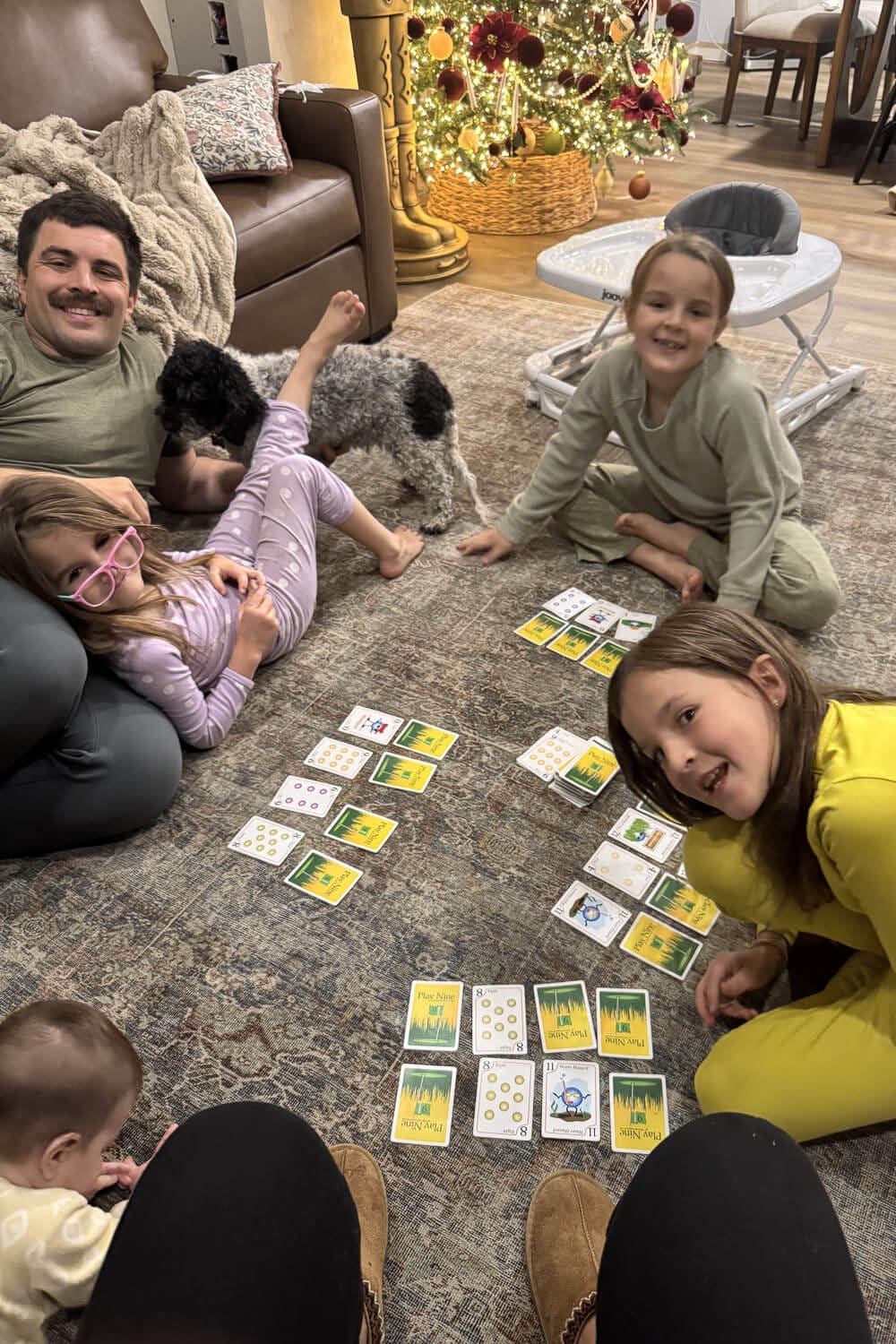
We are a game family. Like, truly. We play with our kids, we pull games out on slow afternoons, and we love hosting friends for game nights where someone gets way too competitive (it’s usually not the kids).
Card games, board games, classics, silly games, strategy games, quick “ten-minute” games that somehow turn into an hour. We are a family that loves board games and card games.
The Problem With Keeping Games in Their Original Boxes
For years, we stored everything in the original packaging. That’s what you’re “supposed” to do, right?
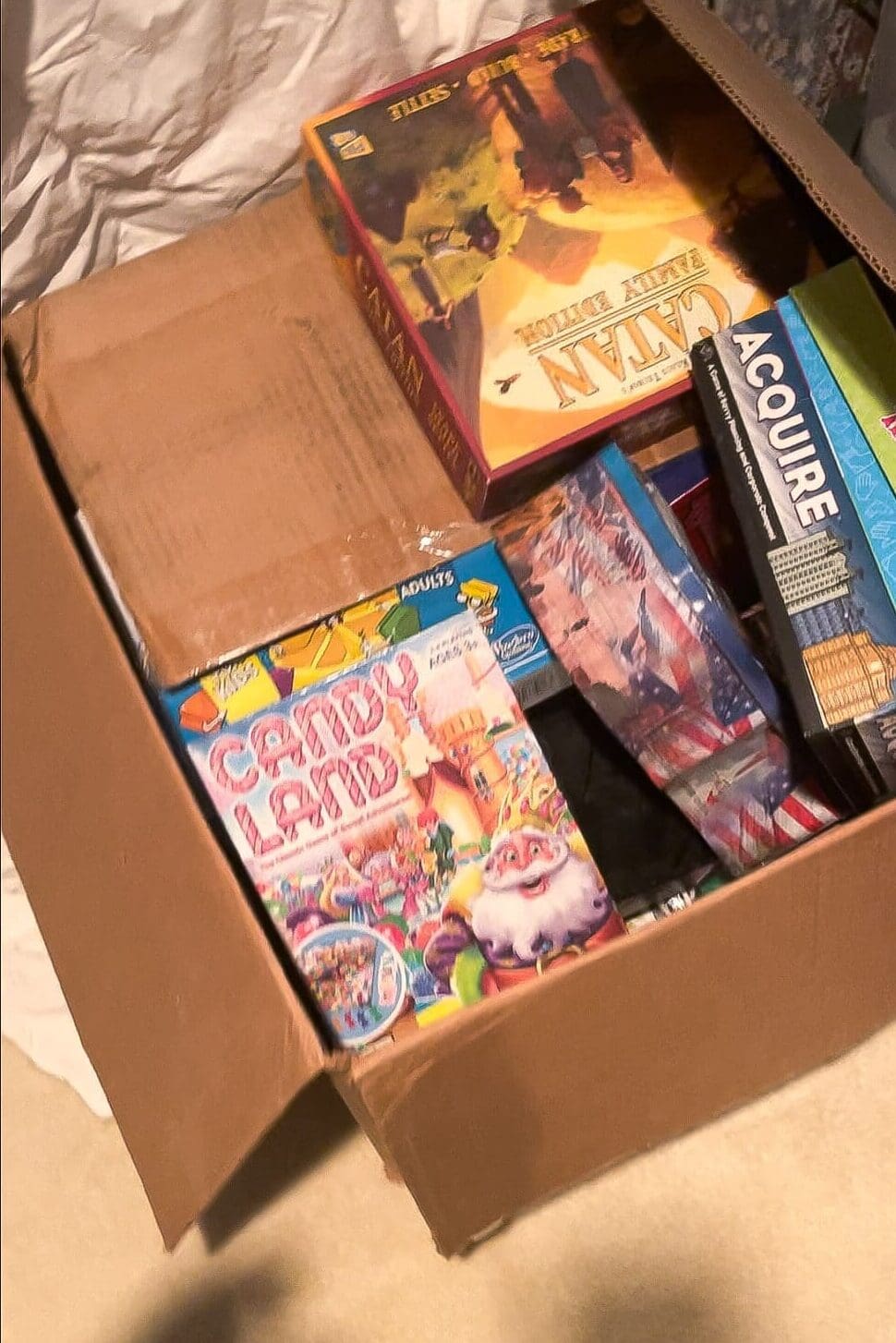
Except it’s the worst.
- Game boxes are all different sizes, so they stack like a bad game of Tetris.
- The corners get crushed, lids slide off, and pieces magically escape.
- You end up wasting a ton of shelf space on bulky air-filled boxes.
- Half the cabinet turns into random stacks that fall over the second you pull one game out.
Basically, we had a cabinet full of games… but it didn’t feel organized, and it definitely wasn’t easy to grab something and play.
Board Game Storage Ideas That Save So Much Space
Here’s the trick that changed everything: stop storing the box. Start storing the game.
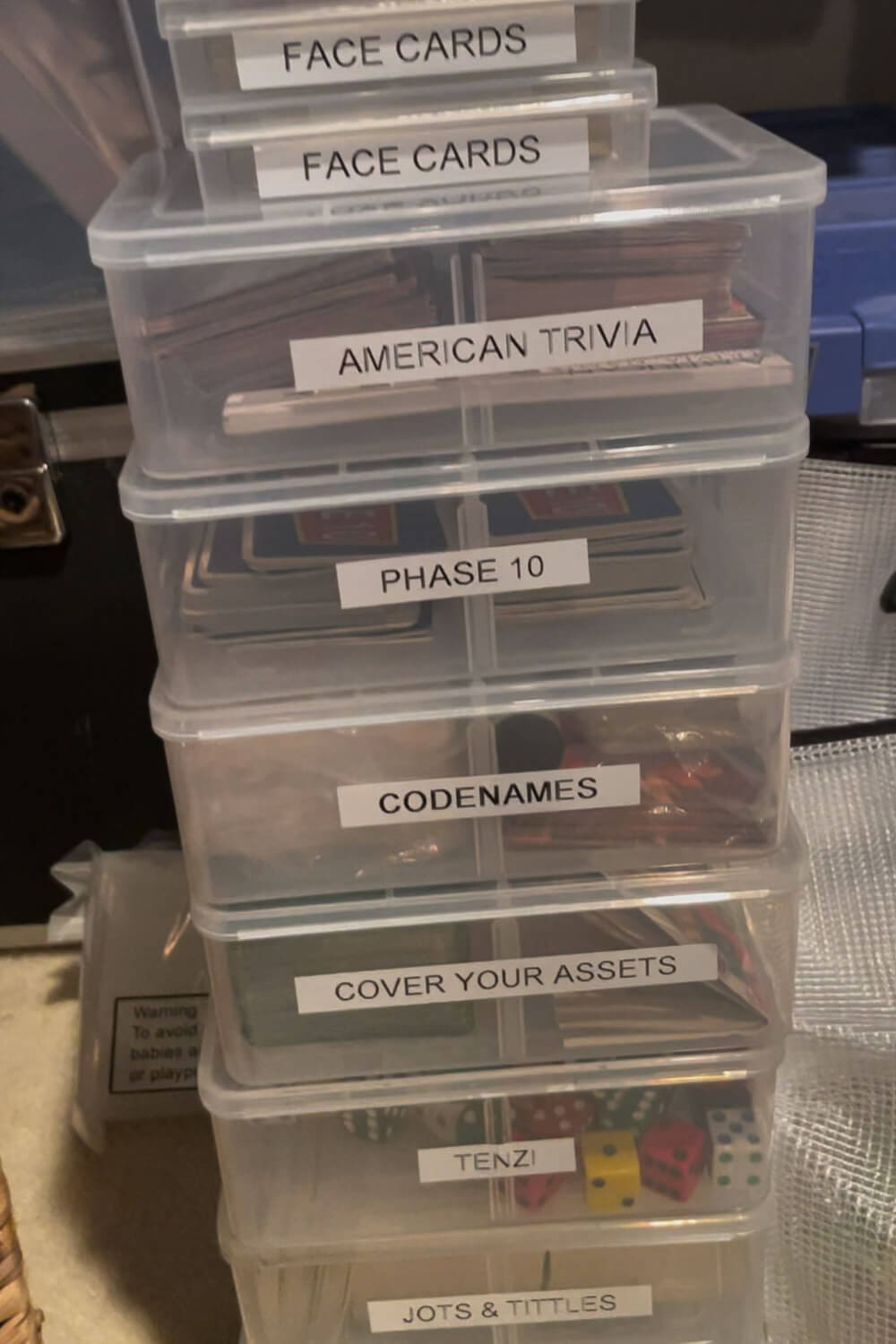
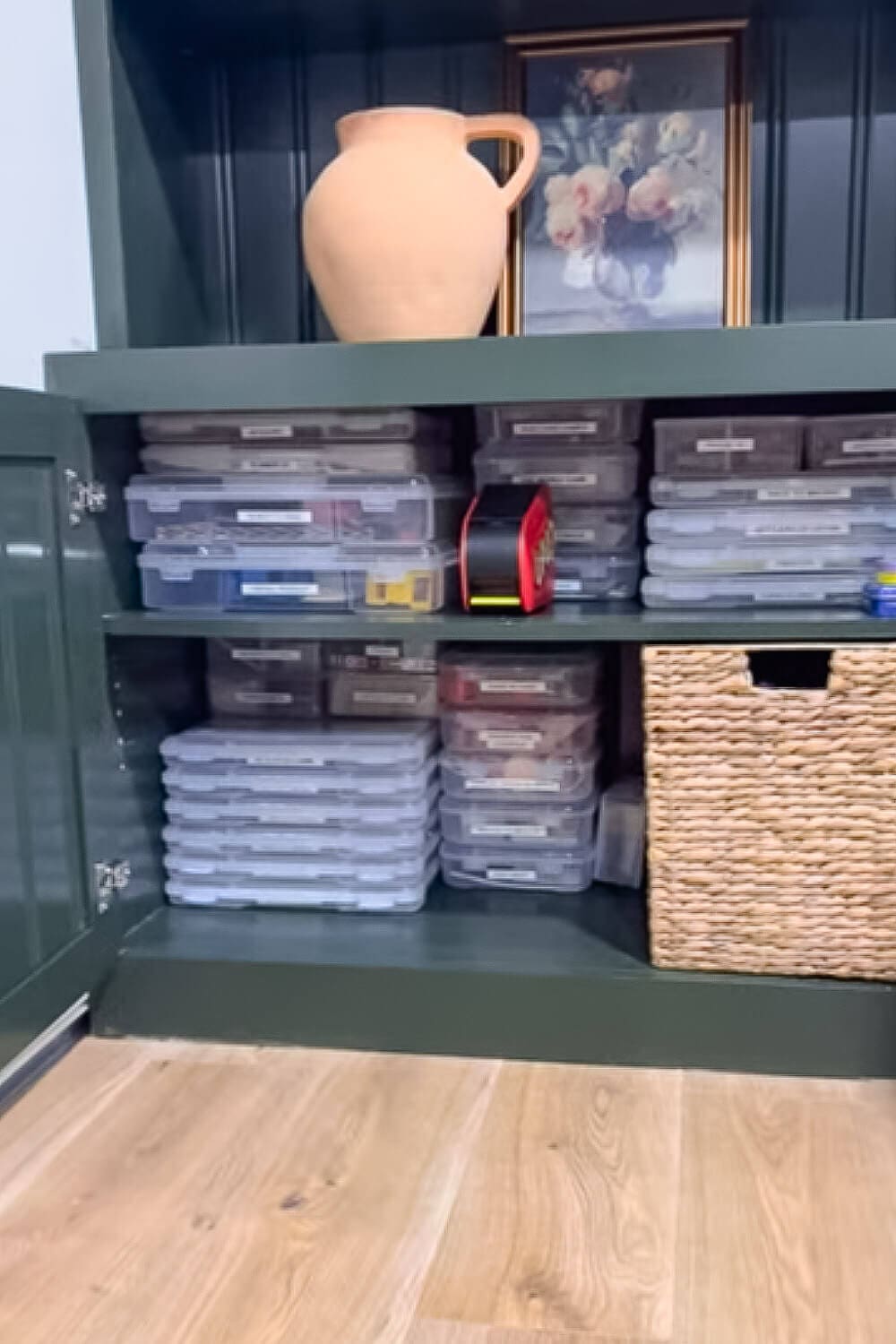
Once you remove games from their original packaging and place them in either stackable plastic cases or a labeled storage bag, the entire cabinet becomes uniform. Everything stacks neatly, everything is easy to find, and you can fit way more games in the same space.
Let’s break it down.
Storage Ideas for Card Games Using Plastic Cases
Card games are the easiest place to start, because the setup is basically: remove, transfer, label, done.
Step One: Transfer the game into a plastic case
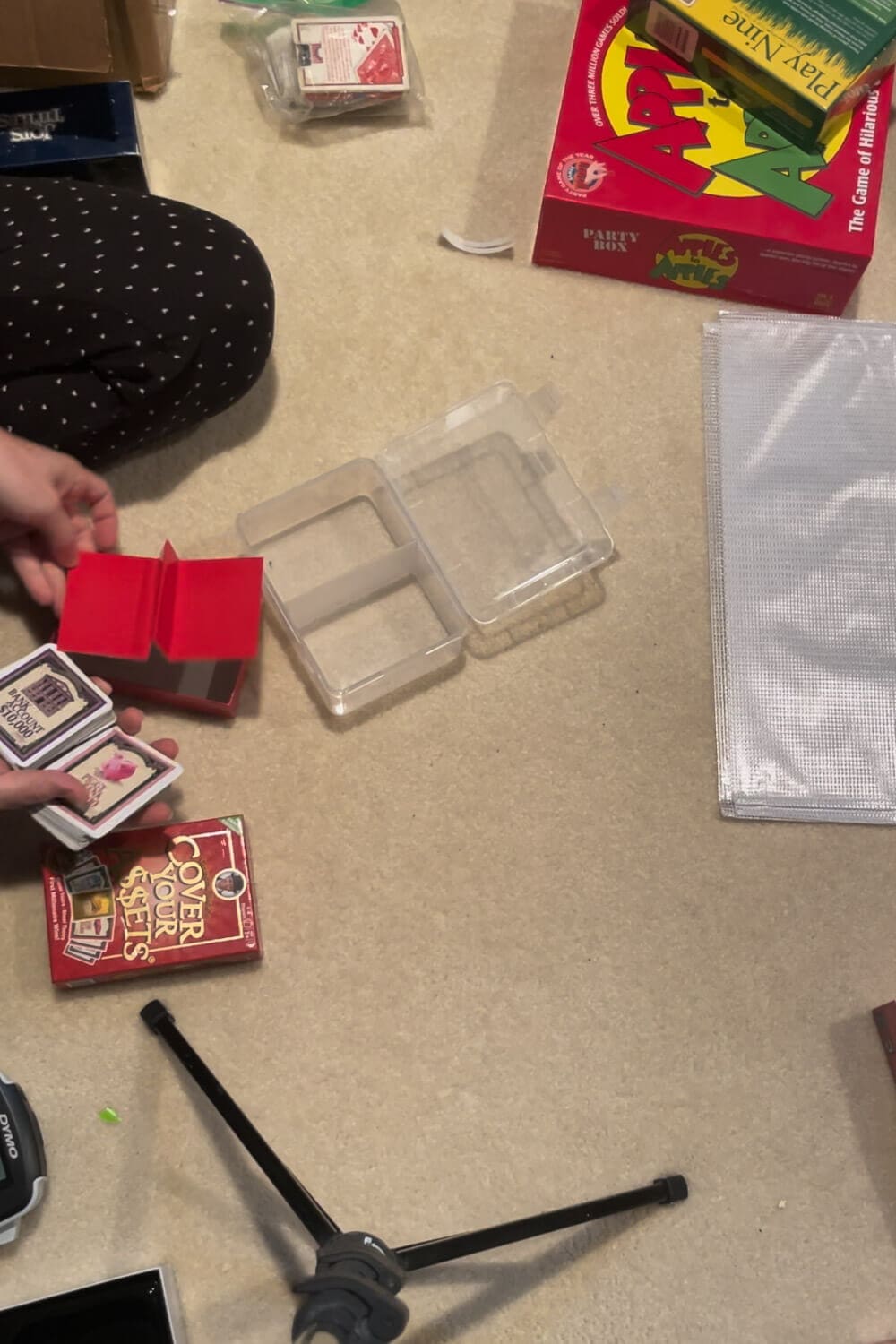
Take the cards out of the original box and put them into a stackable plastic case. I also tuck the instructions inside so everything stays together.
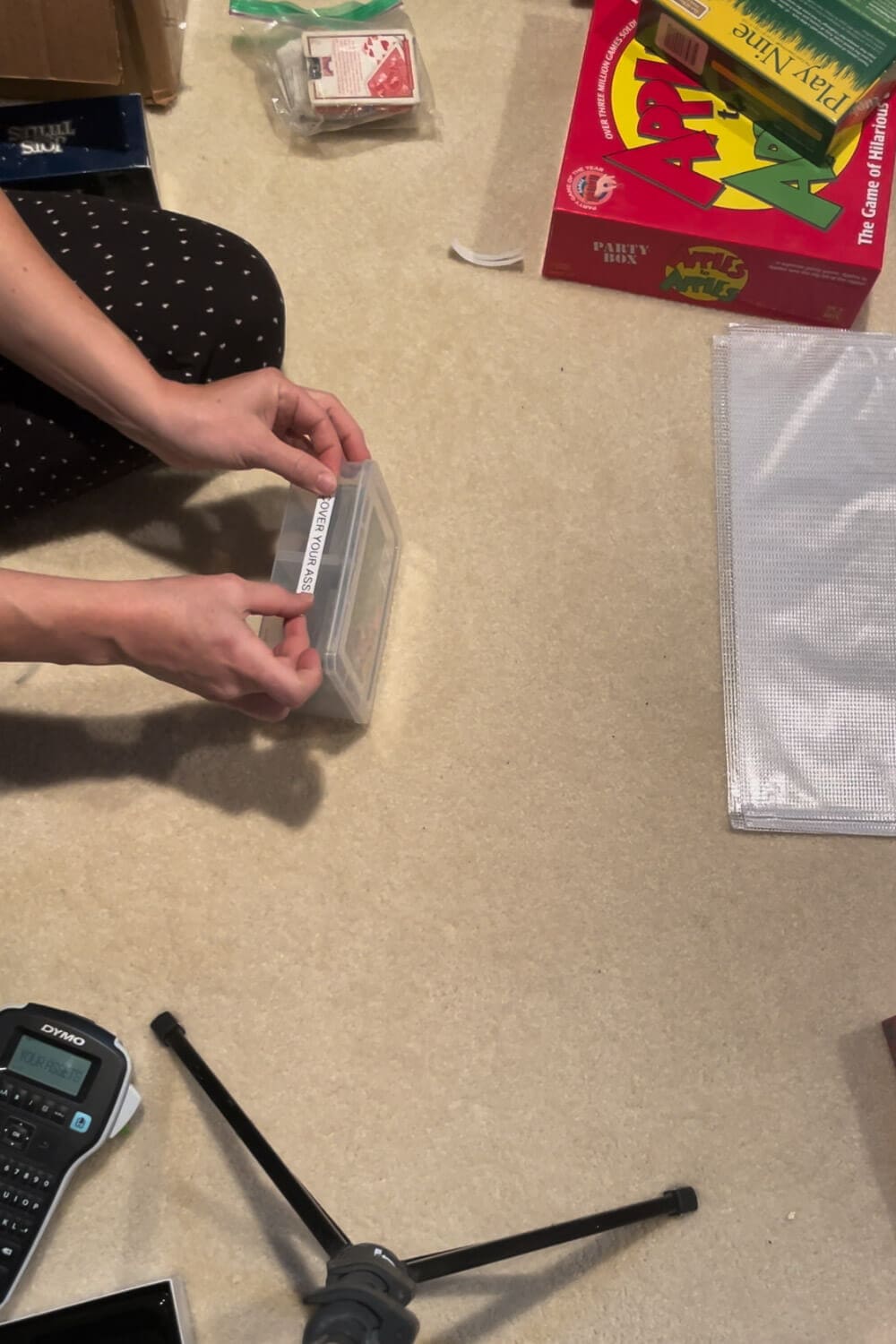
Step Two: Print a label
A label maker is what makes this whole system feel “finished.” Once the case is labeled, it’s easy for kids to put things back, easy for guests to find what they need, and easy for you to spot what you’re looking for without digging.
Step Three: Choose the right size case
Use double-sided cases for games with lots of cards
These are perfect for games like Phase 10, where you’ve got a lot of cards, and you want everything separated but still in one container.
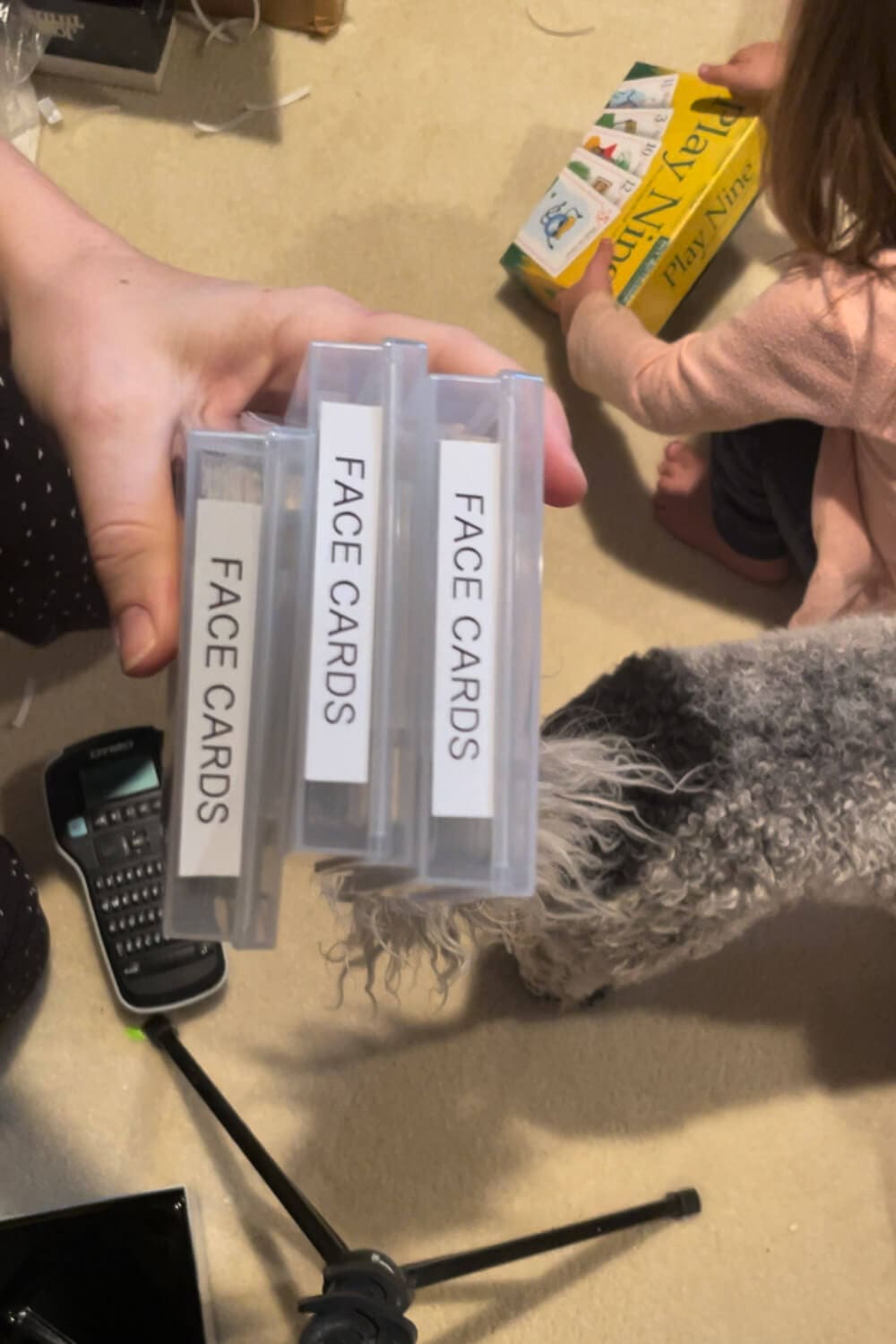
Use smaller cases for small decks or basics
For games with smaller decks like Blink, or even simple staples like face cards, smaller plastic cases are perfect. Same idea, just a slimmer container.
Board Game Storage Using Labeled Bags
Board games are usually where storage gets messy fast, especially if the boxes are big, awkward, or full of pieces that love to spill.
After testing a bunch of options, this is my favorite solution:
Step One: Bag the game board and pieces together
I use zipper storage bags that can hold:
- the game board
- the pieces
- the instructions
- any trays or extras
It’s like turning a bulky box into a slim, easy-to-store file folder.
Step Two: Stand the bags upright in a basket
This is the magic part. Once the games are bagged, they stand upright inside a basket, so you can flip through them like books and grab exactly what you want.
Step Three: Label the bags
Don’t skip this part. The bags all look the same, so using that label maker is a must if you want your games to be easy to find.
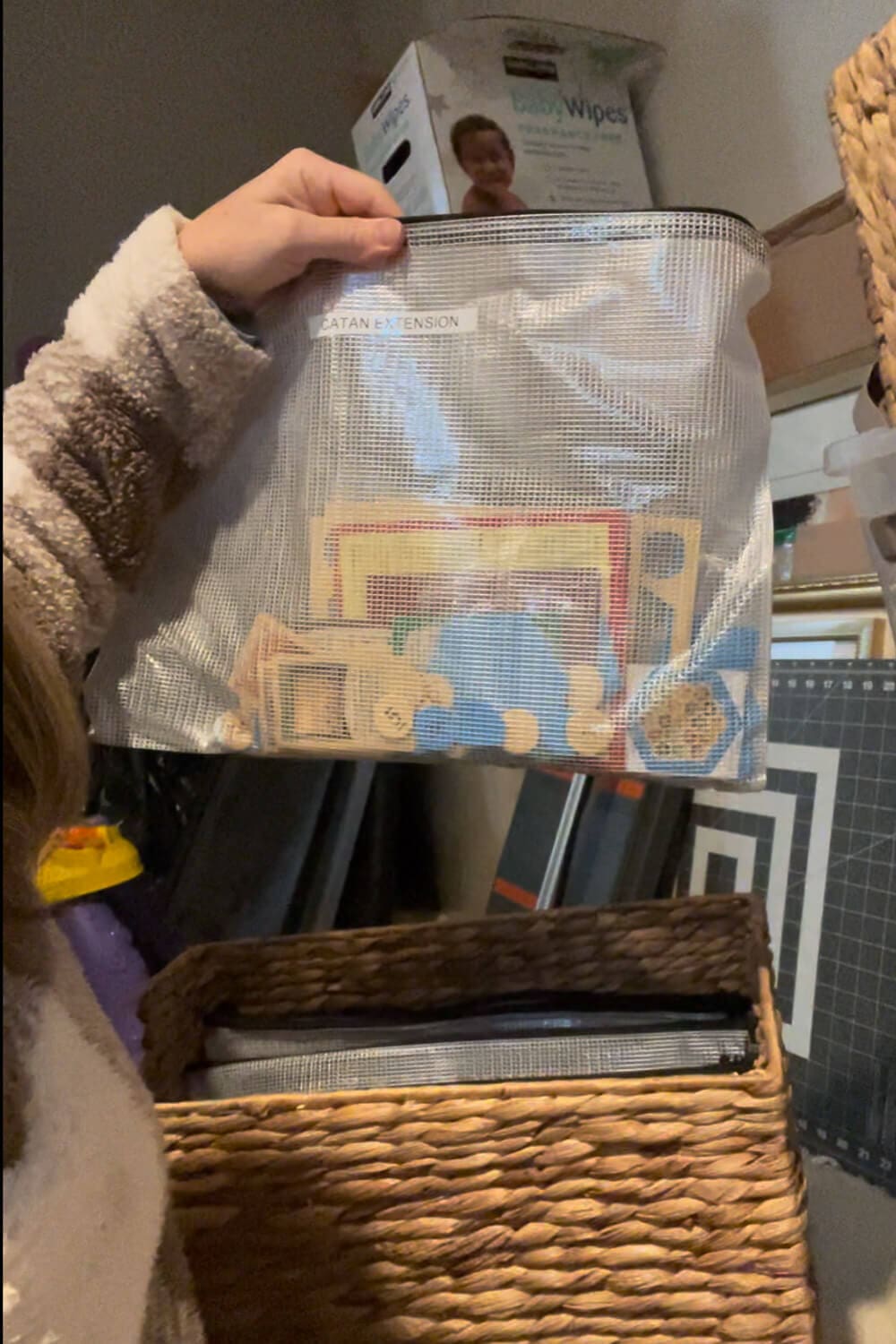
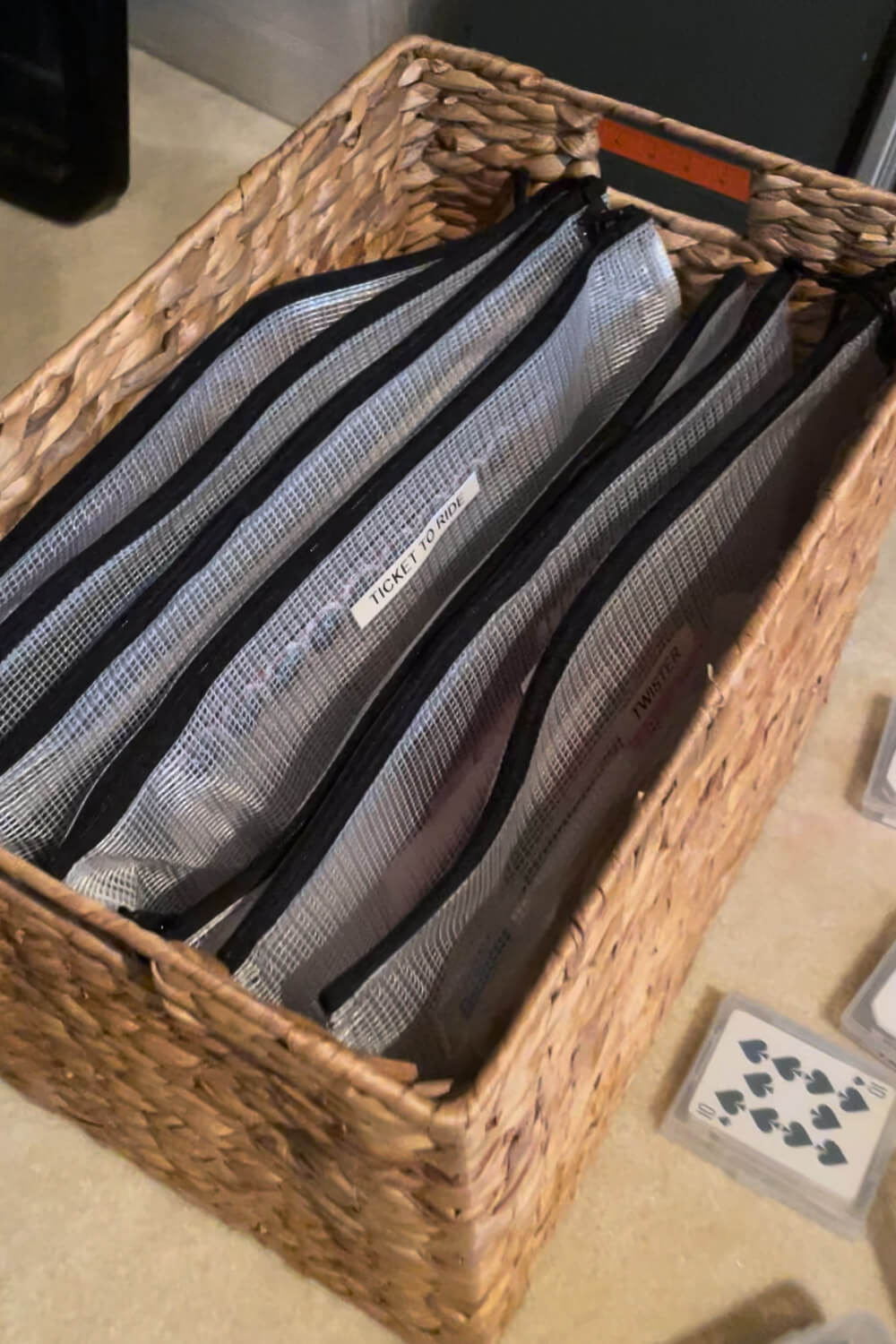
Games like Ticket to Ride and Rummikub fit great this way, and the basket keeps the cabinet feeling organized right alongside all the plastic containers.
What About Games With Extra Stuff?
Some games need a little more space because it’s not just cards.
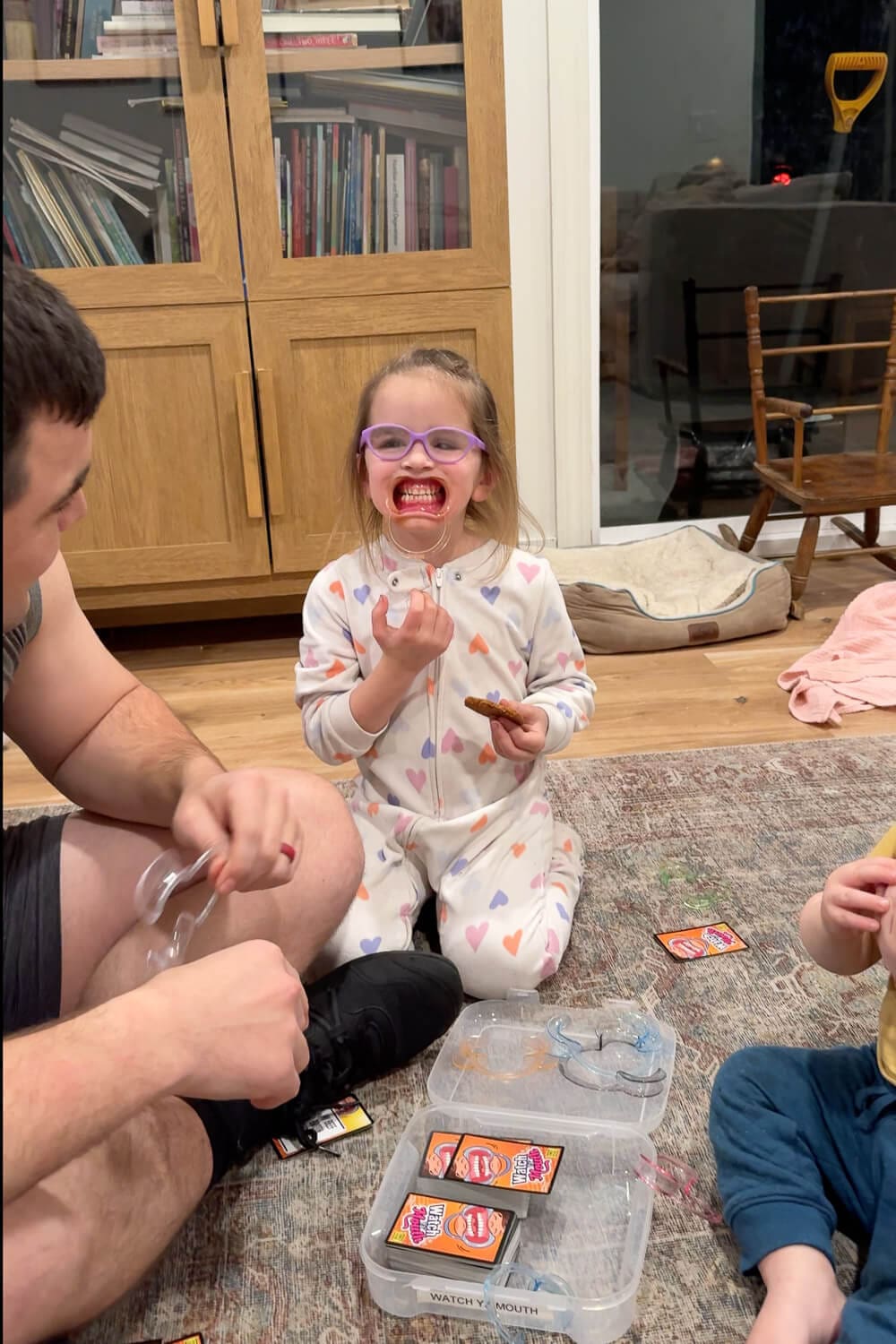
For example, games like Speak Out / Watch Your Mouth / Mouth Off have cards plus mouthpieces. For those, I use slightly larger plastic boxes so everything fits without being crammed or warped. If a game needs even more space, I’ll bump up to a deeper/larger box, or this large, but thin version. The best part is they all stack beautifully.
Board Game Storage Shopping List
If you want to grab the supplies I used for this board game storage setup, I put everything in one easy-to-shop list. It has the stackable plastic cases (including the double-sided ones), the zipper game bags, and the labeling stuff that makes it all look neat. Click here to see my Game Storage Supplies List.
Board Game Storage Ideas That Double as Decor
Now, I will say… some games deserve to stay in their original packaging because they’re just pretty. I love buying decorative versions of classic games and keeping them right on open shelves. I have a few that come in boxes that look like vintage books (and they’re honestly cute enough to count as decor).
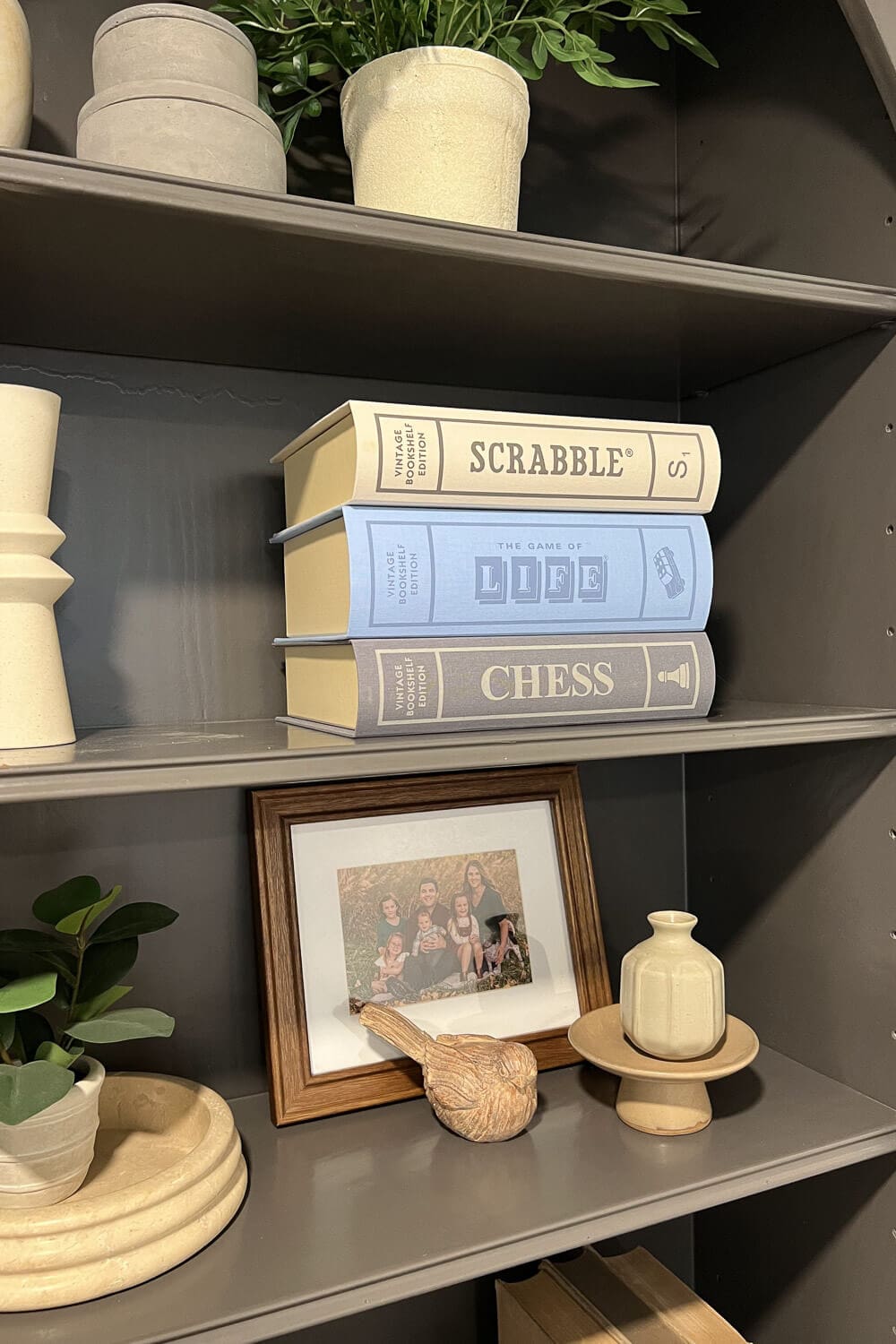
You can get so many classic games like:
- Scrabble
- Sorry
- Monopoly
- Catchphrase
- Yahtzee
- Battleship
- Clue
- and more… check out the whole gorgeous set!
They look intentional, they add personality to shelves, and you can still use them. It’s a win-win!
Final Thoughts (And Our Favorite Games List)
At the end of the day, we love our games. We want them easy to grab, easy to put away, and easy to keep organized even with kids in the mix.
This system has made game nights happen more often because we’re not digging through crushed boxes or hunting for missing pieces. Everything has a spot, everything stacks neatly, and we can fit so many more games in the same cabinet.
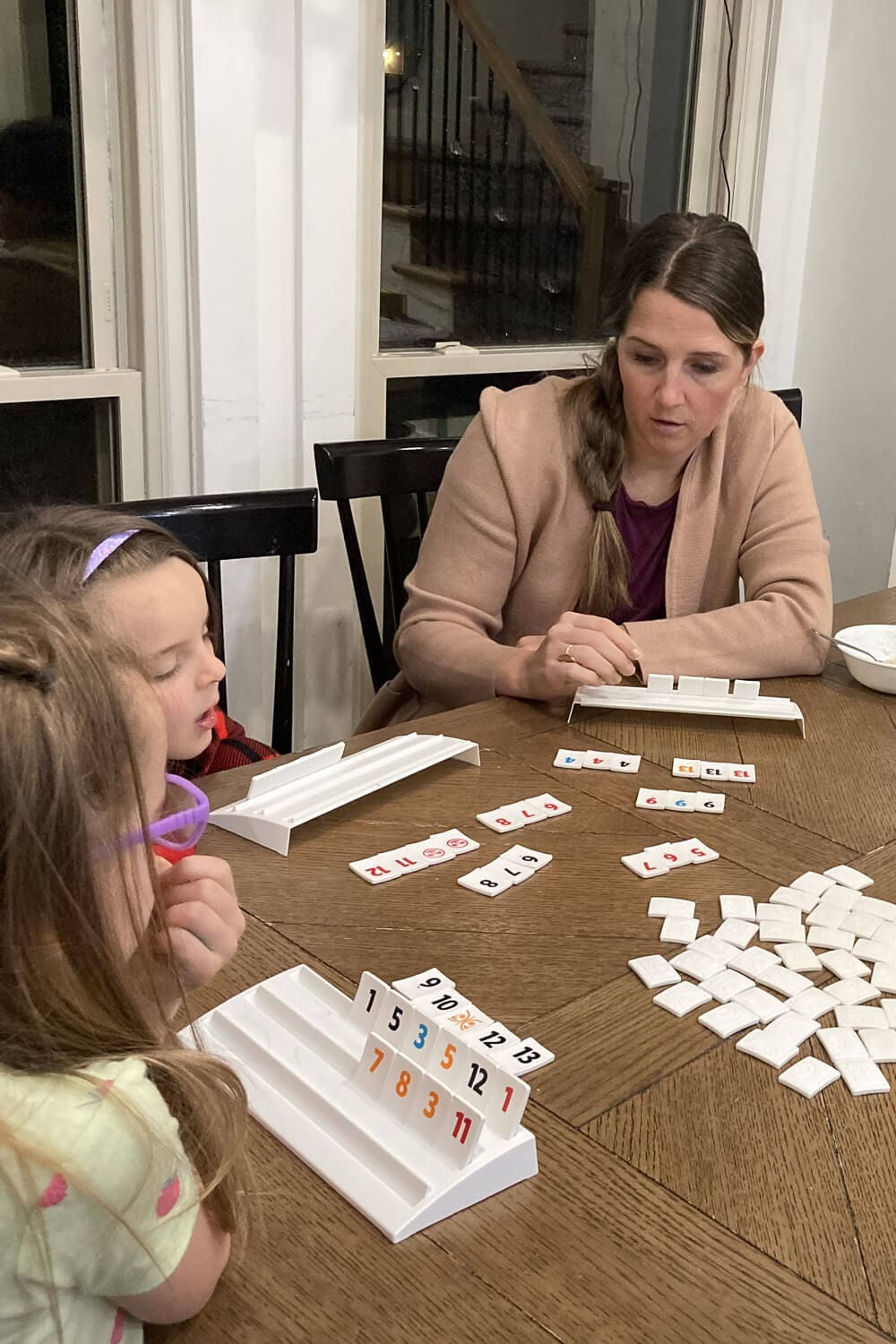
If you’re looking for something fun to play next, I put together a list of all our favorite family board games and card games right here.
More Game Night Ideas
If you’re planning a grown-up game night (or you just want games that are actually fun for the adults in the room), I’ve got you. Check out my post Fun Christmas Party Games for Adults for holiday-friendly ideas, and don’t miss 4 Fun Group Games for Adults to Play for easy crowd-pleasers that work anytime you’ve got friends over. They’re all clean and would be enjoyable for older kids or teens, too.
📌 Save This Board Game Storage Idea for Later
If your game closet is overflowing with mismatched, crushed boxes, you need this board game storage system. Swapping bulky packaging for stackable labeled cases and easy zipper bags saves a shocking amount of space and makes it way easier to actually grab a game and play.
Pin this so you can come back when you’re ready to tackle your game cabinet:
FAQ: Board Game Storage
The easiest way to save space is to remove games from bulky original boxes and store them in uniform containers. I use stackable plastic cases for card games and labeled zipper bags for board games, then store the bags upright in a basket.
Yes, as long as you keep the instructions and all pieces together. If you want to keep resale value or you have collector games, you can save the boxes in a separate bin, but for everyday family games, I ditch them.
For larger games, I bag the board, instructions, and pieces together in a zipper storage bag. Then the bags stand upright in a basket so you can flip through them and grab what you want without unstacking a pile.
A label maker is the fastest and cleanest option. Label the spine of plastic cases and the top edge of bags so you can read them when they’re stacked or stored upright.
Both work, depending on the type. Card games in plastic cases stack really well horizontally. Board games stored in zipper bags are easiest to store vertically in a basket so you can flip through them like files.
